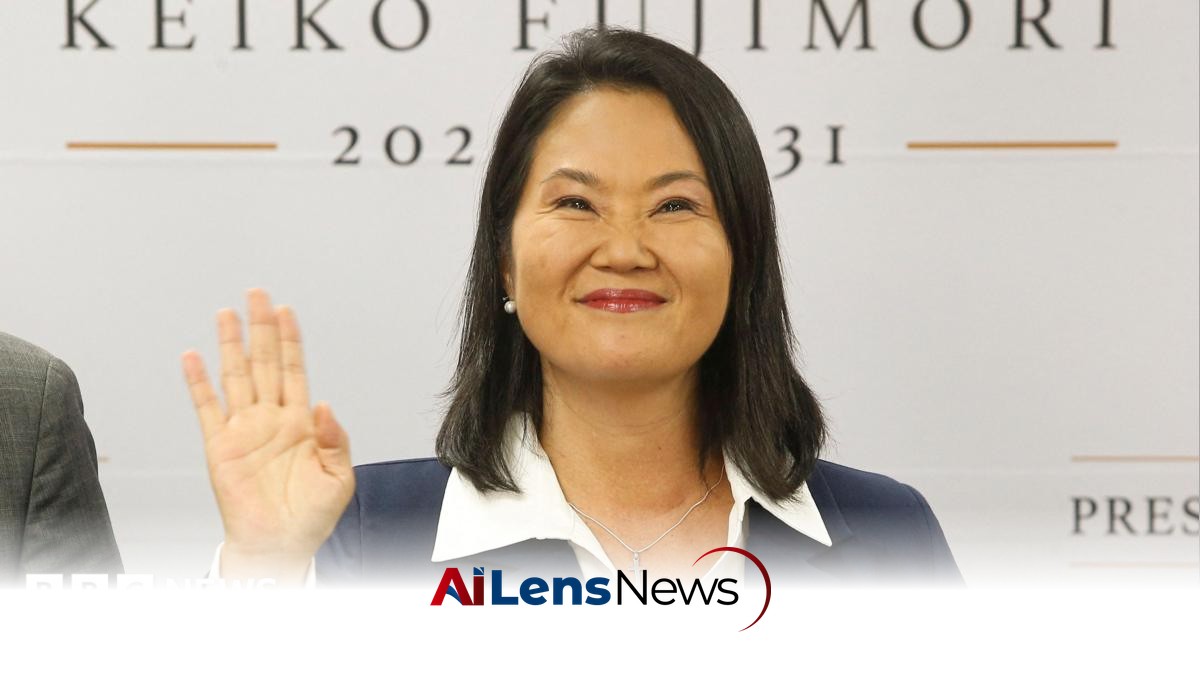


Keiko Fujimori wins Peru's presidential election with a narrow margin, marking a shift towards the right in Latin American politics.
New Delhi, India Jul 4, 2026 ALN: Right-wing candidate Keiko Fujimori has been declared the winner of Peru's tight presidential election, nearly a month after the vote took place.
The 51-year-old won 50.135% of voters' support in the runoff, held on 7 June, against left-wing candidate Roberto Sánchez, who garnered 49.865%. The margin of victory was less than 50,000 votes, according to figures certified by Peru's electoral court. This narrow victory underscores the deep political divisions within the country, highlighting the contrasting ideologies and priorities of the electorate.
This marks the fourth time that Fujimori, the daughter of disgraced former President Alberto Fujimori, has sought the presidency of the South American nation. Her repeated attempts reflect not only her personal ambition but also the significant political legacy of her father, whose controversial rule from 1990 to 2000 continues to shape the political landscape in Peru. Keiko Fujimori has promised to oversee a crackdown on organized crime during her term, a pledge that resonates with many voters who are increasingly concerned about security and public safety amidst rising crime rates.
Fujimori's election coincides with the election of Abelardo de la Espriella in Colombia, indicating a shift towards the right in Latin American politics. This trend is part of a broader regional phenomenon where several countries are experiencing a backlash against leftist governments, often in response to economic challenges and social unrest. The rise of right-wing leaders in Latin America may signal a reconfiguration of alliances and policies in the region, particularly with respect to issues such as crime, economic management, and foreign relations.
Upon her victory, Fujimori stated she would assume the presidency "with responsibility, humility, and a deep sense of duty." She emphasized that each day of the transition process is an opportunity to listen, engage in dialogue, and prepare for the new government. This approach suggests a willingness to address the concerns of a divided electorate and may be an attempt to build consensus in a politically charged environment.
Roberto Sánchez, 57, has alleged that the runoff election was "seriously compromised" and has threatened legal action, claiming that the strong support for Fujimori among Peruvian voters abroad indicates irregularities. His allegations reflect the ongoing tensions surrounding electoral integrity in Peru, where past elections have also been marred by accusations of fraud and manipulation. Following the announcement of the results, Sánchez's party appealed against the electoral court's proclamation, calling for the vote to be nullified. This appeal highlights the potential for prolonged political strife as the opposition seeks to challenge the legitimacy of Fujimori's victory.
While Sánchez, a former foreign trade minister, campaigned on a platform of broad economic reforms, Fujimori capitalized on concerns over crime and political instability that dominated the election narrative. The contrasting platforms of the two candidates illustrate the electorate's divided priorities, with many voters prioritizing security over economic reform, particularly in light of recent increases in crime rates and public safety concerns.
Throughout her campaign, Fujimori leaned on the controversial legacy of her father, promising a military crackdown on organized crime, particularly in response to rising extortion incidents in recent years. This strategy appeals to voters who have experienced the impacts of crime firsthand and are looking for decisive action from their leaders. However, it also raises questions about the potential for human rights abuses and authoritarian practices, given the historical context of her father's regime, which was marked by significant violations of civil liberties.
Alberto Fujimori was ultimately imprisoned for crimes against humanity due to extrajudicial killings and forced sterilizations that occurred during his increasingly authoritarian regime. The shadow of his presidency looms large over Keiko Fujimori's political career, and while she has distanced herself from some of his more controversial policies, the association remains a double-edged sword in her quest for legitimacy and acceptance among the populace.
Keiko Fujimori also pledged to attract private investment to stimulate economic growth and to expel undocumented immigrants found committing crimes in Peru. Her focus on economic revitalization aligns with the interests of the business community but may alienate more progressive voters who advocate for inclusive policies and social justice. The challenge for her administration will be to balance these competing interests while fostering a cohesive national identity.
Having previously run unsuccessfully in 2011, 2016, and 2021, Fujimori will become the ninth president of the Andean country in a decade, amidst a backdrop of intense political instability. This high turnover rate in leadership reflects the challenges of governance in Peru, where corruption scandals, social movements, and economic crises have frequently undermined the political establishment. The frequent changes in leadership have led to a sense of disillusionment among the electorate, who may be skeptical about the ability of any single leader to bring about meaningful change.
Her swearing-in ceremony is expected to take place on 28 July. This date marks a significant transition for Peru, as it will usher in a new administration that must navigate the complexities of a divided electorate and a challenging political landscape. Upon taking office, she will join a growing list of ideologically aligned right-wing leaders in Latin America who have recently ascended to power, often displacing left-wing governments. This shift could have implications for regional cooperation and policy alignment, particularly in areas such as trade, security, and environmental sustainability.
Colombia's president-elect, de la Espriella, will assume office shortly after, having won a similarly narrow election on a platform focused on combating organized crime. The convergence of right-wing leadership in neighboring countries may lead to increased collaboration on security issues, which could reshape the dynamics of regional politics and influence the responses to transnational challenges such as drug trafficking and organized crime.
Other leaders in the region, such as El Salvador's Nayib Bukele and Ecuador's Daniel Noboa, have sought to align themselves with U.S. President Donald Trump, who has shown increased interest in Latin American political affairs during his second term. This alignment may signal a shift in U.S. foreign policy priorities, particularly in relation to security cooperation and economic investment in the region. The implications of this realignment could have far-reaching effects on domestic policies and international relations in Latin America.
This trend positions Brazil's Luiz Inácio Lula da Silva as the predominant left-wing figure in the region, especially as he faces the son of convicted former president Jair Bolsonaro in upcoming elections. Lula's leadership will be crucial in determining the future trajectory of leftist movements in Latin America, and his ability to galvanize support will be tested in the face of a resurgent right. The political landscape in Latin America remains fluid, with shifting alliances and evolving ideologies that reflect the complex realities facing the region's citizens.
To learn more about the latest developments in Regions & Countries, stay updated with our exclusive reports and analyses on AiLensNews.

