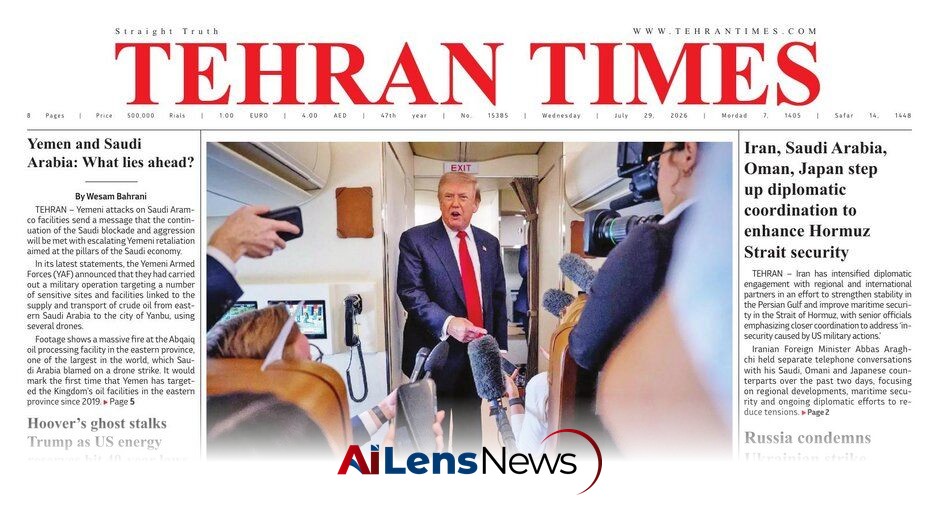


An analysis of the US's inconsistent approach towards Iran highlights strategic failures and the implications for regional stability.
Tehran, Iran Jul 29, 2026 ALN: The United States has been grappling with a complex relationship with Iran, characterized by a series of contradictory policies that have ultimately led to strategic failures. As tensions rise, the question remains: how can the US navigate this intricate landscape without exacerbating the situation further? Understanding the historical context and the factors that have shaped this relationship is crucial to addressing these questions.
Historical Context
The relationship between the United States and Iran has been fraught with tension since the mid-20th century. The 1953 coup, orchestrated by the CIA and British intelligence, which overthrew Iran's democratically elected Prime Minister Mohammad Mossadegh, set a precedent for mistrust. This event was pivotal, as it reinstated the Shah, whose regime was marked by authoritarianism and human rights abuses, leading to widespread discontent among the Iranian populace.
The situation reached a boiling point in 1979 with the Islamic Revolution, which resulted in the establishment of the Islamic Republic of Iran and the subsequent hostage crisis at the US Embassy in Tehran. This marked the beginning of a protracted adversarial relationship, characterized by mutual suspicion and hostility. Over the decades, various administrations have attempted to engage with Iran, but these efforts have often been undermined by domestic political pressures and the complex geopolitical landscape of the Middle East.
Contradictory Rhetoric
One of the most striking aspects of the US's approach to Iran is its inconsistent rhetoric. While officials often emphasize the importance of diplomacy, their actions frequently suggest a preference for confrontation. For instance, the Obama administration's approach, which culminated in the Joint Comprehensive Plan of Action (JCPOA) in 2015, was initially seen as a diplomatic breakthrough. However, the subsequent withdrawal from the Iran nuclear deal in 2018 by the Trump administration marked a significant shift. This withdrawal was justified on the grounds that the agreement was insufficient to curb Iran's nuclear ambitions, but it also revealed a deeper contradiction in US policy: the tension between diplomatic engagement and military posturing.
This duality not only undermines trust but also complicates potential negotiations. Iranian leaders have often pointed to the US's erratic behavior as a reason for their reluctance to engage in dialogue. The lack of a consistent message has left both Iranian officials and the international community uncertain about the US's long-term intentions.
Strategic Failures
The US's inability to formulate a coherent strategy has resulted in missed opportunities. The withdrawal from the Iran nuclear deal in 2018 was a pivotal moment that shifted the dynamics of the region. Instead of curbing Iran's nuclear ambitions, this move has arguably accelerated them, leading to heightened tensions and instability. Following the US withdrawal, Iran began to breach the limits set by the JCPOA, enriching uranium beyond the agreed-upon levels and expanding its nuclear program.
Moreover, the reimposition of sanctions has had a profound impact on the Iranian economy, contributing to domestic unrest and exacerbating anti-American sentiment. The strategic failure lies not only in the immediate consequences of these actions but also in the long-term implications for US interests in the region. The sanctions have not only failed to achieve their intended goals but have also alienated potential allies and partners who are wary of the US's unilateral approach.
Regional Implications
The repercussions of the US's contradictory policies extend beyond Iran's borders. Neighboring countries are increasingly affected by the instability, leading to a ripple effect that threatens regional security. For instance, the ongoing conflict in Syria, where Iran has established a significant foothold, has been exacerbated by US military presence and support for opposition groups. The lack of a unified approach has left allies questioning the reliability of US commitments, particularly in the context of shifting alliances and the rising influence of other regional powers, such as Russia and China.
Additionally, the US's stance has fueled sectarian tensions in the region, particularly between Sunni-majority countries and Shiite-majority Iran. This sectarian divide has been manipulated by various actors to further their own agendas, leading to a cycle of violence and retaliation that complicates the prospect of peace.
Future Considerations
As the US navigates its relationship with Iran, it must consider the broader implications of its actions. A more consistent and diplomatic approach may be necessary to foster stability in the region. Engaging with Iran while addressing legitimate security concerns could pave the way for a more constructive relationship. This includes recognizing Iran's legitimate security interests and finding common ground on issues such as counter-terrorism and regional stability.
Moreover, the US must also engage with its allies and partners in the region to develop a cohesive strategy that takes into account the diverse perspectives and interests at play. This could involve a multilateral approach to negotiations, involving key stakeholders such as the European Union, Russia, and regional powers, to create a more comprehensive framework for addressing the challenges posed by Iran's nuclear program and its regional activities.
In conclusion, the US's contradictory rhetoric and strategic failures in dealing with Iran highlight the complexities of international diplomacy. Moving forward, a reevaluation of tactics may be essential for achieving lasting peace and stability. The path ahead will require not only a commitment to dialogue but also a willingness to understand and address the underlying issues that have fueled the conflict for decades. Only through a sustained and coherent approach can the US hope to navigate the intricate landscape of US-Iran relations and contribute to a more stable Middle East.
To learn more about the latest developments in Culture & Society, stay updated with our exclusive reports and analyses on AiLensNews.

