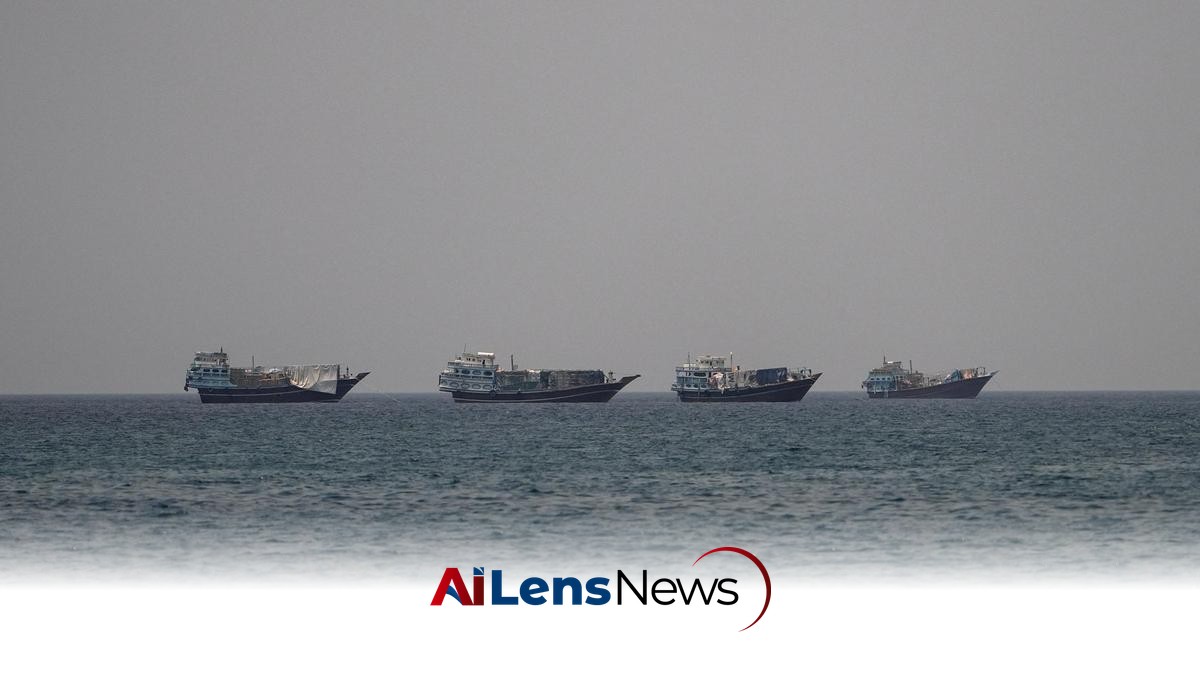


Iran's ambassador to China reveals plans for special fee arrangements for friendly nations transiting the Strait of Hormuz amid U.S. negotiations.
Tehran, Iran Jul 5, 2026 ALN: Iran's ambassador to China, Abdolreza Rahmani Fazli, announced on Saturday that new fees will be implemented for ships transiting the strategically important Strait of Hormuz. This announcement comes amidst ongoing tensions between Iran and the United States, which have historically had a fraught relationship, particularly concerning maritime activities in this critical waterway. The U.S. government has already rejected this proposal, indicating potential friction between the two nations regarding maritime commerce and security in the region.
The Strait of Hormuz is one of the 's most vital maritime chokepoints, situated between Iran and Oman. It serves as a crucial passage for oil and gas shipments, with approximately one-fifth of the 's crude oil and liquefied natural gas passing through it. This makes the strait not only a key economic artery but also a focal point of geopolitical tensions, particularly in the context of U.S.-Iran relations. The announcement of new fees for transiting vessels raises questions about Iran's intentions and the implications for global energy markets.
Historically, the Strait of Hormuz has been a flashpoint for conflict. Iran has threatened to close the strait in response to U.S. sanctions and military presence in the region, which has led to heightened tensions and concerns over the security of maritime navigation. The initial agreement between Iran and the United States, which aimed to de-escalate hostilities, included a provision that allowed commercial ships to transit the strait free of charge for a period of 60 days. However, the specifics of what will follow this period remain uncertain, leaving room for speculation about the future of maritime commerce in the region.
During his speech at the Peace Forum in Beijing, Ambassador Fazli emphasized Iran's collaboration with Oman to establish "new arrangements" for the Strait of Hormuz. This collaboration is significant, as Oman has historically maintained a neutral stance in regional conflicts and has acted as a mediator between Iran and other nations. The ambassador clarified that while Iran would impose service fees for the use of its territorial waters, these would not be classified as a "toll." This distinction may be an attempt to mitigate backlash from the international community and maintain a semblance of goodwill.
Fazli elaborated on the purpose of these new arrangements, stating they would focus on ensuring the security of passage through the Strait of Hormuz, overseeing the movement of vessels, and addressing the environmental impacts caused by the high volume of maritime traffic. The environmental concerns are particularly relevant given the increasing scrutiny on the ecological impacts of shipping and oil extraction activities in sensitive marine areas. The ambassador's comments suggest that Iran is positioning itself as a responsible steward of the strait, which could be an effort to counter negative perceptions in the international community.
Moreover, Fazli's remark about considering "special treatment for the countries that were friendly to us and specially stood by us during the hard times" highlights Iran's intention to foster goodwill among its allies during a period of heightened geopolitical tension. This approach may be aimed at strengthening relationships with nations that have supported Iran amidst international sanctions and diplomatic isolation, particularly in the context of the ongoing conflict with the United States and its allies.
The implications of Iran's announcement are multifaceted. On one hand, the introduction of fees could be seen as a means for Iran to assert its sovereignty and control over a vital shipping lane. On the other hand, it may also provoke further tensions with the United States and other nations that rely on the safe passage of goods through the Strait of Hormuz. The U.S. has a vested interest in maintaining open and secure shipping lanes, and any perceived threat to this could lead to increased military presence in the region or other forms of diplomatic pressure on Iran.
Following the initial agreement with the U.S. to end the conflict, Iran lifted its blockade of the Hormuz, which had been a significant factor in the rise of global energy prices. The blockade had caused disruptions in the supply of oil, leading to fluctuations in prices that reverberated across global markets. The lifting of the blockade was a crucial step towards stabilizing the energy market, but the introduction of new fees could potentially lead to renewed uncertainty and volatility.
As discussions for a permanent resolution to the ongoing tensions are currently in progress, the situation remains fluid. The international community will be closely monitoring Iran's actions and the responses from the United States and other stakeholders. The outcome of these negotiations could have far-reaching implications for regional stability, global energy markets, and the future of U.S.-Iran relations.
In conclusion, Iran's announcement regarding special fees for ships transiting the Strait of Hormuz reflects the complex interplay of geopolitics, economics, and security in a region that is critical to global trade and energy supplies. As the situation develops, the actions taken by Iran, the U.S., and other nations will be pivotal in shaping the future dynamics of this essential maritime corridor.
The Strait of Hormuz's strategic importance cannot be overstated. It has been the site of numerous military confrontations and diplomatic crises over the years. The U.S. Navy's Fifth Fleet is stationed in Bahrain, just outside the strait, to ensure the security of shipping lanes and to deter any aggressive actions by Iran. This military presence has often been a point of contention, with Iran viewing it as a threat to its sovereignty.
Furthermore, the geopolitical landscape surrounding the Strait of Hormuz is complicated by the interests of other regional players, including Saudi Arabia, the United Arab Emirates, and Qatar. These countries, along with the U.S., have a vested interest in keeping the strait open for the uninterrupted flow of oil. Any instability in this region can lead to a spike in global oil prices, affecting economies wide.
Iran's recent announcement may also be interpreted as a response to the broader context of sanctions imposed by the United States and its allies. These sanctions have severely impacted Iran's economy, particularly its oil exports, which are a crucial source of revenue for the country. By introducing fees for maritime transit, Iran may be attempting to create a new revenue stream that could help mitigate the economic impact of these sanctions.
In addition, the environmental considerations raised by Ambassador Fazli are significant in the context of global discussions about climate change and environmental protection. The strait is home to diverse marine life, and the high volume of traffic poses risks to its ecological health. By positioning itself as a responsible actor, Iran may be attempting to align itself with international efforts to promote sustainable practices in maritime activities.
Ultimately, the situation in the Strait of Hormuz is emblematic of the broader tensions in the Middle East, where issues of national sovereignty, economic interests, and environmental sustainability intersect. As Iran moves forward with its plans, the reactions from the international community, particularly from the U.S. and its allies, will be crucial in determining the future stability of this vital maritime passage.
To learn more about the latest developments in International Politics, stay updated with our exclusive reports and analyses on AiLensNews.

