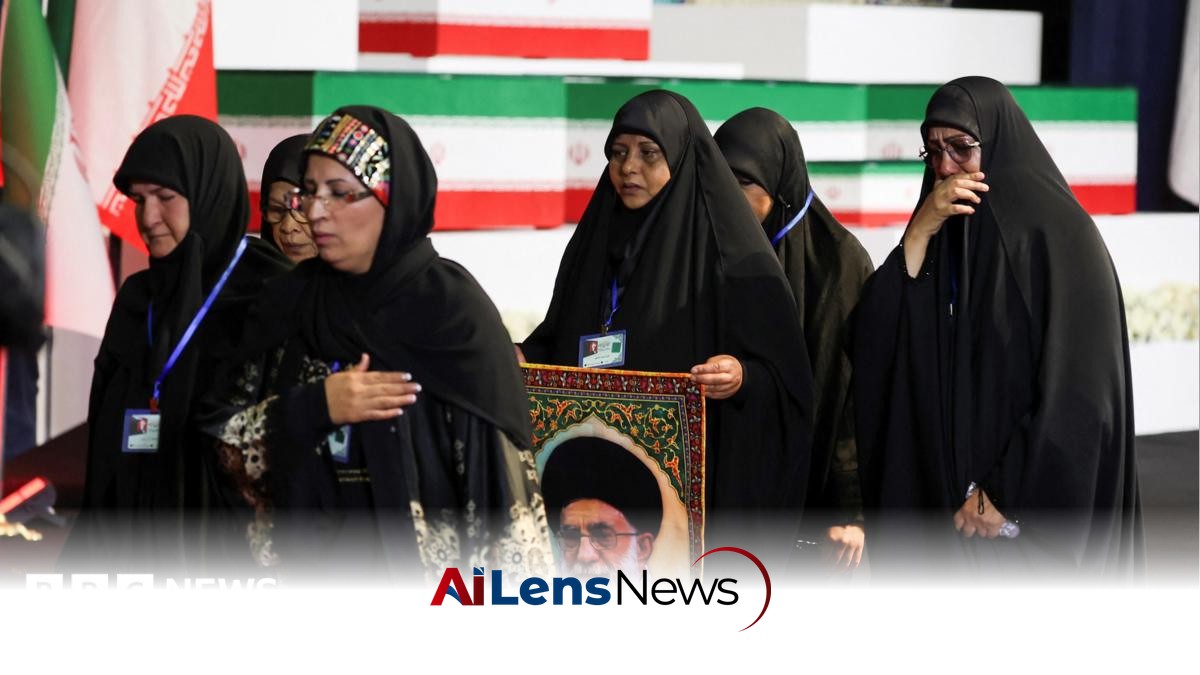


Iran has commenced a period of public mourning for former Supreme Leader Ayatollah Ali Khamenei, whose body will lie in state in Tehran ahead of a series of funeral events.
New Delhi, India Jul 3, 2026 ALN: Iran has begun several days of public mourning and funeral processions for its former Supreme Leader, Ayatollah Ali Khamenei, more than four months after he was killed in strikes launched by the US and Israel.
The former Ayatollah's body will lie in state in Tehran's Grand Mosalla from Friday, ahead of his burial in his hometown of Mashhad next Thursday. This period of mourning is marked by large-scale public participation and heightened emotions as the nation reflects on the legacy of Khamenei, who played a crucial role in shaping Iran’s political landscape for decades.
Iranian authorities said 12 to 20 million people were expected to attend, which they are calling the "funeral of the century". This reflects not only the reverence held for Khamenei among his supporters but also the broader implications of his death for the Iranian political system and its regional influence.
It comes as Iran and the United States observe a fragile ceasefire after signing a preliminary deal to halt their conflict in June. The timing of the mourning and funeral ceremonies is significant, as it occurs against a backdrop of ongoing tensions and complex geopolitical dynamics in the region. The ceasefire, while a temporary measure, highlights the precarious nature of relations between Iran and the US, particularly in light of the events leading to Khamenei's death.
Six days of ceremonies will start at 06:00 (03:30 BST) on Saturday, at Tehran's Imam Khomeini Mosalla, which visitors can visit to pay their respects until Sunday afternoon. The ceremonies are expected to draw massive crowds, reflecting both the mourning and the political mobilization that often accompanies significant events in Iranian society.
There will be an official funeral ceremony in Tehran on Saturday, which the Tehran-based Mohammad Rasulullah Corps is leading. This group, associated with the Iranian Revolutionary Guard Corps, signifies the intertwining of religion and military in Iran's governance. The group's commander Hassan Hassanzadeh stated that Khamenei's coffin would be displayed on an elevated platform, with crowd flows designed to allow visitors to enter and leave within 15 to 20 minutes, indicating a highly organized approach to managing the expected influx of mourners.
Khamenei's body will lie in the Grand Mosalla for three days, alongside the remains of family members who were also killed in the US and Israeli strikes in February. This aspect of the ceremony not only personalizes the loss for many Iranians but also serves as a reminder of the ongoing conflicts that have shaped the nation’s recent history.
Authorities have ordered public and private offices in Tehran to close from Saturday through Monday, while traffic restrictions will shut down most of the city centre to private vehicles. The airspace over Tehran will be partially closed from Friday and fully closed on Monday, reflecting the government's efforts to ensure the safety and security of the large crowds expected to attend the ceremonies.
On Tuesday, events will move to Qom, just south of Tehran, where a senior Shia cleric will lead funeral prayers at Jamkaran - one of Iran's most prominent and symbolic religious sites. Qom is known as the religious heart of Iran, and this location was chosen to emphasize Khamenei's role as a religious leader as well as a political one.
Khamenei's body will then travel to Najaf in Iraq on Wednesday. Following a procession at the shrine of Imam Ali, Shia Islam's first imam, ceremonies will continue in Karbala before the body returns to Iran. The inclusion of these sites is significant, as they are central to Shia identity and reflect Khamenei's influence across the Shia Muslim community, not just within Iran but throughout the region.
Iranian officials say the Iraq events follow requests from Iraqi groups, with some analysts seeing them as representative of Khamenei's influence across the Shia Muslim community and Iran's religious and political ties across the region. The participation of Iraqi Shia groups in the mourning process underscores the interconnectedness of Shia communities in Iran and Iraq, and the broader implications for regional politics.
Iranian Foreign Minister Abbas Araghchi visited Baghdad to coordinate the arrangements, stating that the funeral had a "symbolic importance". This highlights the diplomatic efforts being made to ensure that the event is not only a national mourning but also a regional gathering of Shia solidarity.
On Thursday, Khamenei will be buried in the city of his birth, Mashhad, at the Imam Reza Shrine, the mausoleum of Shia Islam's eighth imam and Iran's most important pilgrimage site, which attracts millions of visitors each year. The choice of burial site is deeply symbolic, as it signifies Khamenei's role as a religious figure and his connection to the Shia faith.
Representatives from multiple countries are expected to attend the ceremonies, including Pakistan's Prime Minister Shehbaz Sharif. The international presence at the funeral underscores the geopolitical ramifications of Khamenei's death and the potential shifts in alliances and relationships in the region.
Ceremonies will continue across the country for 40 days, with commemorative events planned until the first anniversary of Khamenei's burial. This extended period of mourning reflects the cultural and religious practices in Iran, where such ceremonies are not only a time for grief but also for reflection on the political and spiritual legacy of the deceased.
Khamenei was succeeded by his son, Mojtaba, who has not been seen in public since becoming supreme leader. This absence raises questions about the new leader's visibility and approach to governance, particularly in a time of transition and uncertainty for the nation.
Key questions around the ceremony centre on whether Mojtaba will attend the funeral. His presence or absence could signal his approach to leadership and his relationship with the Iranian populace, as well as the military and political elites. Last week, secretary of the organising committee, Ali Akbar Pourjamshidian, said any decision on Mojtaba's attendance would be announced by the offices of the armed forces commander-in-chief and the supreme leader. This highlights the careful management of public perception during this sensitive time.
Questions also remain about who will lead the funeral prayer, as in Shia tradition the role carries religious and political significance. The decision on this matter could indicate the power dynamics within the Iranian leadership and provide insights into the future direction of the country’s policies and governance.
To learn more about the latest developments in Culture & Society, stay updated with our exclusive reports and analyses on AiLensNews.

