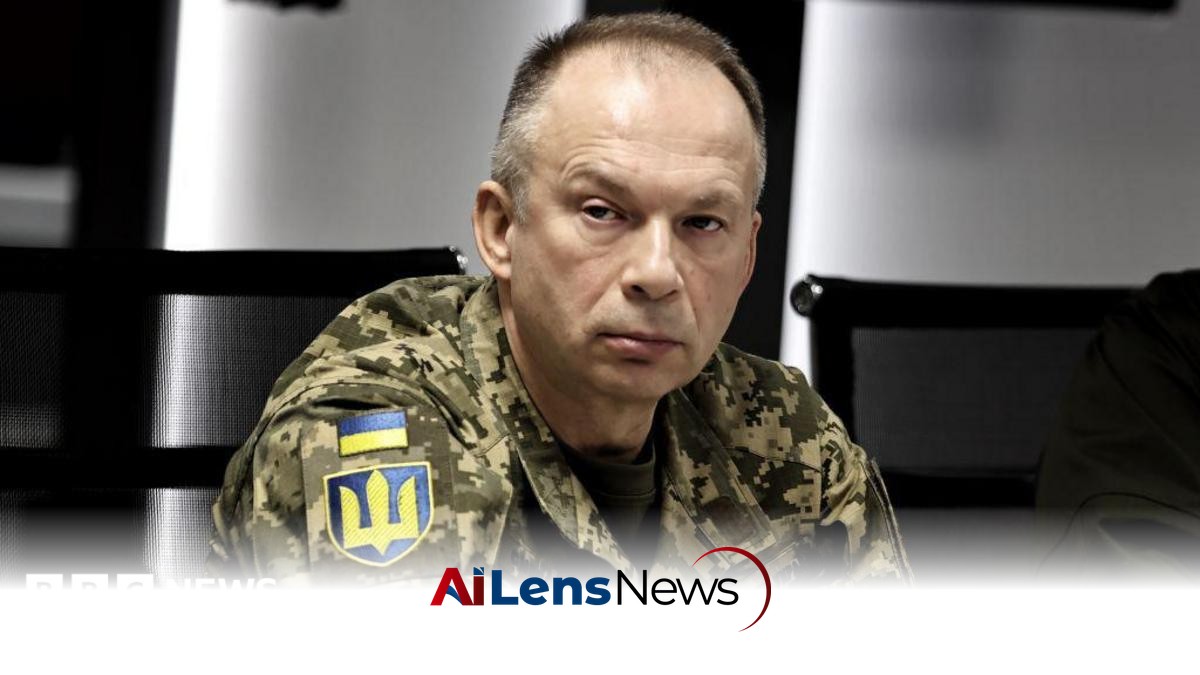


Ukrainian President Volodymyr Zelensky has replaced army chief Oleksandr Syrskyi following public outcry over the removal of popular Defense Minister Mykhailo Fedorov.
New Delhi, India Jul 22, 2026 ALN: Ukrainian President Volodymyr Zelensky has dismissed the country's army commander-in-chief, Oleksandr Syrskyi.
This decision comes just days after the removal of popular Defense Minister Mykhailo Fedorov, a move that triggered street protests across the country. The recent developments have raised significant concerns about the leadership and direction of Ukraine's military efforts, especially in the context of the ongoing conflict with Russia.
Initial rumors suggested that the end of Fedorov's tenure was related to a conflict between him and Syrskyi, which were soon confirmed. Fedorov, 35, has been widely praised for energizing the ministry and transforming the armed forces, as well as leading a drive against corruption. His tenure as defense minister, though brief, was marked by innovative approaches to military strategy and logistics, which resonated with both military personnel and the general populace.
In contrast, Syrskyi, 60, is perceived by many in Ukraine as a Soviet-school commander reluctant to implement radical changes in the army. This perception has been a source of frustration for those advocating for modernization and reform within the military, especially as Ukraine continues to face external threats. The differences in leadership style between Fedorov and Syrskyi highlight a broader debate within Ukraine about military strategy and the need for adaptation in the face of evolving warfare tactics.
Syrskyi has been replaced by Mykhailo Drapatyi, 43, a popular, battle-hardened general who is seen as more aligned with the modernizing vision that Fedorov championed. Drapatyi's appointment is viewed as a strategic move to restore confidence in Ukraine's military leadership during a critical phase of the conflict.
In a video post on social media late on Tuesday, Zelensky thanked Syrskyi for his military campaigns, including his role in successfully defending the capital Kyiv during the initial days of Russia's full-scale invasion in 2022. The defense of Kyiv is often cited as a pivotal moment in the war, showcasing the resilience and determination of Ukrainian forces. However, the ongoing war has highlighted the need for continuous adaptation and improvement in military strategies.
Zelensky also revealed that earlier in the day, he met with Fedorov and offered him a "worthy position in power," although it remains unclear whether the offer was accepted. This move indicates Zelensky's attempt to placate public discontent following Fedorov's dismissal and to retain his innovative approach within the military framework.
Fedorov was last week replaced by Yevhenii Khmara, a former top official at Ukraine's Security Service (SBU). Khmara's background in intelligence is seen as a potentially valuable asset in navigating the complexities of military strategy and national security in the current environment.
"All decisions will be formalized tomorrow," Zelensky added in his post. The urgency of these changes reflects the pressing nature of the ongoing conflict and the need for effective leadership to address the challenges faced by the Ukrainian armed forces.
Meanwhile, Fedorov congratulated Drapatyi on his new role, describing his appointment as a "new hope in the fight of free people for freedom and justice." He stated it was "the voice of change that could not be ignored." This endorsement is crucial as it may help unify the military leadership and restore morale among troops and supporters of the Ukrainian defense efforts.
Fedorov also revealed that he had called Syrskyi to thank him for the defense of the Kyiv region and other "historic battles." This gesture underscores the importance of maintaining professional relationships within the military hierarchy, even amid significant leadership changes.
However, he emphasized the need to move faster and correct previous mistakes. The urgency for reform is palpable, as the military must adapt to the rapidly changing dynamics of warfare, particularly as new technologies and strategies are employed by adversaries.
Fedorov had been appointed defense minister only in January but has been widely praised for using data to analyze and improve performance on the front line. His data-driven approach has been a significant departure from traditional military management styles, emphasizing accountability and efficiency.
A former minister of digital transformation, he was active from the early days of the full-scale invasion by establishing a volunteer "IT Army of Ukraine" to launch cyber-attacks against Russia. This initiative reflects a modern approach to warfare that integrates technology and civilian participation into military efforts, showcasing the innovative spirit that Fedorov brought to his role.
Later, he led a successful fundraising campaign called the Army of Drones and introduced elements of "gamification" to the war, creating a system that awarded Ukrainian military units with credits for hitting Russian assets. These initiatives not only boosted morale but also fostered a sense of community and shared purpose among the military and civilian population.
Fedorov's ousting prompted six days of widespread protests, with Zelensky facing mounting pressure to dismiss Syrskyi. The protests signify a broader discontent with the military leadership and a demand for accountability and reform. Citizens are increasingly vocal about their expectations for effective governance, especially in the context of national security.
Zelensky appeared to have bowed to that pressure by replacing him with Drapatyi, who is seen as a younger, more innovative commander and a close friend of Fedorov. The relationship between Drapatyi and Fedorov is expected to facilitate a smoother transition and a more cohesive approach to military strategy moving forward.
Fedorov's endorsement of Drapatyi is likely to help defuse the political crisis of the past week. However, the underlying issues that led to the protests remain, and the new leadership will need to address them head-on to restore public confidence in the military and the government.
For now, acting Defense Minister Khmara remains in position. President Zelensky has tasked him and Drapatyi with developing a new defense strategy, addressing key issues such as reforming the military corps system, weapons supply, and drones. The emphasis on reform highlights the need for a comprehensive approach to modernizing Ukraine's military capabilities in response to the ongoing threat from Russia.
Syrskyi has not publicly commented on the latest developments. On Monday, he wrote an op-ed for the Militarny website, stating that he viewed his relationship with Fedorov as a working one. This statement reflects a professional acknowledgment of their collaboration, even in light of the recent upheaval.
"If I offended anyone, Mykhailo Albertovych [Fedorov], I'm sorry," he wrote. This expression of regret suggests a desire to maintain unity within the military ranks despite the political turmoil.
Regarding the protests in several Ukrainian cities, Syrskyi noted that the issues surrounding military contracts, procurement, and mobilization are far more complex than they appear in the media. His comments point to the intricate nature of military logistics and the challenges faced in ensuring that troops are adequately supplied and supported.
"Decisions on which people's lives depend are not made with slogans," he said. "Real work, not the public drama surrounding it, wins the war," Syrskyi added. His remarks underscore the importance of focusing on substantive changes rather than being swayed by public sentiment alone.
Protesters continue to seek Fedorov's backing in a position of real authority, where he can drive innovation in Ukraine's battle against Russia. The ongoing demand for Fedorov's involvement in a significant capacity reflects the public's desire for leadership that prioritizes reform and accountability.
If he receives such a position, Zelensky will have repaired the immediate damage. However, many may not forgive him for what they perceive as the wrong choice initially. The political implications of these leadership changes will likely resonate beyond the military, influencing public perception of Zelensky's administration and its ability to navigate the complexities of wartime governance.
To learn more about the latest developments in International Politics, stay updated with our exclusive reports and analyses on AiLensNews.

