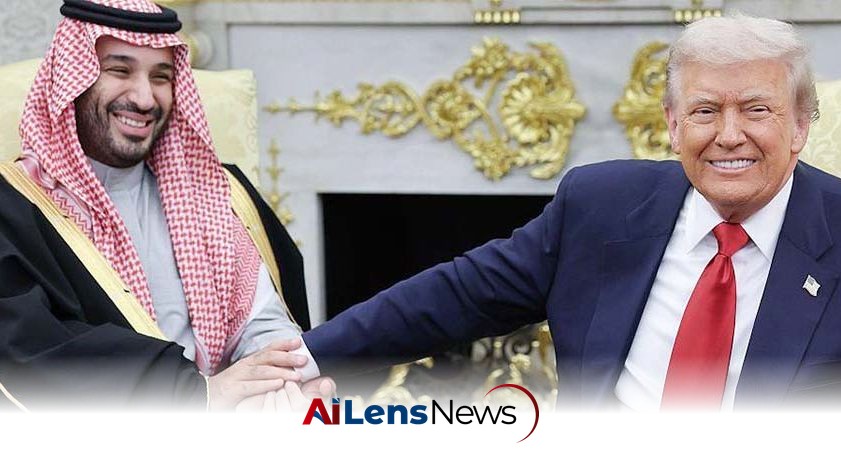


The US and Saudi Arabia have formalized a significant civil nuclear cooperation agreement, enhancing their strategic partnership and paving the way for American companies in Saudi Arabia's nuclear energy sector.
New Delhi, India Jul 23, 2026 ALN: Washington: The United States and Saudi Arabia have signed a landmark civil nuclear cooperation agreement, marking a major step in their strategic partnership and opening the door for American companies to participate in the Kingdom’s planned nuclear energy programme. This agreement not only signifies a mutual commitment to bolster energy security but also reflects a broader geopolitical strategy in a region historically characterized by complex dynamics.
The signing took place on Wednesday (local time) between US Energy Secretary Chris Wright and Saudi Energy Minister Prince Abdulaziz bin Salman. The agreement is referred to as a “123 agreement,” which is a term derived from Section 123 of the US Atomic Energy Act of 1954. This legislation lays out the framework for civil nuclear cooperation between the United States and other nations, ensuring that such collaborations adhere to strict non-proliferation standards.
The US Department of Energy has described this deal as the foundation for a “decades-long, multi-billion-dollar partnership” that is poised to support Saudi Arabia’s civilian nuclear ambitions. This partnership is not merely about energy generation; it also aligns with US commercial interests, strategic objectives, and non-proliferation goals. The implications of this agreement extend beyond immediate economic benefits, potentially influencing regional stability and international relations.
As part of this agreement, American companies will gain expanded access to Saudi Arabia’s emerging nuclear energy sector, which is seen as a vital component of the Kingdom’s broader strategy to diversify its energy mix. Historically, Saudi Arabia has relied heavily on oil for its energy needs, but with fluctuating oil prices and the global shift towards renewable energy, the Kingdom is keen to develop alternative energy sources, including nuclear power. This initiative is aligned with Saudi Arabia's Vision 2030, a strategic framework aimed at reducing the country's dependence on oil and developing public service sectors.
US officials have emphasized that the accompanying safeguards agreement commits both countries to uphold high standards of nuclear safety, security, and non-proliferation. This is particularly important given the sensitive nature of nuclear technology and the potential risks associated with its proliferation. The agreement aims to ensure that nuclear materials and technology are used solely for peaceful purposes, thereby addressing concerns that have historically surrounded nuclear cooperation in the Middle East.
“These agreements reflect our two nations’ shared commitment to strengthening US-Saudi commercial relations, delivering prosperity at home and security to our allies abroad,” Wright stated after the signing. His comments highlight the dual focus of the agreement: fostering economic ties while also enhancing regional security. The notion of security is especially pertinent in the context of ongoing tensions in the Middle East, where nuclear capabilities can be a source of both power and contention.
Wright further noted, “Rest assured, these agreements uphold the highest standards of nuclear safety and nonproliferation, while relying on the world’s best nuclear technology and scientists, designed right here in the United States.” This assertion underscores the confidence the US has in its nuclear technology and the rigorous standards that govern its export. The emphasis on safety and non-proliferation is crucial as it seeks to alleviate fears among neighboring countries and the international community regarding the potential for nuclear arms development.
The Energy Department has indicated that the agreement is part of the broader strategy of the Trump administration to expand US leadership in the global civil nuclear market. This strategy is not only about economic gain but also about reinforcing the United States' position as a key player in global energy discussions, particularly in a region that has historically been a focal point for energy resources.
According to the department, the partnership is expected to expand US nuclear technology exports, create high-paying American jobs, strengthen US energy and national security, reinforce global non-proliferation standards, and deepen strategic ties with Saudi Arabia. The prospect of job creation and economic benefits resonates well within the context of the US economy, especially in light of the ongoing need for high-skilled labor in the nuclear sector.
The agreement builds on President Donald Trump’s executive order on deploying advanced nuclear reactor technologies for national security, which includes provisions promoting American civil nuclear exports under Section 123 of the US Atomic Energy Act. This legislative framework is designed to ensure that nuclear cooperation is conducted in a manner that promotes peace and stability while preventing the proliferation of nuclear weapons.
Under US law, a Section 123 agreement is a prerequisite before Washington can engage in significant civilian nuclear cooperation with another country. Such agreements establish the legal and non-proliferation framework governing nuclear trade, technology transfers, and related cooperation. The legal implications of this agreement are significant, as they set the groundwork for future collaborations and ensure that all parties adhere to international norms regarding nuclear energy.
The agreement will now be sent to the US Congress for review, a procedural step that is crucial for the finalization of the deal. Congressional oversight is a fundamental aspect of US foreign policy, particularly in matters concerning nuclear cooperation, as it allows lawmakers to assess the implications of such agreements on national security and international relations. The review process will likely involve discussions about the potential risks and benefits of the agreement, as well as its impact on regional dynamics in the Middle East.
In conclusion, the US-Saudi nuclear cooperation agreement represents a significant milestone in the evolving relationship between the two nations. It encapsulates a strategic alignment of interests, particularly in the realms of energy security, economic cooperation, and non-proliferation. As both countries move forward with this partnership, the implications for regional stability and global nuclear governance will be closely monitored by international observers and stakeholders. The success of this agreement will depend not only on the technical aspects of nuclear cooperation but also on the broader geopolitical context in which it is situated.
To learn more about the latest developments in International Business, stay updated with our exclusive reports and analyses on AiLensNews.

