

The US and Iran have intensified military actions against each other after two US soldiers were killed in Jordan, with both sides targeting critical infrastructure.
New Delhi, India Jul 19, 2026 ALN: The US launched another round of air strikes against Iran on Saturday night, targeting its coastal surveillance and air defence facilities, US military officials said.
These strikes are part of a broader escalation of hostilities between the two nations, which have been embroiled in conflict for decades, particularly since the US withdrawal from the Joint Comprehensive Plan of Action (JCPOA) in 2018. The JCPOA, commonly known as the Iran nuclear deal, was an agreement reached between Iran and six powers aimed at curbing Iran's nuclear program in exchange for relief from economic sanctions. The US withdrawal led to a significant deterioration in US-Iran relations, with both sides engaging in a series of retaliatory actions.
Iranian state media reported that Qeshm Island in the Strait of Hormuz had been struck. This strategic waterway is crucial for global oil transportation, with a significant percentage of the 's oil passing through it. Centcom stated it also targeted Iran's Revolutionary Guards (IRGC), who were responsible for the attack that killed two US troops in Jordan on Friday, with another service member still missing. The IRGC has been a key player in Iran's military and foreign operations, often acting in a capacity that extends Iran's influence across the Middle East.
In retaliation, Iran's army claimed to have conducted drone attacks on two US bases in Kuwait, according to state media. Bahrain reported intercepting aerial attacks, indicating the conflict's potential to spill over into neighboring nations. The use of drones in this context highlights the evolving nature of warfare, where non-traditional methods are increasingly employed to target enemy assets while minimizing risk to personnel.
The US and Iran have escalated their attacks against each other in recent days, with both sides accused of targeting critical infrastructure. Washington has reimposed its blockade of Iranian ports, a move that is likely to exacerbate the already dire economic situation in Iran, which has been struggling under the weight of international sanctions. Tehran, on the other hand, declared the Strait of Hormuz closed, following the collapse of a preliminary ceasefire that lasted less than a month. This closure could have significant implications for global oil markets and maritime security, as any disruption in this vital shipping route can lead to increased oil prices and heightened tensions among regional and global powers.
On Sunday, the IRGC warned that two vessels had ignored Iranian warnings not to transit the Strait of Hormuz and were subsequently involved in "an accident". It cautioned that all vessels influenced by the US and using unsafe routes would "certainly face accidents". This statement underscores the precarious nature of maritime operations in the region and the potential for miscalculations that could lead to broader conflict.
On Sunday morning, the US embassy in Amman announced that Jordanian authorities had evacuated the international airport and seaport in Aqaba due to a "specific and credible threat". However, a Jordanian government spokesperson denied this, stating that no recent threats had been detected and neither port had been evacuated. This discrepancy highlights the challenges of information dissemination in a conflict zone, where the perception of threats can vary significantly between different actors.
The US military described its eighth consecutive night of attacks on Iran as "designed to further degrade Iran's ability to threaten commercial shipping in the Strait of Hormuz" and to "swiftly punish Islamic Revolutionary Guard Corps forces who launched attacks against American service members in Jordan last night". The sustained nature of these strikes suggests a strategic objective to weaken Iran's military capabilities and deter further aggression.
Verified footage from inside the Jordanian facility showed at least two impacts and an explosion, indicating the severity of the situation on the ground. Such imagery serves to underscore the human cost of the conflict, which has been mounting on both sides.
In response to the deaths of US soldiers, Defence Secretary Pete Hegseth stated: "Godspeed, heroes. Their sacrifice only stiffens our resolve." The US death toll in the conflict has now risen to 16 after an American Navy pilot who went missing earlier this month was declared dead. This rising toll reflects the increasing stakes of the conflict and the potential for further military involvement by the US.
In Iran, at least 50 people have reportedly been killed and over 500 injured in US strikes over the past three weeks, according to the country's health ministry. These figures highlight the significant human toll of military operations and the potential for escalating violence to trigger broader humanitarian crises.
On Saturday, the Gulf Cooperation Council, which includes Bahrain, Kuwait, Oman, Qatar, Saudi Arabia, and the United Arab Emirates, accused Tehran of targeting civilian infrastructure after Kuwait reported that a power plant and a water distillation plant had been hit. Iran claimed it had also targeted an air base and a depot used by US forces in Kuwait. This exchange of accusations points to the complexities of modern warfare, where the distinction between military and civilian targets can become blurred, raising ethical and legal concerns regarding the conduct of hostilities.
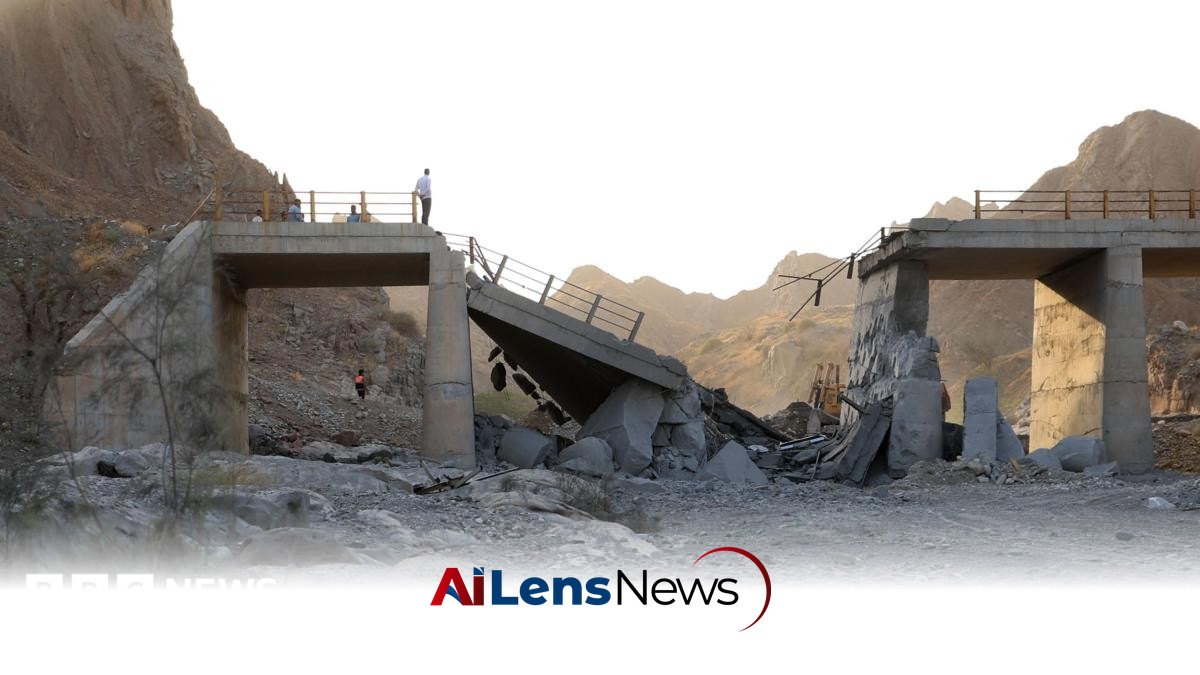
The US has asserted that it "carried out strikes exclusively on military targets, including military logistics infrastructure" after Iran alleged that bridges and a station were hit. Under international law, attacking civilians or civilian areas is illegal; however, certain civilian objects may lose their protection if used to support the enemy's war effort. This legal framework complicates the situation, as both sides may seek to justify their actions based on the perceived military necessity.
Washington and Tehran had struck a preliminary deal to end the war in June, but the agreement unraveled within weeks, with President Donald Trump declaring it "over" on July 8. The collapse of this ceasefire agreement illustrates the fragility of diplomatic efforts to resolve longstanding disputes and the difficulties in achieving lasting peace in the region.
Late on Saturday, Iran's Supreme Leader Mojtaba Khamenei stated in a written statement that America's "repeated breaches" of the agreement had "laid bare a fundamental truth: the signature of the US president is utterly worthless and devoid of credibility". This statement reflects the deep mistrust that characterizes US-Iran relations and the challenges that any future diplomatic engagement will face. As both sides continue to escalate their military actions, the potential for miscalculation and unintended consequences looms large, raising concerns about the broader implications for regional stability and international security.
To learn more about the latest developments in Wars & Conflicts, stay updated with our exclusive reports and analyses on AiLensNews.

