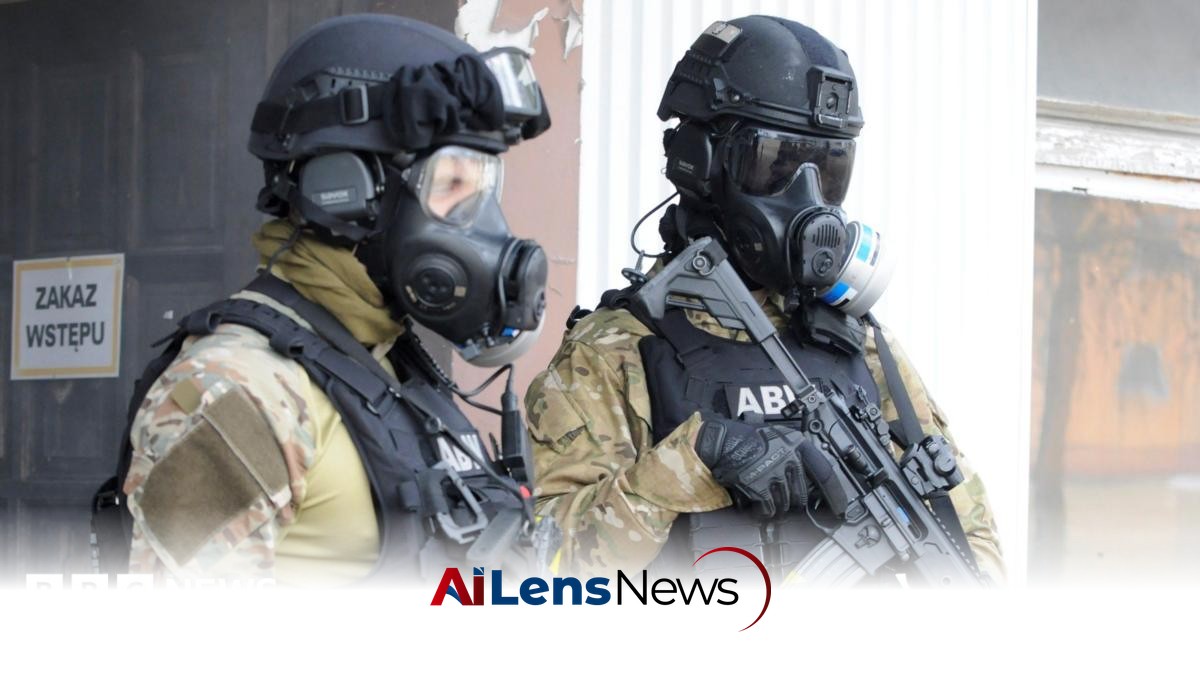


An 18-year-old Ukrainian man faces charges for sabotage acts aimed at inciting tensions between Poland and Ukraine, according to Polish authorities.
New Delhi, India Jul 16, 2026 ALN: Prosecutors in Poland have charged an 18-year-old Ukrainian man with carrying out sabotage acts on behalf of Russian intelligence aimed at inciting tensions between Poland and Ukraine.
The suspect, identified as Illia K, under Polish privacy laws, was charged with 47 criminal acts between November 2024 and August 2025, when he was arrested. The case has drawn significant media attention not only because of the nature of the alleged crimes but also due to the broader context of Polish-Ukrainian relations, which have been fraught with historical tensions and modern geopolitical implications.
The alleged sabotage included desecrating memorials to Polish victims of the UPA, the Ukrainian Insurgent Army that took part in the murder of tens of thousands of Poles during War II, an event commonly referred to as the Volhynia massacre. This historical episode remains a sensitive topic in Polish-Ukrainian relations, as it evokes painful memories and differing narratives about the wartime experiences of both nations.
"The aim was to incite ethnic tensions between Poland and Ukraine," Poland's Internal Security Agency (ABW) said in a statement. The agency's assertion highlights the ongoing concerns that external actors, particularly Russian intelligence, may seek to exploit historical grievances to destabilize relationships between neighboring countries. Poland has been particularly vigilant in monitoring espionage activities, especially in light of the ongoing conflict in Ukraine and its implications for regional security.
Prosecutors stated that although the suspect himself had acted for financial rather than ideological reasons, most of the alleged acts were "for the benefit of foreign intelligence." This distinction raises questions about the motivations behind such criminal acts and the extent to which individuals may be manipulated or incentivized to engage in activities that serve the interests of foreign powers.
The ABW reported in May that it had launched 48 espionage investigations last year, more than double the number in 2024. This increase reflects a heightened awareness and response to perceived threats from Russian intelligence, which has been accused of attempting to discredit Poland internationally and exploit "historical ethnic antagonisms, mainly in Polish-Ukrainian relations," it added. The implications of these investigations extend beyond individual cases, as they signal a broader struggle for influence and narrative control in Eastern Europe.
The 18-year-old was also charged with making preparations to fly a drone over Polish President Karol Nawrocki's vehicle during last year's Polish Armed Forces' Day parade in Warsaw on August 15. He was arrested three days before the event took place. Such an alleged act underscores the potential seriousness of the threats posed by individuals acting on behalf of foreign intelligence services, particularly in a climate where national security is a paramount concern.
The suspect, who faces life in prison if found guilty, allegedly recruited people to take part in the crimes, using cryptocurrencies registered in Russia and China to pay them, the ABW said. The use of cryptocurrencies in this context raises significant questions about the evolving methods of financing illicit activities and the challenges law enforcement faces in tracking and regulating such transactions.
According to prosecutors, Illia K was given tasks by an unidentified person via a messaging service. He sent photos back proving he had carried out the tasks. This method of communication and verification reflects a modern approach to espionage and sabotage, where anonymity and digital platforms can facilitate covert operations.
He allegedly vandalized the Monument to the Jewish Heroes of the Warsaw Ghetto in the Polish capital and monuments to the Polish victims of the Volhynia massacre in Domostawa and Wrocław, by placing inscriptions and symbols that glorified the UPA. Such actions not only target specific historical narratives but also serve to inflame existing tensions between communities, highlighting the delicate balance of memory and identity in post-war societies.
Up to 100,000 of the minority Polish population of what was then Poland and is now western Ukraine were killed during the Volhynia massacre between 1943 and 1945 as the UPA fought to create an independent Ukraine for Ukrainians. This historical context is crucial for understanding the emotional weight and political ramifications of the alleged acts of sabotage. The painful issue has bedeviled relations between the neighbors ever since, complicating efforts toward reconciliation and mutual understanding.
At times, Kyiv banned Polish requests to exhume the victims' remains from mass graves, although exhumations have resumed. This contentious issue reflects the broader struggle over historical memory and the interpretation of past events, which can significantly impact current diplomatic relations.
The massacre was resurrected in May when Ukrainian President Volodymyr Zelensky issued a decree naming a Ukrainian military unit after the "Heroes of the UPA." This decision sparked outrage in Poland, leading to a diplomatic fallout. In response, Nawrocki stripped the Ukrainian leader of Poland's highest state honor - the Order of the White Eagle - something that had happened only once before in 300 years. Such actions highlight the fragility of international relations and the potential for historical grievances to resurface in contemporary politics.
Poles and Ukrainians view the UPA very differently, said Wojciech Konończuk, director of Warsaw's Office for Eastern Studies. "For Ukrainians, they are heroes because they fought the Soviets," he told the BBC in a recent interview. "Many years after the Second War, the UPA were fighting the Soviet occupation, so Ukrainians only want to remember that part of the history of the formation after 1945. So they don't know, or don't want to know what were the UPA activities before 1945." This divergence in historical interpretation complicates dialogue and reconciliation efforts, as each side grapples with its own narratives and collective memories.
"For Poles, the UPA were a criminal structure responsible for the mass killing of the Polish population. At the same time, the level of knowledge in Poland of the history of UPA after the Second War - basically they were fighters against the Soviets - is usually non-existent in Polish society," he added. This lack of mutual understanding can exacerbate tensions and hinder efforts to build a cooperative future between Poland and Ukraine, especially in a geopolitical landscape marked by external pressures and historical legacies.
To learn more about the latest developments in Regions & Countries, stay updated with our exclusive reports and analyses on AiLensNews.

