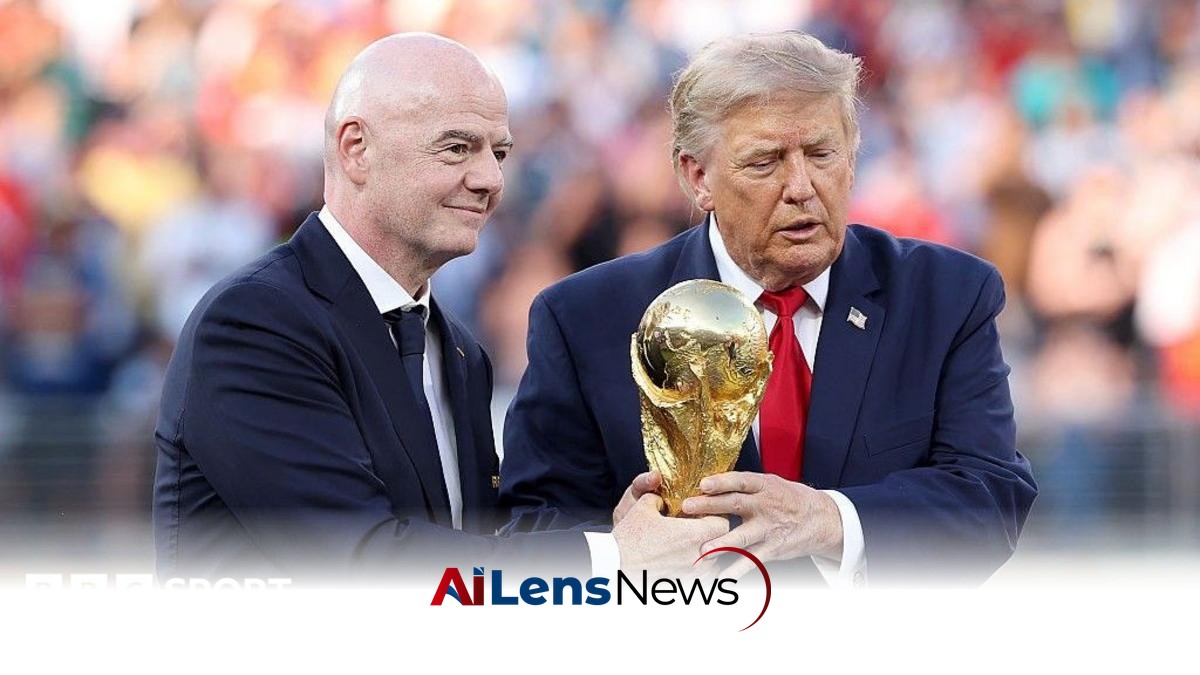


Uefa and Prime Minister Andy Burnham criticize Fifa's proposal to seek private investment in its competitions, including the Cup, raising concerns over football's governance.
New Delhi, India Jul 28, 2026 ALN: European football's governing body Uefa and Prime Minister Andy Burnham have criticized proposals from Fifa to seek private investment in its competitions, including the Cup.
Fifa - the sport's global governing body - said it intends to expand "football development funding" to more than $10bn (£7.5bn) and invite third-party investment in a new venture. This ambitious plan, if approved, would mark a significant shift in the financial landscape of international football, potentially altering the way the sport is governed and funded.
The story was first reported in the Financial Times and the Times, with the latter claiming the plans could potentially earn Fifa president Gianni Infantino tens of millions of pounds. Such financial incentives for Fifa's leadership have raised eyebrows and concerns about the motivations behind these proposals, with critics suggesting that they could prioritize profit over the integrity of the sport.
In a lengthy statement outlining the proposals, Fifa says it will "invite third parties to make minority, non-controlling investments" in a new subsidiary - Fifa Forward Enterprise (FFE) - to "consolidate" its commercial and event operations. This structure aims to attract private capital while ostensibly maintaining Fifa's control over football governance. However, the implications of such a move have sparked a debate about the future of football's governance and its accessibility to fans.
The plan still needs to be passed by a vote of Fifa's 211 member nations. But if approval is granted, Fifa says Thrive Eternal is expected to lead the proposed investor group for FFE. Thrive is an American venture capital firm founded by Joshua Kushner, the brother of US President Donald Trump's son-in-law Jared. The involvement of a firm with political connections has added another layer of complexity to the situation, prompting concerns about potential conflicts of interest and the influence of private investors in a sport traditionally governed by national associations.
Fifa sources have told BBC Sport there has been no discussion over Infantino, or anyone else, becoming chief executive of FFE. This statement raises questions about the governance structure of the new subsidiary and how it will operate independently while still being tied to Fifa's overarching authority.
In its statement, Fifa did say Infantino and the rest of the organization "has a duty" to control the development of the project. However, Fifa has not clarified what that entails or what the specific nature of Infantino's involvement will be, leaving stakeholders in the dark about the potential implications of this new venture.
As part of its pitch, Fifa says all member associations will be able to access up to $20m (£15m) in "one-off capital" to fund development. This funding could be particularly beneficial for smaller football associations that struggle to generate revenue through traditional means. Infantino stated that every nation should benefit from the riches football creates, emphasizing Fifa's commitment to fostering growth at all levels of the sport.
However, Uefa has issued a statement criticizing the proposals, which it claimed "crosses a line". The concern from Uefa reflects a broader apprehension about the increasing commercialization of football and the potential for private investors to prioritize profit over the sport's integrity.
Burnham said going ahead with the idea would mean Fifa had "sold out". He wrote on X: "Let me say this very directly. Football does not belong to investors. It belongs to the people who fill the stands and who stand on the touchline week in, week out, rain or shine. The Cup is not a product. It is the greatest competition in sport, and it was never anyone's to sell. Dress the deal up however you like. Once you have sold a piece of it, you have sold out. Football belongs to the fans. It always has, and it always will." Burnham's passionate defense of football's grassroots highlights the tension between commercial interests and fan engagement in the sport.
The Football Association has stated that it was unaware of Fifa's plans when they were released, indicating a lack of communication and transparency within the global football governance structure. This has further fueled criticism of Fifa's approach and raised questions about the decision-making processes that govern the sport.
Fifa argues its plan, with a dedicated commercial subsidiary, is similar to that used by governing bodies in other sports. For instance, in 2018, Premiership Rugby announced a partnership with private equity and investment advisory firm CVC Capital Partners, which has been seen as a successful model for generating revenue. However, Uefa views Tuesday's announcement as a step too far, raising concerns that it could lead to further expansion of Fifa competitions in order to raise revenue, both in terms of size and frequency, thus threatening Uefa's own lucrative competitions.
"This crosses a line that football's governing institutions should never cross," Uefa stated. "Uefa takes it extremely seriously. So should every National Football Association. So should every stakeholder who cares about the future of the game. The soul and governance of football are not assets to trade - especially with zero transparency as to who gains financially. None of us are the owners of football. It is not Fifa's to sell." This statement underscores the philosophical divide between Fifa's commercial ambitions and Uefa's commitment to preserving the sport's integrity.
Fifa maintains that it would retain control of FFE "and exclusive authority over football governance, competitions, the international match calendar and all regulatory and sporting decisions". This assertion is intended to reassure stakeholders that Fifa's involvement will not compromise the governance of the sport. However, the actual implementation of these assurances remains to be seen.
Football finance expert Kieran Maguire told BBC Sport that the proposals are "an opportunity for Fifa to generate even more money" and that there are "an awful lot of interested parties in the game who want a slice of the action." This perspective highlights the financial motivations driving these proposals, raising concerns about the long-term impact on the sport's sustainability.
Maguire added that there was likely going to be pressure for a 64-team Cup and for it to take place every two years if the FFE organization is set up because it has "got to make money in order to satisfy the shareholders". This potential expansion could fundamentally alter the nature of international competitions, leading to a dilution of their prestige and value.
The matter is likely to be a topic of conversation at the next Fifa Council meeting in the autumn and then around the Fifa Intercontinental Cup, featuring Champions League winners Paris St-Germain, in December. The discussions at these meetings will be critical in shaping the future of Fifa's proposals and addressing the concerns raised by various stakeholders.
The proposal could be voted on by all 211 members at the Fifa Congress in Morocco in March. The outcome of this vote will have significant implications for the future of football governance, potentially setting a precedent for the involvement of private investment in the sport.
Quite aside from the unease many will feel at the potential involvement of private equity investors - and someone with close ties to Donald Trump - being at the center of this, there is also a fight being played out for control of the game. Fifa's stated aim of developing the sport globally is unsettling for those closer to home, who fear that such ambitions could undermine local football structures and traditions.
One senior English football executive told BBC Sport privately that today's announcement was the biggest story since the European Super League plan - and raised just as many concerns. The European Super League proposal, which faced widespread backlash from fans, players, and governing bodies, serves as a cautionary tale for Fifa as it navigates this new venture.
The issue is if there is a drive to generate more finance through Fifa competitions, that will mean expansion - both in the number of teams and the frequency of both the Cup and the Club Cup. Some also feel the scale of the tournaments will be such that they may end up being played in the winter months. This potential scheduling conflict could exacerbate the already congested football calendar, which is under pressure from domestic leagues and other international competitions.
That would put more pressure on the calendar, which is already being squeezed at domestic level, partly because of the expansion of European competition. The basic reality is that while $20m is not a significant sum in the English game, for many countries globally, it is huge - and will be supported. This disparity in financial resources among member associations may lead to divisions within the sport, as wealthier nations could dominate discussions and decision-making processes.
However, it still remains to be seen what the respective stakeholders - associations, leagues, clubs, and players - make of the plan. The response from these groups will be crucial in determining the viability of Fifa's proposals and the potential ramifications for the future of football governance.
To learn more about the latest developments in International Politics, stay updated with our exclusive reports and analyses on AiLensNews.

