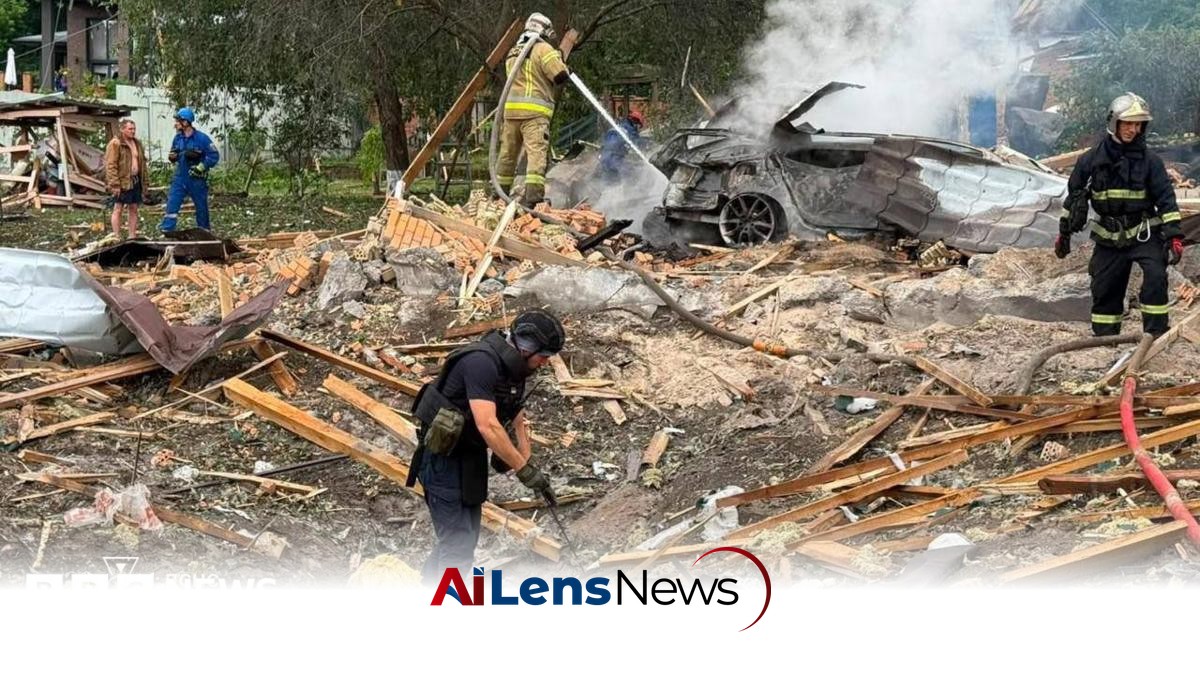


A Russian missile attack on a drone exhibition near Kyiv resulted in at least ten fatalities and numerous injuries, raising concerns over security at public events.
New Delhi, India Jul 25, 2026 ALN: At least 15 people have been killed in Russian attacks on Ukraine, including 10 dead in ballistic missile strikes on an exhibition near Kyiv showcasing drone technology.
The recent missile strikes underscore the ongoing and escalating conflict between Russia and Ukraine, which has seen significant military actions and civilian casualties since the full-scale invasion began in February 2022. The exhibition, which was set to highlight advancements in drone technology, was attended by key figures in the defense sector, illustrating the importance of such events in the context of Ukraine's military strategy against Russian aggression.
Ukrainian President Volodymyr Zelensky stated that approximately 100 individuals were injured in the daytime assault on the exhibition. This attack not only claimed lives but also raised concerns about the safety of defense technology events in Ukraine, which are crucial for showcasing the nation's military capabilities and fostering partnerships with international defense entities.
In addition to the casualties at the exhibition, five people were killed by Russian glide bombs in the eastern city of Sloviansk. The attacks reflect a broader pattern of violence that has characterized the conflict, with civilians often caught in the crossfire. Early on Saturday, military officials confirmed the deaths of two men in the northern city of Sumy, further illustrating the widespread impact of the strikes across different regions of Ukraine.
On Friday evening, Zelensky indicated that he had received intelligence suggesting Russia was preparing for another massive missile strike, potentially within the next 48 hours. This warning highlights the precarious security situation in Ukraine, where the threat of missile attacks looms large, particularly following significant military engagements.
A Ukrainian strike overnight on Thursday resulted in six deaths and 26 injuries in the Russian city of Kirov, located more than 1,000 km (600 miles) behind the front line. This attack was part of a broader strategy by Ukraine to target Russian military capabilities and logistics, aiming to disrupt supply chains that support the ongoing war effort. Ukraine also targeted warehouses of Wildberries, Russia's largest online retailer, indicating a shift in tactics to strike at economic targets that could indirectly support military operations.
Following the attacks near Kyiv, there were initial concerns for the safety of Defense Ministry adviser Serhiy Beskrestnov, known as Flash, and Lyuba Shypovych, who has been involved in developing technology for the Ukrainian army. Their presence at the event underscores the high stakes involved in military technology development and the risks faced by those working in this critical sector. Both individuals later confirmed their safety via social media, with Beskrestnov stating he had avoided the event due to security concerns, highlighting the constant vigilance required in such a volatile environment.
Ukrainian air force spokesman Yuri Ihnat reported that the attack involved three ballistic missiles, with only one being intercepted. The effectiveness of Ukraine’s air defense systems is a critical factor in mitigating the impact of such attacks, but the ability to intercept all incoming threats remains a significant challenge.
Russia confirmed the attack, with its Defense Ministry stating that high-precision long-range weaponry was used on a site where drones intended for targeting civil sites in Russia were being demonstrated. The Russian government's narrative frames the attack as a preemptive measure against what it claims are Ukrainian plans to use the showcased technology against Russian civilians, which adds a layer of complexity to the conflict's propaganda battle.
The ministry claimed that producers of drones, along with representatives of Ukraine's drone forces and security services, were present and directly involved in planning strikes on Russian territory. This assertion reflects Russia's strategy of portraying Ukraine as a direct threat to its national security, justifying its military actions in the eyes of its domestic audience.
This incident marks at least the third time since Russia's full-scale invasion in 2022 that an exhibition of this nature has been targeted. The repeated targeting of defense exhibitions raises questions about the safety protocols in place for such events and the broader implications for Ukraine's defense strategy. There has been widespread outrage regarding the holding of such a public event, which was reportedly widely advertised, indicating a potential oversight in assessing security risks.
President Zelensky announced that an investigation into the incident is underway, while Ukraine's prosecutor-general is working to determine who authorized the event and what safety measures were implemented. The outcome of this investigation could have significant ramifications for how future defense-related events are organized and secured, as well as for accountability within the Ukrainian government.
The attack occurred shortly after Ukrainian strikes on a factory in Kirov and warehouses in north-west Russia. These strikes are part of a broader strategy by Ukraine to target Russian military infrastructure and logistics, aiming to disrupt supply chains that support the ongoing war effort. Zelensky noted that one of the most critical military facilities in Kirov, supplying components for aircraft and missile equipment used in strikes against Ukraine, had been targeted. This highlights the interconnected nature of military supply chains and the importance of disrupting them to weaken the enemy's capabilities.
Friday's attacks on at least two Wildberries facilities in the St Petersburg area are part of a series of strikes over the past week. These attacks have significantly impacted numerous small and medium-sized businesses in Russia, illustrating the economic ramifications of the conflict that extend beyond the battlefield. The targeting of commercial logistics hubs like those operated by Wildberries indicates a strategic shift in Ukraine's military objectives, aiming to undermine the Russian economy and its ability to sustain military operations.
After months of drone strikes on oil depots and refineries, Kyiv is now targeting logistics hubs like those operated by Wildberries, as they can be utilized to procure military equipment, aiming to disrupt supplies to the Russian army. This tactical evolution reflects Ukraine's adaptive military strategy in response to the changing dynamics of the conflict.
Meanwhile, Zelensky is expected to travel to the US next week, with a meeting scheduled with President Donald Trump on Tuesday, as Washington seeks to revive peace talks between Ukraine and Russia. The diplomatic efforts to resolve the conflict come amid ongoing military actions, highlighting the complex interplay between warfare and diplomacy in the region.
Trump ally Laura Loomer, who is currently in Kyiv, quoted Zelensky as stating his intention to attend the funeral of US Senator Lindsey Graham on the same day. This statement underscores the international connections and implications of the conflict, as well as the role of foreign political figures in shaping the narrative surrounding the war.
Additionally, Romanian President Nicusor Dan reported that a Romanian F-16 fighter jet shot down a Russian drone that breached the country's airspace on Friday, prompting alerts across several eastern and southeastern regions. This incident highlights the broader regional security concerns stemming from the conflict, as neighboring countries remain vigilant against potential spillover effects from the war in Ukraine.
To learn more about the latest developments in Wars & Conflicts, stay updated with our exclusive reports and analyses on AiLensNews.

