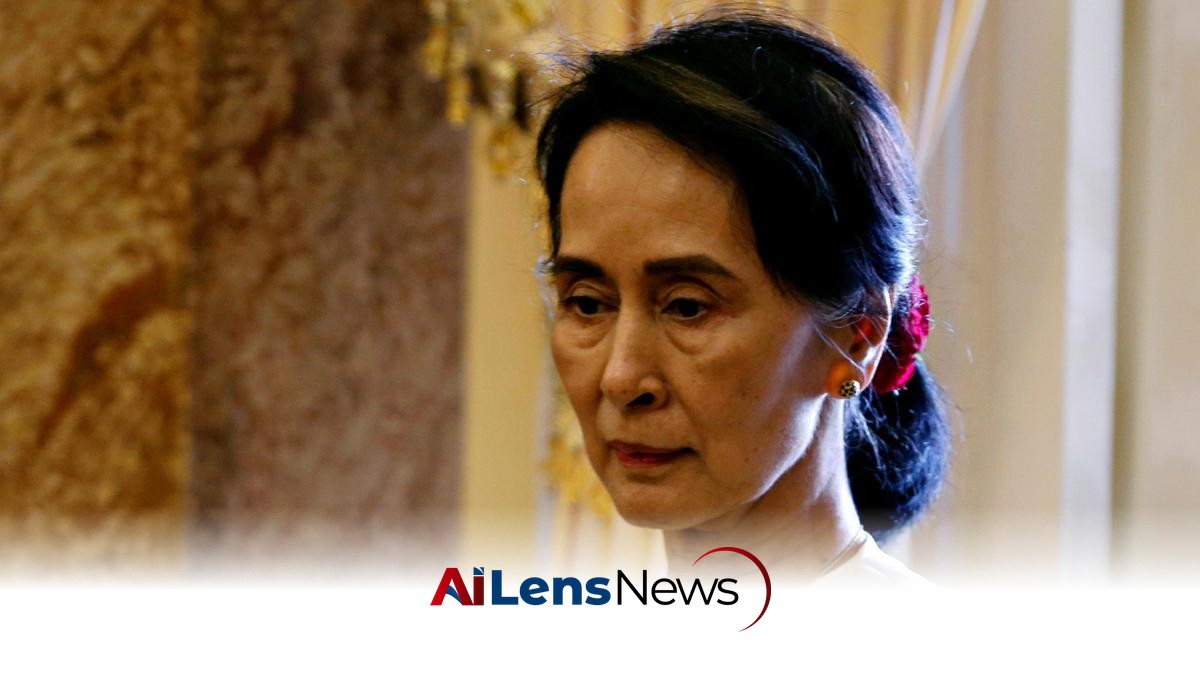


Myanmar's Foreign Minister reassures ASEAN that Aung San Suu Kyi is in good health and will be cared for during her imprisonment, amidst ongoing civil strife.
New Delhi, India Jul 13, 2026 ALN: The recent assurances provided by Myanmar’s Foreign Minister regarding the well-being of Aung San Suu Kyi, the country’s former leader, come amidst a backdrop of ongoing political turmoil and conflict following the military coup that ousted her government in February 2021. The coup resulted in widespread protests and civil disobedience, leading to a brutal crackdown by the military, which has been met with armed resistance from various ethnic and pro-democracy groups. This complex situation has led to a significant humanitarian crisis, with thousands displaced and an estimated 100,000 lives lost due to the ensuing violence.
Aung San Suu Kyi, a Nobel Peace Prize laureate, was detained by the military junta shortly after the coup and has since been sentenced to a total of 27 years in prison on various charges. Her supporters contend that these charges are politically motivated, aimed at removing her from the political landscape and suppressing the democratic aspirations of the Myanmar people. The international community, including the United Nations and numerous human rights organizations, has condemned her detention and called for her release, viewing it as a critical step towards restoring democracy in Myanmar.
During a meeting on July 12, 2026, ASEAN's special envoy to Myanmar, Maria Theresa Lazaro, reported that the Myanmar Foreign Minister had characterized Suu Kyi as “a sister” and assured that she was in good health. This statement is significant as it reflects Myanmar’s attempt to project a sense of normalcy and care for Suu Kyi amidst widespread criticism of its human rights record. However, skepticism remains regarding the true conditions of her detention, as her exact whereabouts have not been publicly disclosed, raising concerns about transparency and accountability.
ASEAN, comprising 11 Southeast Asian nations, has faced challenges in addressing the crisis in Myanmar. The bloc's diplomatic efforts have been hampered by the military’s refusal to engage with the five-point consensus peace plan, which was agreed upon in April 2021. This plan includes calls for an immediate cessation of violence, dialogue among all parties, and the provision of humanitarian assistance. Despite these goals, progress has been minimal, and the situation on the ground has continued to deteriorate.
The recent meeting between ASEAN diplomats and their Myanmar counterpart marked the first in-person engagement since the coup, emphasizing the bloc’s desire to revive its peace initiative. However, the meeting also highlighted the complex dynamics at play, as the military-backed government in Myanmar has openly rejected the ASEAN peace initiative, labeling it as foreign interference. This rejection raises questions about the effectiveness of ASEAN’s approach and the possibility of meaningful dialogue in the future.
Maria Theresa Lazaro's defense of engaging with Myanmar’s Foreign Minister Tin Maung Swe illustrates a broader strategy within ASEAN to foster dialogue and potentially facilitate humanitarian access. Lazaro emphasized that engagement is a gradual process, stating, “It can’t be done in one stroke... it’s evolving and I think all of these engagements are very important.” This perspective reflects a recognition of the need for sustained diplomatic efforts, even in the face of significant challenges.
The call for engagement with Myanmar’s leadership is not without its critics. Many observers argue that ASEAN’s continued interaction with a government that has shown little commitment to the peace process undermines the bloc’s credibility and moral authority. The recent passage of a motion by Myanmar’s pro-military parliament, which criticized ASEAN’s peace initiative and urged the government to reject it, further complicates the situation. This motion indicates a hardening of positions within Myanmar’s ruling elite and suggests that the military is unwilling to make concessions that could lead to a peaceful resolution of the conflict.
Despite these challenges, Lazaro and other ASEAN representatives remain committed to the five-point consensus, viewing it as a necessary framework for dialogue among conflicting parties. The ongoing humanitarian crisis in Myanmar, characterized by widespread displacement and suffering, underscores the urgency of finding a resolution. Lazaro’s assertion that the ASEAN plan is a framework for initiating dialogue and improving relief efforts highlights the bloc’s recognition of its role in addressing the humanitarian needs of the Myanmar population.
The need for verification regarding Aung San Suu Kyi’s health has been echoed by other ASEAN member states, including Thailand. Foreign Minister Sihasak Phuangketkeow emphasized the importance of allowing access to Suu Kyi to verify claims about her well-being. This call for transparency is indicative of broader concerns regarding human rights abuses in Myanmar and the treatment of political prisoners. Access to Suu Kyi could serve as a critical test of the military’s willingness to engage with the international community and adhere to basic human rights standards.
Myanmar’s Foreign Ministry has stated that discussions during the recent meeting focused on enhancing relations and constructive cooperation for restoring Myanmar’s full participation in ASEAN. However, this assertion has been met with skepticism from various political and ethnic minority groups in Myanmar, who have expressed concern about ASEAN's engagement with a government that is actively rejecting its peace initiative. A joint statement from 20 political and ethnic minority groups emphasized the difficulties in reconciling high-level engagement with a party that has openly repudiated ASEAN’s framework, calling for a more inclusive approach that considers the voices of all stakeholders in Myanmar.
The situation in Myanmar remains fluid and complex, with the military junta facing increasing resistance from both armed groups and civil society. The international community continues to watch closely, urging all parties to prioritize dialogue and reconciliation. As ASEAN navigates this challenging landscape, the effectiveness of its diplomatic efforts will be critical in determining the future of Myanmar and the prospects for peace and stability in the region.
To learn more about the latest developments in Regions & Countries, stay updated with our exclusive reports and analyses on AiLensNews.

