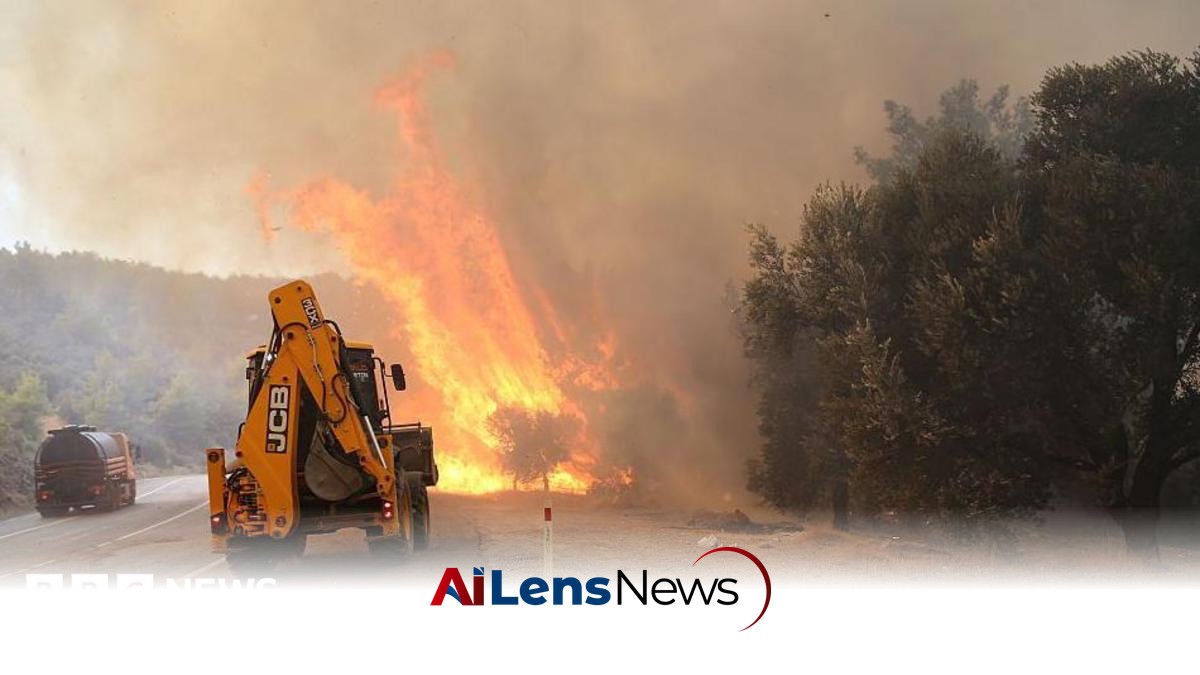


Two firefighters have tragically lost their lives battling wildfires in Crete, as southern Europe faces a series of devastating fires exacerbated by extreme weather conditions.
New Delhi, India Jul 29, 2026 ALN: Two Greek firefighters have died after they became trapped tackling a wildfire that swept through the Rethymno area of Crete.
The tragic incident underscores the extreme challenges faced by firefighting teams in Southern Europe, where a series of devastating wildfires have wreaked havoc during an unusually hot summer. The wildfires in Crete were exacerbated by gale-force winds, which whipped up the flames and posed significant risks to both residents and emergency responders. In response to the rapidly spreading fire, several villages in the vicinity were evacuated, highlighting the urgency of the situation.
In addition to the crisis in Greece, wildfires have also broken out in southern Turkey, particularly affecting the Muğla province. The main highway connecting Fethiye to Antalya was closed, and part of a local hospital had to be evacuated due to the proximity of the flames. This series of events has raised concerns about the broader implications of climate change and the increasing frequency and intensity of wildfires across the region.
As if the situation in Greece and Turkey were not dire enough, a fourth heatwave of the summer has begun to impact Spain and France. Firefighters in these countries are on high alert, working tirelessly to prevent the re-ignition of major wildfires that had only recently come under control. Witnesses in Crete reported that several fires broke out simultaneously, with the most severe fire front extending as far as 15 kilometers (approximately 9.3 miles). The fire department confirmed that the two firefighters who lost their lives were engaged in operations near Rethymno, a city located on the north coast of Crete.
The wildfires are not confined to Crete alone; other regions in Greece, including the islands of Paros and Lesbos in the Aegean Sea, as well as the southern town of Trifylia on the Greek mainland, have also experienced significant fire outbreaks. The widespread nature of these fires raises questions about the effectiveness of current firefighting strategies and the need for improved resources and planning to combat such natural disasters.
In Spain, Prime Minister Pedro Sánchez has issued a stark warning regarding the wildfire situation near Madrid, describing the next 12 hours as "decisive" in efforts to control the blaze. He noted that while conditions were progressing favorably, the risks remained high due to increased temperatures, lower humidity, and the potential for gusty winds. The wildfires have already caused extensive damage, with more than 43,000 hectares (108,000 acres) burned in Burgohondo, located in Ávila province, which is about 150 kilometers (93 miles) west of Madrid. This incident has now been classified as the largest recorded wildfire in Spanish history, contributing to a grim total of over 207,000 hectares of land burned by wildfires across Spain in 2023 alone.
Francisco Bolaños, one of the officials managing the firefighting operations, expressed cautious optimism, noting that while the fire had not moved during the night, there were still concerns about its potential to reignite due to the prevailing high temperatures. The focus of firefighting efforts has shifted to stabilizing a perimeter of 180 kilometers (112 miles), a daunting task given the scale of the fire and the environmental conditions.
Fortunately, authorities have begun allowing thousands of residents to return to their homes as restrictions have been lifted in areas affected by the fires, including parts of Toledo, Madrid, Ávila, and Castellón. In the Madrid region alone, approximately 24,000 individuals have been cleared to return, with lockdowns on an additional 20,000 residents also lifted. Among those returning were about 1,000 residents from the towns of Navas del Rey and Chapinería, who had been sheltered in Leganés, a town on the southwestern outskirts of Madrid.
The mayor of Chapinería, Lucía Moya, spoke to the media about the severe consequences faced by the town, stating that many residents had lost their homes and jobs due to the fires. She emphasized that the path to recovery would be long and challenging. Meanwhile, in the nearby Tiétar Valley, around 2,000 people were forced to evacuate, with many receiving assistance from local volunteers in the town of Talavera de la Reina. As of Wednesday morning, approximately 300 evacuees remained in temporary shelters, and Mayor José Julián Gregorio assured the public that they would continue to receive the same level of care as they had since the onset of the crisis.
In addition to the ongoing struggles in Spain and Greece, another fire remains out of control in Vall d'Uixó, located northwest of Valencia. The situation underscores the widespread nature of the wildfire crisis affecting Southern Europe this summer. Climate change continues to play a significant role in exacerbating these extreme weather events, with rising global temperatures leading to increased heatwaves, greater pressure on water supplies, and more intense wildfire activity across the continent.
In southwestern France, officials are closely monitoring the situation in the Gironde region, where large fires have been described as "still stabilised" despite several flare-ups. However, officials have warned of the dangers posed by dry winds and soaring temperatures, which could further complicate firefighting efforts. The mayor of Le Barp, located south-west of Bordeaux, expressed concern about the deteriorating conditions and urged residents to remain vigilant.
Flare-ups have also been reported near Lanton, on the eastern shore of the Bay of Arcachon, prompting authorities to take precautionary measures. Gironde and the Landes regions are among 16 departments under an orange heatwave alert, a classification indicating heightened risks associated with extreme temperatures.
Fire services in France have had to implement special measures to protect critical sites linked to the country’s defense and aerospace industries, including plants that manufacture hazardous materials for missiles and rockets. The potential for wildfires to threaten such sensitive sites adds an additional layer of complexity to the firefighting efforts and highlights the need for comprehensive disaster preparedness strategies.
While no fatalities have been reported in the fires surrounding Madrid and Castellón, the situation remains dire in southern Spain, where authorities in Seville have confirmed that a woman who suffered severe burns from the Los Gallardos fire in Almería earlier this month has succumbed to her injuries in the hospital. This incident is part of a larger tragedy, as fourteen individuals lost their lives in the Almería fires, which included nationals from the UK, Belgium, the US, France, and Spain, illustrating the widespread impact of these wildfires on communities and families across multiple nations.
In neighboring Portugal, wildfires are also raging, particularly in the northeastern district of Vila Real. Civil protection officials have reported an active fire front of approximately one kilometer in length and are closely monitoring the situation, especially around a local water treatment plant and a gas depot near the town of Valpaços. The ongoing crisis in Portugal further emphasizes the regional scale of the wildfire threat, as neighboring countries grapple with similar challenges.
To learn more about the latest developments in Wars & Conflicts, stay updated with our exclusive reports and analyses on AiLensNews.

