

India criticizes the U.S. approach to forced labour tariffs, highlighting inconsistencies while exempting 1,600 critical items and advocating for bilateral dialogue.
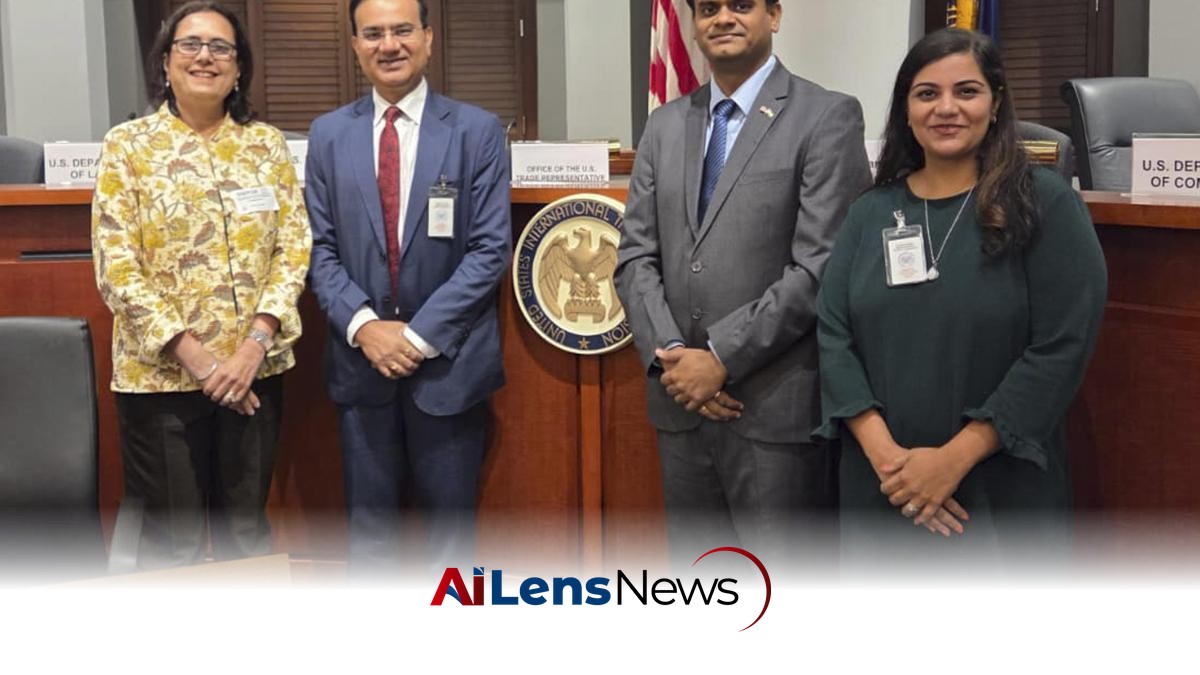
Washington DC, United States Jul 9, 2026 ALN: India has raised concerns regarding the United States' approach to imposing tariffs on goods linked to forced labour, highlighting what it perceives as inconsistencies during a public hearing held by the U.S. Trade Representative (USTR). The discussion centered around a USTR proposal that seeks to levy tariffs on imports from various countries, including India, which are believed to be associated with forced labour practices.
During the hearing, Brij Mohan Mishra, Joint Secretary in the Ministry of Commerce, articulated India's position, noting that the U.S. has exempted 1,600 specific items from scrutiny related to forced labour. These exemptions are granted to items that cannot be produced or grown domestically within the United States. Mr. Mishra argued that such exemptions undermine the broader policy goal of addressing forced labour impacts in global supply chains and may inadvertently encourage circumvention practices.
Mr. Mishra's testimony also pointed out that the U.S. has implemented reduced tariff rates on exports of textile products manufactured using U.S. cotton and related materials. He criticized this practice, stating, "By providing reduced tariff rates on the basis of imports of U.S.-origin textile inputs, the textiles mechanism operates as an arbitrary requirement that influences and constrains the sourcing decisions of foreign manufacturers, without fully addressing the concern of forced labour." This statement reflects India's apprehension that such tariff structures could create an uneven playing field for foreign manufacturers, particularly those in India who may not have the same access to U.S. cotton and inputs.
Despite these critiques, Mr. Mishra emphasized India's willingness to engage in dialogue with the U.S. He asserted that concerns regarding forced labour should be addressed within the framework of ongoing India-U.S. bilateral trade negotiations, rather than through unilateral measures such as those proposed under Section 301 investigations. This indicates India's preference for a collaborative approach to trade issues, rather than one that could potentially escalate into trade disputes.
Industry representatives from Indian business organizations, including the Federation of Indian Chambers of Commerce and Industry (FICCI) and the Confederation of Indian Industry (CII), also presented their perspectives during the hearing. They expressed concerns that the proposed tariffs, which could range from 10% to 12.5% on imports from 60 economies, would not only affect Indian exporters but would also have a ripple effect on U.S. manufacturers, importers, retailers, and ultimately American consumers. Poornima Shenoy, a representative from FICCI in the U.S., stated, "An additional tariff will increase costs not only for Indian exporters, but also for U.S. manufacturers, importers, retailers and ultimately American consumers." This comment underscores the interconnected nature of global supply chains and the potential economic implications of the proposed tariffs.
Shenoy further elaborated on the importance of established sourcing relationships between Indian suppliers and U.S. industries, emphasizing that these relationships are built on quality, reliability, and compliance with existing standards. She posited that imposing higher tariffs on these established supply chains would not effectively identify goods produced with forced labour, but would instead raise costs for businesses that already adhere to compliance standards. This sentiment reflects a broader concern among exporters that punitive tariffs may inadvertently penalize compliant businesses while failing to address the root issues of forced labour.
Additionally, CII representative Suchita Sonalika countered the proposed tariffs by asserting that India's policy framework does not qualify as 'unreasonable' or 'discriminatory' under Section 301(b) of the Trade Act of 1974. She emphasized that India has a robust constitutional and statutory framework that ensures Indian companies cannot practice forced labour. This assertion aims to challenge the USTR's findings and the rationale behind the proposed tariffs, which are based on the premise that certain economies, including India, have failed to prevent goods made with forced labour from entering global supply chains.
The USTR initiated two separate Section 301 investigations on March 11 and 12, 2026, concerning 60 economies over issues related to forced labour and excess industrial capacity. Following these investigations, the USTR issued findings on June 3, proposing additional tariffs on imports from 54 economies. India's response indicates a growing frustration with what it perceives as a lack of thorough analysis in the USTR's investigations. The country contends that the USTR has not met the evidentiary requirements necessary to establish how the absence of bans in these countries significantly distorts market conditions or undermines the profitability of compliant firms.
India's position is clear: it argues that a mere absence of a forced labour import prohibition does not equate to 'unreasonable' practices as defined under Section 301 of the Trade Act. Furthermore, India asserts that the USTR has not conducted an economy-specific analysis of laws and practices across the investigated economies. Instead, it has issued a broad determination that fails to consider the specific measures being implemented by each economy. This critique highlights a potential flaw in the USTR's methodology and raises questions about the fairness and accuracy of its assessments.
In its submission, India also noted that there is insufficient evidence to support the claim that the lack of a forced labour import ban provides an unfair comparative advantage to the detriment of U.S. industries. The country highlighted that evidence across various sectors of major exports from India to the U.S. does not suggest any direct linkage with forced labour inputs. This assertion is significant as it underscores India's commitment to maintaining ethical practices in its export sectors and challenges the narrative that might suggest otherwise.
The ongoing dialogue between India and the U.S. regarding these tariff proposals is crucial, as it not only reflects the complexities of international trade but also the broader implications for global supply chains. The U.S.'s approach to forced labour is part of a larger trend among nations to address human rights violations in trade practices. However, the challenge lies in balancing the enforcement of ethical standards with the realities of global commerce, where supply chains often span multiple countries and jurisdictions.
As the discussions continue, it remains to be seen how the USTR will respond to India's critiques and whether a more nuanced approach will be adopted in addressing concerns related to forced labour. The outcome of these negotiations could have significant implications for bilateral trade relations, affecting not only India and the U.S. but also the global marketplace at large. As countries increasingly scrutinize their supply chains for ethical compliance, the need for robust dialogue and cooperation between trading partners becomes ever more critical.
To learn more about the latest developments in Diplomacy & Treaties, stay updated with our exclusive reports and analyses on AiLensNews.

