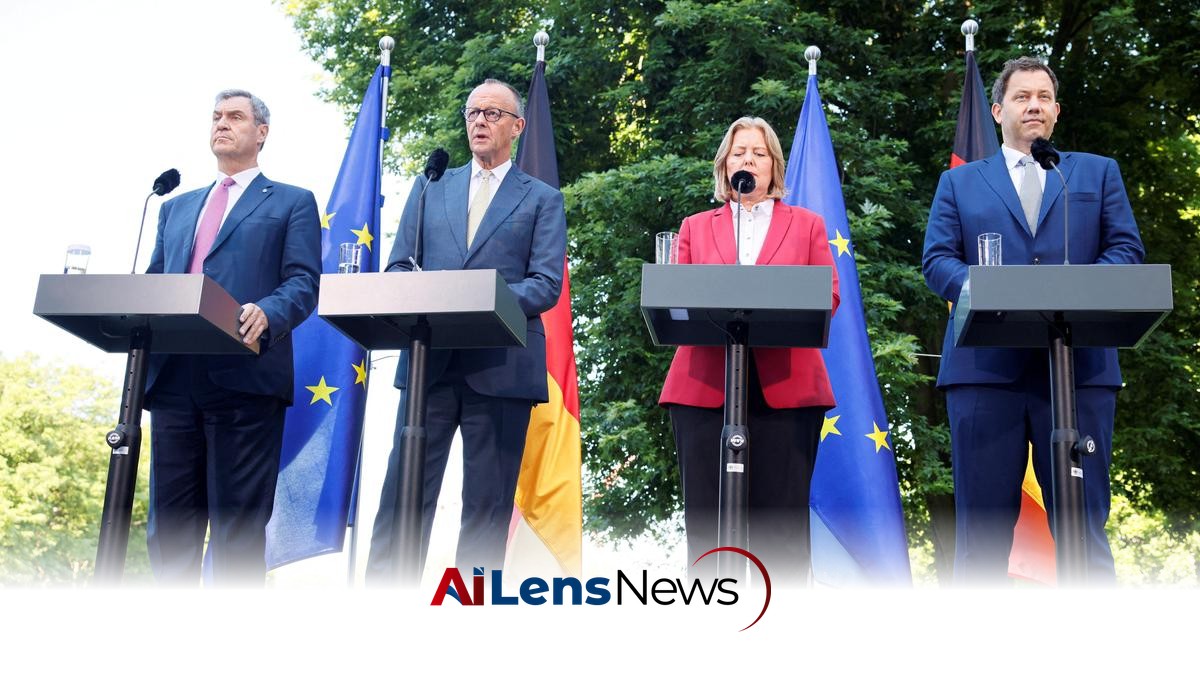


Germany's coalition announces significant tax and labor reforms, promising €600 annual relief for families to boost economic growth.
Germany, Germany Jul 3, 2026 ALN: Germany's ruling coalition has recently reached a significant agreement on a comprehensive reform package, which encompasses major changes in tax, labor, and pension policies. This development was announced by Chancellor Friedrich Merz during a press conference held in Berlin. The agreement is seen as a critical step towards revitalizing Germany's struggling economy and addressing the growing influence of the far-right political faction, the Alternative for Germany (AfD).
Chancellor Merz emphasized the coalition's commitment to enhancing the flexibility of businesses within Germany. He stated, "We are working to increase the flexibility of our businesses," which reflects a broader goal of fostering an environment conducive to economic growth and competitiveness. The coalition partners, which include Merz's center-right Christian Democratic Union/Christian Social Union (CDU/CSU) alliance and the center-left Social Democratic Party (SPD), have been engaged in extensive negotiations to address various contentious issues that have surfaced since they took office in May of the previous year.
The reform package aims to cut bureaucratic red tape, protect the welfare state, and alleviate financial burdens on both employees and companies through tax reductions. Merz asserted that these reforms constitute a "great leap forward" for German economic growth, highlighting the urgency of the situation given the current economic climate.
Among the key components of the reform package is an income tax cut amounting to €10 billion (approximately $11.4 billion). This tax relief is intended to benefit average families, who are projected to be about €600 better off annually as a result of these changes. However, the tax cuts will be financed by imposing higher taxes on individuals earning over €250,000 per year. Finance Minister and Vice Chancellor Lars Klingbeil, representing the SPD, remarked that "the highest earners in this country will take on a larger share" of the tax burden, framing this approach as a fair means of advancing the nation.
In addition to tax reforms, the coalition has proposed adjustments to the pension system, which will eventually see the retirement age rise beyond the current threshold of 67 years. This change is part of a broader strategy to ensure the sustainability of the pension system in light of demographic shifts, including an aging population and declining birth rates.
Furthermore, the coalition has agreed to reduce corporate reporting obligations that many companies have deemed burdensome. This move is expected to enhance the operational efficiency of businesses and encourage investment. Another notable change is the repeal of the right for employees to obtain a sick note via telephone, a decision aimed at reducing absenteeism in the workplace. Additionally, the new regulations will allow for the employment of individuals on temporary contracts for up to four years, a shift that has drawn mixed reactions.
Business organizations have largely welcomed the reforms, viewing them as a positive step towards fostering a more business-friendly environment. However, trade unions, particularly IG Metall, have voiced strong opposition, characterizing the labor reforms as an "attack on workers' rights." This division highlights the ongoing tension between the need for economic flexibility and the protection of labor rights, a fundamental aspect of Germany's social market economy.
The coalition's agreement comes at a time when the political landscape in Germany is increasingly fraught. The ruling parties have faced significant challenges in reaching consensus on various issues, reflecting broader societal divisions. The government is under pressure to demonstrate its capability to address the country's pressing problems, particularly as the AfD has gained traction in national opinion polls, potentially threatening the traditional political order.
Upcoming regional elections in September, especially in the eastern states of Germany, are particularly critical. These elections could result in the first-ever AfD-led state government, marking a historic shift in post-war German politics. Such an outcome would underscore the precarious position of Chancellor Merz, whose approval ratings have been in decline.
In light of these challenges, Merz acknowledged the pressure facing the coalition, stating, "We are doing everything we can to overcome our country's structural weakness when it comes to economic growth." The reforms are thus seen not only as economic measures but also as political maneuvers aimed at stabilizing the coalition and countering the rise of populism.
Germany's economy, historically characterized by its robust export-led industry, is currently grappling with several challenges. Rising energy and labor costs have placed significant strain on this sector, while increased competition from China and the impact of U.S. trade policies, particularly under former President Donald Trump, have further complicated the landscape. The coalition's reform package is partially designed to address these economic pressures.
In a strategic move aimed at countering competition from China, the government has indicated its intention to advocate for tougher actions at the EU level against what it describes as "unfair competition." This includes pushing for stricter regulations concerning foreign investment in strategic sectors and critical infrastructure, reflecting a growing concern over national security and economic sovereignty.
The announcement of the reform package has garnered attention from economists and analysts, with varying assessments of its potential impact. Marion Muehlberger, a senior economist at Deutsche Bank, described the agreement as "one of (Germany's) biggest reform packages in decades," highlighting the government's ability to reach consensus on crucial structural reforms. She expressed optimism that these measures could positively influence economic sentiment and contribute to a projected growth rebound in the latter half of the year.
Conversely, Holger Schmieding from Berenberg expressed caution, noting that while the reforms are significant, none of them are groundbreaking on their own. However, he acknowledged that when combined with previously endorsed pension reform proposals, the overall package could lead to tangible improvements in Germany's investment climate and job creation.
Marcel Fratzscher, president of the DIW institute, offered a more critical perspective, labeling the reforms as "a symbolic package" rather than a comprehensive solution to the challenges facing Germany. His assessment underscores the skepticism that exists among some economists regarding the effectiveness of the proposed measures in addressing the underlying issues affecting the economy.
In conclusion, the ruling coalition's agreement on this major reform package represents a pivotal moment for Germany as it seeks to navigate economic difficulties and political challenges. The implications of these reforms will be closely monitored by both domestic and international observers, as they could significantly influence the trajectory of Germany's economy and its political landscape in the coming years.
To learn more about the latest developments in Global Economy, stay updated with our exclusive reports and analyses on AiLensNews.

