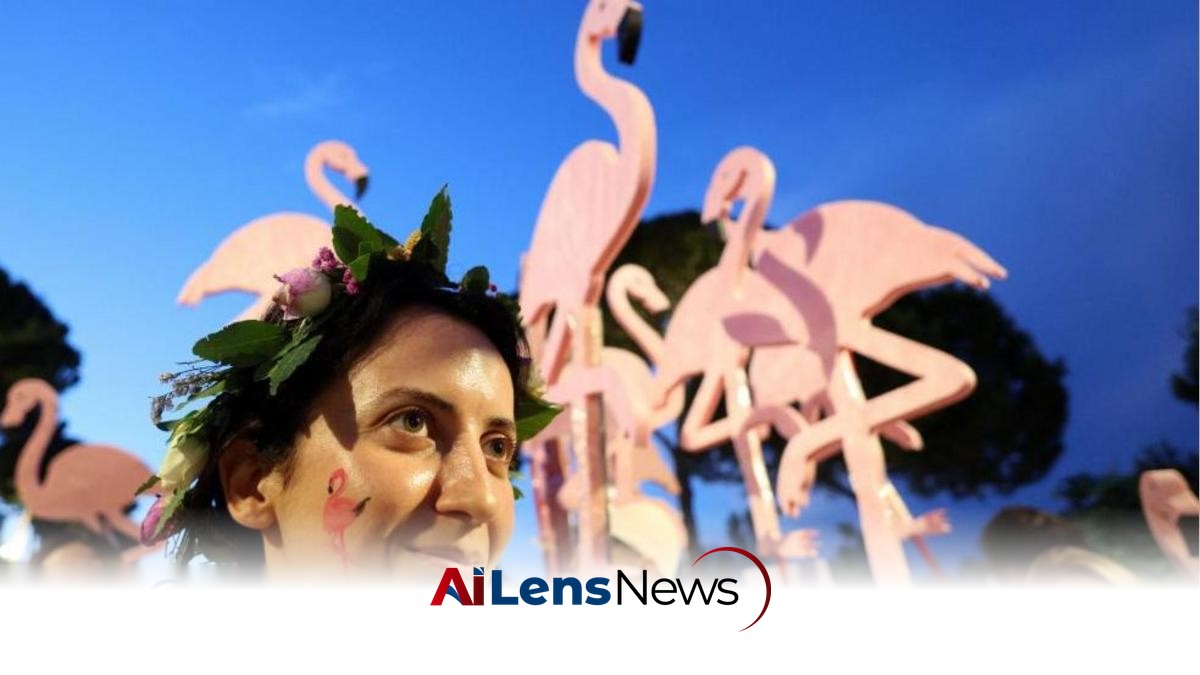


Protests in Albania have erupted over a luxury development project, with flamingos symbolizing the movement against Prime Minister Edi Rama's government.
New Delhi, India Jul 4, 2026 ALN: First they protested about flamingos, now the crowd on the streets below Albanian Prime Minister Edi Rama's office has begun to chant about schools, jobs and living standards as well – and wants him to resign.
The pink migratory birds became the symbol of Albania's nightly rallies because they flock to Narta Lagoon, a protected area near the coastal city of Vlora. This region is not only significant for its ecological diversity, but it also holds cultural and historical value for the local communities. The flamingos, which migrate to this area during certain seasons, have become emblematic of the natural beauty that many Albanians feel is being threatened by rapid development.
A group of international investors – including US President Donald Trump's son-in-law, Jared Kushner – want to develop a luxury resort nearby, and the government has granted them "special investor" status. This status allows for expedited processes in terms of permits and regulations, raising concerns among local environmentalists and activists who argue that such privileges undermine legal protections for the environment and local communities.
There's no planning permission yet, and Rama's government says an environmental impact assessment has not even begun, but fencing and bulldozers have been seen on the site. This has sparked fears that the government is prioritizing foreign investment over the preservation of local ecosystems and the rights of local residents. As the protests gained momentum, the focus shifted from the immediate threat to the flamingos to broader issues affecting Albanian society.
Small-scale local protests about the potential environmental impact went national a month ago, when a video of private security guards beating up a protester spread on social media. The incident has been confirmed by the prime minister, which has only fueled public outrage. The violent response to peaceful protests has highlighted the growing discontent among the populace regarding the government's handling of dissent and its commitment to democratic principles.
Anger has now spread, bringing in wider concerns about the way Albania is developing – and how it is governed. Protesters have begun to voice their frustrations not only about environmental issues but also about education, healthcare, and job opportunities. "I'm here for our schools," a young protester called Helena tells the BBC. "I'm here for our hospitals, I'm here for our infrastructure, I'm here for my family that's outside [Albania], and wanted to be here. And for all of that, I'm mostly here for myself, because I want to stay in my country, and I don't want to leave." Helena's words resonate with many young Albanians who feel that their future is being compromised by the current political climate.
Rama and his Socialist Party have now been in power for 13 years. Much has changed in Albania in that time. The skyline of the capital, Tirana, has been transformed, with a plethora of towers mostly designed by international architects. This urban transformation has been touted by the government as a sign of progress and modernization, yet it has also raised questions about who benefits from this development. The tourism industry has boomed – transforming the country's international image and accounting for more than a fifth of GDP. However, this growth has not translated into improvements in living standards for many citizens, leading to a sense of disenfranchisement.
Perhaps most impressively of all, Albania has made significant progress towards membership of the EU. From a standing start in 2022, it is on course to complete accession negotiations by the end of next year. Of the six countries in the Western Balkans, only Montenegro is further ahead – and it has been in talks for a decade longer. Yet, this progress is viewed with skepticism by many, who question whether the government is genuinely committed to the reforms necessary for EU integration or if it is merely a façade to attract foreign investment.
But that does not cut much ice with prominent protester Fatos Lubonja. The writer and human rights activist served 17 years in a forced labour camp during the rule of the notorious communist dictator, Enver Hoxha. His experiences have given him a unique perspective on the current political situation in Albania. Now, he alleges, the current government is propped up by "oligarchs, organised crime, the media and corrupt internationals" – and the building boom is little more than money laundering. Lubonja's allegations reflect a pervasive belief among many Albanians that corruption is deeply entrenched within the political system, undermining democracy and the rule of law.
"We want to push justice to investigate," he says, gesturing to the towering new buildings surrounding Tirana's central Skenderbeg Square. "If you see all these skyscrapers, it comes out that this is a plan by organised crime, plus oligarchs, plus functionaries of the state." His call for justice resonates with a populace that has grown weary of corruption and mismanagement, further fueling the protests.
Taking a quiet moment in his office in the middle of the afternoon – before the nightly protests begin – Rama characterises the protests as a sign of a healthy, democratic society. He has publicly stated that dissent is a natural part of democracy and that he welcomes the voices of the people. However, the reality on the ground tells a different story, as many citizens feel their voices are being ignored. The government's approach to dissent has come under scrutiny, especially in light of the violent crackdown on protests.
But several of his closest political allies have come under investigation by Albania's anti-corruption prosecutors (SPAK), including his former deputy and the mayor of Tirana. This has raised further questions about the integrity of the government and its commitment to tackling corruption. So should Albanians also be concerned about the integrity of the prime minister? The ongoing investigations into his associates have cast a shadow over Rama's leadership, leading many to wonder whether he is truly committed to reform or merely paying lip service to the idea.
"I've said it since day one: I want a justice that doesn't look left, doesn't look right, but looks straight," Rama says. "Justice that cannot be bought, cannot be pressured and cannot be remotely controlled. And I have said also that this is the biggest contribution the Socialist Party will give to this country, because it will not contribute just by making reforms, but by giving its own skin for the country." His assertions of commitment to justice and reform, however, are met with skepticism by many who see little evidence of genuine change.
But the youngest member of Albania's parliament has decided that working with the Socialist Party is no longer the answer. Rama hand-picked 25-year-old Majana Koceku as a candidate for last year's elections after she established a reputation as an environmental campaigner in the northern county of Shkoder. Now she has quit the party, saying her youth meant she "couldn't just stand there and clap the government and pretend like nothing is happening". Her departure from the party signals a growing disillusionment among the younger generation, who are increasingly questioning the status quo. She adds that Rama is a big part of the problem. "He doesn't inspire people anymore – and I think that this brought him to a huge crisis of legitimacy. It took me some time to realise that beyond these beautiful facades that look so nice and shiny, the reality is not the same. And people are realising it every day more and more." Koceku's sentiments reflect a broader sentiment among young Albanians who feel that their aspirations for a better future are being stifled by the current leadership.
For the moment, it seems there is a stand-off. The protesters are not going anywhere – and neither is Rama. So, flamingos are likely to remain a familiar sight on the streets of Tirana, serving as a poignant reminder of the struggle between development and environmental preservation, as well as the ongoing fight for social justice and political accountability in Albania. The outcome of these protests could have significant implications for the future of the country, as the voices of the people continue to call for change in a landscape marked by corruption and disillusionment.
To learn more about the latest developments in Regions & Countries, stay updated with our exclusive reports and analyses on AiLensNews.

