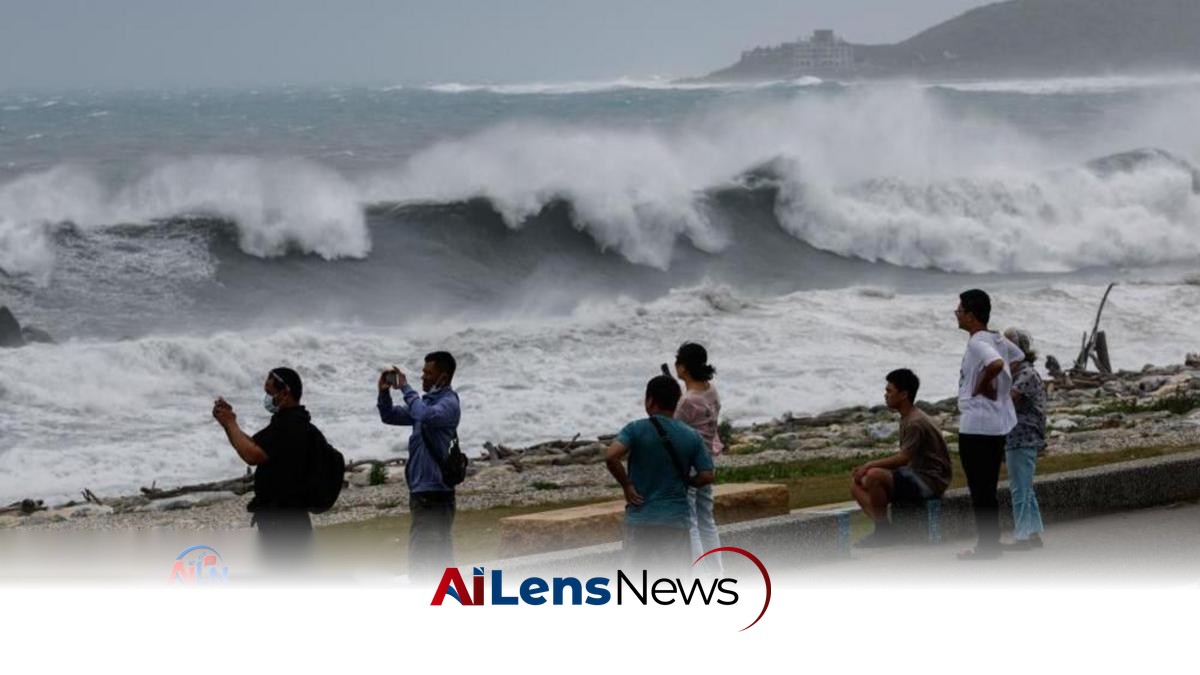


Typhoon Bavi, one of the strongest storms in decades, is heading towards Taiwan and southeastern China, following deadly landslides in the Philippines.
New Delhi, India Jul 10, 2026 ALN: Landslides triggered by one of the strongest storms in decades have killed at least 15 people in southern Philippines, as parts of East Asia brace themselves for the looming storm.
Typhoon Bavi, which spans 1,000km (620 miles) at its widest point – roughly the width of France – is sweeping across the Pacific towards Taiwan. Typhoon Bavi is classified as a super typhoon, a designation given to storms with sustained winds of at least 150 miles per hour. The strength and breadth of this storm have raised alarms across multiple nations in the region, particularly those that are historically vulnerable to tropical cyclones.
The Philippines, an archipelago nation situated in the western Pacific Ocean, is particularly susceptible to typhoons due to its geographical location. The country experiences an average of 20 typhoons each year, with many making landfall and causing significant destruction. Typhoon Bavi's impact on the Philippines has already been devastating, with landslides burying families on the island of Mindanao. Rescuers are currently engaged in search and recovery operations, but the situation remains dire as moderate to heavy rains are expected to continue throughout the weekend, complicating these efforts.
As the storm continues its trajectory, it is expected to dump rain on Taiwan's north and east, and on a chain of remote Japanese islands, before making landfall in southeastern China on Saturday. Taiwanese authorities have issued warnings that Bavi could bring extreme rainfall, with estimates reaching up to 1 meter (39 inches). Such levels of precipitation can lead to severe flooding, landslides, and other hazards, prompting the island's defense ministry to place around 29,000 soldiers on standby to assist with potential relief efforts.
Bavi is poised to be the largest storm, by size, to hit Taiwan since 1987, according to Taiwan's Central Weather Administration. This historical context underscores the significance of Bavi and its potential impact on the island's infrastructure and population. Farmers across the region have been working diligently to harvest crops or protect them from the impending deluge, while fishermen have secured their vessels in anticipation of the storm's arrival.
In a statement reflecting the apprehension felt by many in the region, a 60-year-old fisherman remarked, "Don't be fooled by the nice and calm weather now. A storm like this could be the most terrifying." This sentiment captures the duality of nature's unpredictability, where calm can quickly give way to chaos. In preparation for the storm, thousands of sandbags have been distributed to residents and shop owners in flood-prone areas, illustrating the proactive measures being taken to mitigate the potential damage.
Across the strait, China has also issued warnings regarding Bavi's potential impact. The storm is expected to make landfall in Fujian province, and meteorological experts have indicated that its large size and energy could lead to significant weather events in northern provinces such as Jiangsu and Anhui, which are less experienced in dealing with typhoons. Ma Jun, director of China's Institute of Public and Environmental Affairs, emphasized the need for these regions to "strengthen preparations" in anticipation of the storm’s remnants and outer rainbands.
Some forecasts suggest that Bavi could make landfall twice in China, which would exacerbate the challenges faced by local authorities and emergency services. The potential for repeated landfalls raises concerns about cumulative rainfall and flooding, particularly in areas that have already faced challenges from previous storms.
In Japan, residents on the remote Sakishima Islands are also on high alert. Preparations have included taping up windows and draping windproof nets across homes and shops to reduce the risk of wind damage. The Japanese government has a well-established disaster response system, but the unpredictability of Bavi's path poses challenges for emergency planning.
As the storm approaches, various airlines have grounded flights in the region to ensure passenger safety. Japan Airlines has cancelled over 100 flights for Friday and Saturday, affecting nearly 20,000 passengers, while All Nippon Airways has also grounded more than 160 flights through Sunday. Other airlines, including Thai Airways and Malaysia Airlines, have followed suit, suspending flights to and from Taipei. These cancellations reflect the widespread disruption that Bavi is causing across East Asia, as travel plans are thrown into disarray.
Adding to the region's woes, parts of southern China are still recovering from the devastation wrought by Typhoon Maysak just days earlier. Maysak claimed the lives of at least 39 individuals, and rescue operations are ongoing as authorities search for missing persons among the wreckage. The storm forced the evacuation of over 130,000 people, primarily in the Guangxi region, and resulted in substantial agricultural losses, including the death of livestock and the destruction of crops. The occurrence of two rare tornadoes in Hubei province during Maysak further highlights the extreme weather patterns affecting the region.
The implications of Typhoon Bavi extend beyond immediate damage and loss of life. The economic impact on agriculture, infrastructure, and transportation can be profound, particularly in nations like the Philippines and Taiwan, where agriculture plays a vital role in the economy. The potential for flooding and landslides can disrupt supply chains, leading to food shortages and increased prices. Additionally, the psychological toll on affected communities can be significant, as families grapple with loss and uncertainty in the aftermath of such disasters.
In conclusion, as East Asia braces for Typhoon Bavi, the region faces a precarious situation marked by the potential for widespread destruction. The combination of recent storms and the impending arrival of Bavi underscores the urgent need for effective disaster preparedness and response strategies. As communities come together to support one another in the face of adversity, the resilience of the human spirit shines through, even in the darkest of times.
To learn more about the latest developments in Climate & Environment, stay updated with our exclusive reports and analyses on AiLensNews.

