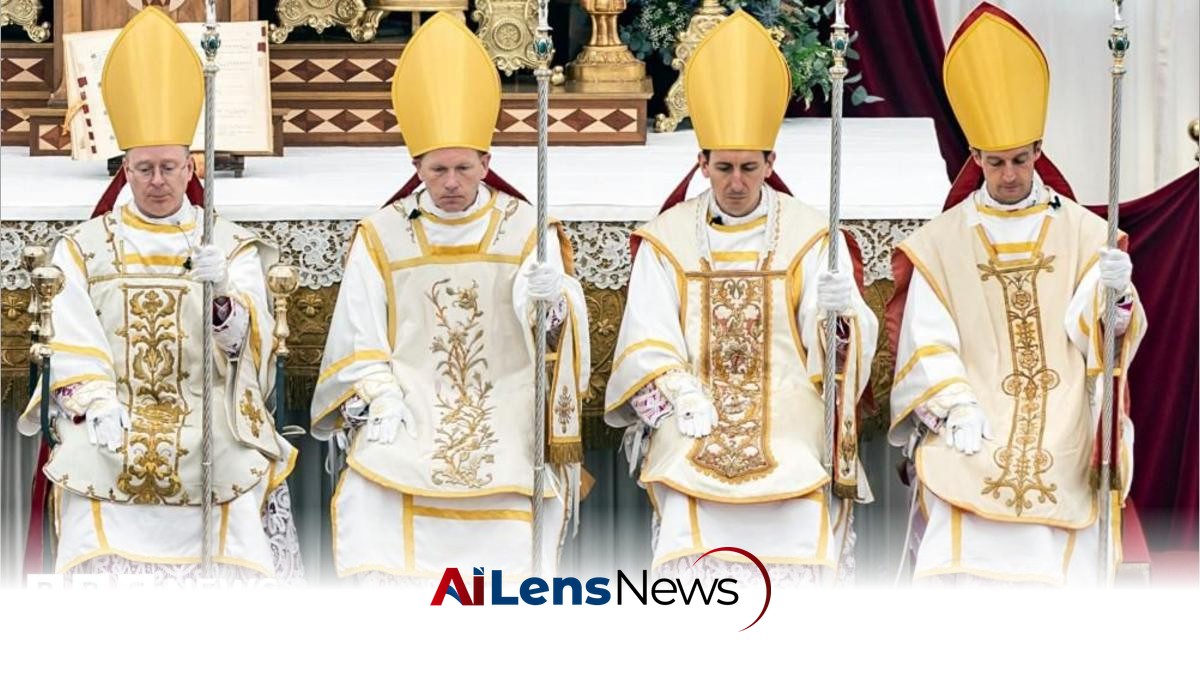


Thousands gathered in Switzerland for the ordination of bishops from the Society of Saint Pius X, defying Pope Leo XIV's warnings against schism.
New Delhi, India Jul 2, 2026 ALN: Thousands of people have gathered in a tiny village in Switzerland to witness the ordination of four new Catholic bishops, in defiance of an appeal by Pope Leo XIV.
The four, one from the United States, one from Switzerland, and two from France, are members of the controversial Society of Saint Pius X (SSPX), also sometimes known as Lefebrvistes after SSPX's founder Marcel Lefebvre. This event marks a significant moment in the ongoing tensions between traditionalist factions within the Catholic Church and the Vatican's leadership, particularly under the papacy of Pope Leo XIV.
The Society rejects key modernising reforms introduced by the Vatican in the 1960s and 1970s, including permission to hold Mass in languages spoken by the congregation, rather than only in Latin. These reforms were part of the Second Vatican Council, which aimed to make the Church more accessible and engage with the contemporary . The SSPX's rejection of these reforms highlights a fundamental ideological divide within the Church, with traditionalists arguing that such changes dilute the sanctity and mystery of the faith.
Pope Leo made a last-minute appeal to SSPX leaders earlier this week not to proceed with the ordination, describing it as a "schismatic act", which could "tear the seamless garment of Christ". His use of the term "schismatic" is particularly significant, as it implies a serious breach of unity within the Church. Schism is a formal division within the Church, and the Pope's warning underscores the gravity of the situation.
But on Wednesday morning, under cool grey Alpine skies, the society defied the Pope – regarded by millions of Catholics as God's representative on Earth – and proceeded with the ordination. The event attracted a large crowd, with estimates suggesting at least 15,000 people gathered in Écône to watch hundreds of robed priests - carrying candles and crosses, and dispensing incense - progress through the village into a pasture where a large tent had been set up for the ceremony.
There, the four candidates for bishop prostrated themselves before an altar, their heads buried in red velvet pillows. Ceremonial organ music played, and the ordination vows were taken, of course, in Latin, further emphasizing the SSPX's commitment to traditional liturgical practices. This adherence to Latin is not merely a preference; it symbolizes a broader resistance to modernity and a desire to maintain a connection to the historical roots of the Catholic faith.
However, for these four men, their time as bishops may be very short. The last time the Society ordained new bishops, in 1988, they were immediately excommunicated. This historical precedent looms large over the current situation, as the Church has a history of responding firmly to perceived threats to its unity and authority. Although Pope Benedict XVI repealed the excommunication in 2009 in an unsuccessful attempt to heal the rift, Pope Leo is also expected to exclude the new bishops from the Catholic Church, which would further entrench the divide.
To some, the Vatican's objections to SSPX may seem exaggerated; after all, many Churches have separate branches, some more conservative than others. However, ordaining bishops without the Pope's consent is regarded as a serious violation of the unity of the Church. This act is not just about the individuals involved but represents a challenge to the very authority of the papacy and the structure of the Catholic Church as a whole.
The split is not just about SSPX's desire to conduct Mass only in Latin. The Society, founded by controversial French archbishop Marcel Lefebvre in 1970, has always wanted to preserve a kind of medieval mystique in which priests, bishops, cardinals, and the Mass itself are seen as somehow closer to God, and therefore separate from ordinary people. This perspective reflects a broader theological stance that views the sacred as distinct from the secular, and the clergy as intermediaries between the divine and the laity.
SSPX has consistently defied the Vatican over multiple policies designed to make the Church more accessible and egalitarian, including establishing ties with other religions, recognising the right to religious freedom, and participating in debates over big social and political questions. This resistance to engagement with the modern has led to accusations that the Society is out of touch with the realities of contemporary society and the needs of the faithful.
It even objected to the Vatican's decision to have priests face the congregation when holding Mass, preferring the medieval practice of facing the altar, with their backs to the congregants. This preference underscores a broader ideological commitment to tradition and a reluctance to embrace changes that many view as necessary for the Church's relevance in today's .
SSPX's Superior General, Davide Pagliarani, denied trying to sustain the rift, telling the congregation in Écône that the ordination was taking place "precisely because we love the Pope as the vicar of Christ, as the head of the Church… we don't want to see the Pope humiliated any more, on the side of false shepherds representing false religions". This statement reflects a complex relationship between SSPX and the Vatican, where the Society sees itself as a defender of true Catholicism against perceived modernist errors.
The defiance poses a challenge to Pope Leo, who is relatively new in post. His papacy has already faced significant challenges, and the emergence of this schism could further complicate his efforts to unify the Church and address pressing issues facing Catholics around the . The Pope's response will be closely watched, as it could set a precedent for how the Church deals with dissenting factions in the future.
Although the Society is small, with an estimated 600,000 followers compared with the Catholic Church's more than 1.4 billion members, it is now represented in dozens of countries, including the US, where it has an enthusiastic following in Kansas. This international presence illustrates the appeal of SSPX's traditionalist message, particularly in regions where a more conservative interpretation of Catholicism resonates with certain demographics.
And SSPX clearly has funds. The ordination was live streamed on YouTube in seven languages, indicating a savvy approach to modern technology that contrasts with their traditionalist ideology. The thousands who turned up to witness it were offered baseball caps commemorating "Écône2026". There were even novelty gift packs of Swiss wine, costing $92 (£80), each bottle labelled with a picture of a mitre, the bishop's crown-like hat. This commercialization of the event raises questions about the intersection of faith and commerce, and how traditionalist groups navigate contemporary cultural landscapes.
So although Pope Leo has made it clear he views the new bishops as illegitimate, and their ordination as a clear attack on the Catholic Church, he may not want to do anything further to make his feared schism any worse. The implications of this ordination extend beyond the immediate context, as they could influence how the Catholic Church approaches issues of authority, tradition, and modernity in the years to come. The ongoing tensions between traditionalists and the Vatican will likely continue to shape the discourse within the Church, as both sides grapple with the challenges of maintaining unity in an increasingly diverse and complex .
To learn more about the latest developments in Culture & Society, stay updated with our exclusive reports and analyses on AiLensNews.

