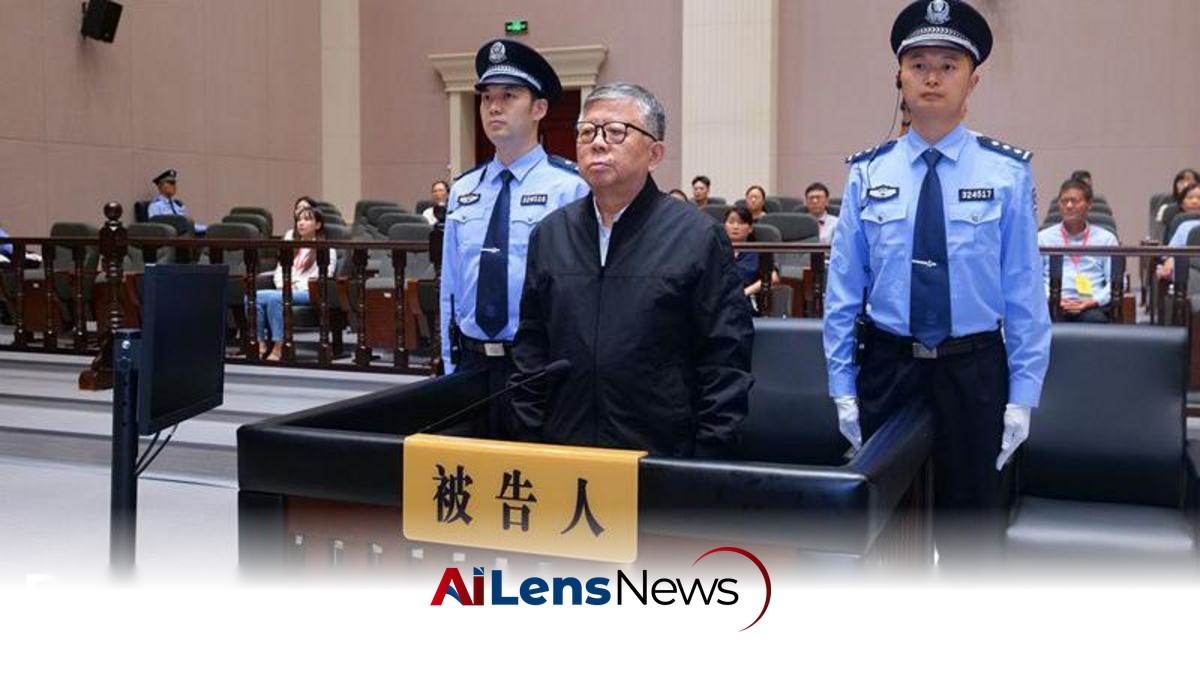


A former city official in China has been sentenced to death for accepting over $325 million in bribes, highlighting the ongoing anti-corruption efforts under President Xi Jinping.
New Delhi, India Jul 7, 2026 ALN: A court in eastern China has sentenced a former city official to death for taking more than 2.2 billion yuan ($325 million; £243 million) in bribes over 30 years.
Yang Youlin, who served in various positions in Nanjing city from 1993 to 2023, was also convicted of embezzlement, abuse of power, and money laundering, with his ill-gotten gains amounting to one of the highest in recent years. The court's decision highlights the severity with which the Chinese government is addressing corruption, especially among high-ranking officials.
The 69-year-old exploited his roles to help others secure engineering contracts, land transfers, and financing, in exchange for money and valuables, said state media. His actions reflect a broader issue within China's bureaucratic system, where corruption has been a persistent problem that undermines public trust and economic development.
Yang was investigated as part of President Xi Jinping's anti-corruption crackdown, which has cut through military ranks and high-level banking, among other sectors. This ongoing campaign, initiated shortly after Xi took office in 2012, aims to root out corruption at all levels of government and the Communist Party. It has led to the prosecution of thousands of officials, ranging from low-level bureaucrats to high-ranking leaders, and has been characterized by its aggressive stance against graft.
The anti-corruption drive has been met with mixed reactions. Supporters argue that it is a necessary step to restore integrity in government and ensure that resources are allocated fairly and efficiently. Critics, however, contend that the campaign is also a political tool used by Xi to consolidate power and eliminate rivals within the party. The dual nature of the campaign raises questions about its long-term implications for governance and political stability in China.
Yang, who spent much of his career working on economic and technological development in Nanjing, had committed offences "of an extremely serious nature" and "caused exceptionally heavy losses to the interests of the state and the people," a court in Changzhou city said on Monday. The court's ruling underscores the gravity with which financial crimes are treated in China, particularly when they involve large sums of money that could have been used for public benefit.
Since coming to power, President Xi has launched waves of anti-corruption drives, which critics say have also been used as a tool to purge political rivals. The selective nature of prosecutions has led to speculation about the motivations behind certain cases, with some analysts suggesting that the anti-corruption campaign may be more about maintaining political control than about genuine reform.
Death sentences for white-collar crimes, however, remain rare, though they are meted out occasionally, typically if the cases involve large sums exceeding 1 billion yuan. In recent years, the Chinese judiciary has shown a willingness to impose severe penalties on corrupt officials, reflecting a societal demand for accountability. For instance, former finance chief Lai Xiaomin was executed in 2021 for taking 1.8 billion yuan in bribes over a 10-year period. Similarly, Li Jianping, a former Inner Mongolia official, was executed in 2024 for embezzling and taking bribes totaling more than 3 billion yuan. These high-profile cases serve as cautionary tales for other officials who may consider engaging in corrupt practices.
In many other cases, the courts have handed out jail terms or suspended death sentences, which get commuted to life imprisonment after a specified duration. The legal framework surrounding corruption in China allows for some leniency, particularly for those who cooperate with investigations or provide information about other offenders. The courts have also reduced sentences in some cases where the convicted individuals reported on other offenders, indicating a potential incentive for whistleblowing within the bureaucratic system.
But while Yang provided similar assistance to authorities, his offences were so "grave" that his assistance "was insufficient to warrant a more lenient punishment," the Changzhou court said. This statement reflects the court's stance that, despite any cooperation, the scale and impact of Yang's corruption warranted the harshest penalties available under Chinese law. The decision to impose the death penalty serves as a stark reminder of the risks associated with corruption and the lengths to which the Chinese government is willing to go to combat it.
Yang pleaded guilty and "expressed remorse in his final statement," according to state media. His admission of guilt and expression of remorse may have been taken into account during the trial; however, the severity of his crimes ultimately overshadowed any mitigating factors. In the context of China's broader fight against corruption, Yang's case may serve as a significant example of the consequences faced by those who engage in corrupt practices, reinforcing the message that the government will not tolerate such behavior, regardless of an individual's status or past contributions to society.
The implications of Yang's sentencing extend beyond individual accountability; they reflect a societal demand for transparency and integrity in governance. As the Chinese government continues to grapple with corruption, the outcomes of high-profile cases like Yang's may influence public perception and trust in the political system. The government's commitment to tackling corruption is likely to remain a central theme in its domestic agenda, as it seeks to foster a more equitable and just society.
Moreover, the international community is closely watching China's anti-corruption efforts, as they have significant implications for foreign investment and economic relations. A transparent and accountable government is essential for attracting foreign investors, who seek stability and predictability in the markets they enter. By addressing corruption head-on, China aims to enhance its global reputation and create a more favorable environment for economic growth.
In conclusion, the sentencing of Yang Youlin to death for his extensive corruption is a pivotal moment in China's ongoing battle against graft. It highlights the government's resolve to eradicate corruption within its ranks and serves as a warning to others who may consider engaging in similar activities. As the anti-corruption campaign continues, the outcomes of such cases will play a crucial role in shaping the future of governance in China and the relationship between the state and its citizens.
To learn more about the latest developments in International Politics, stay updated with our exclusive reports and analyses on AiLensNews.

