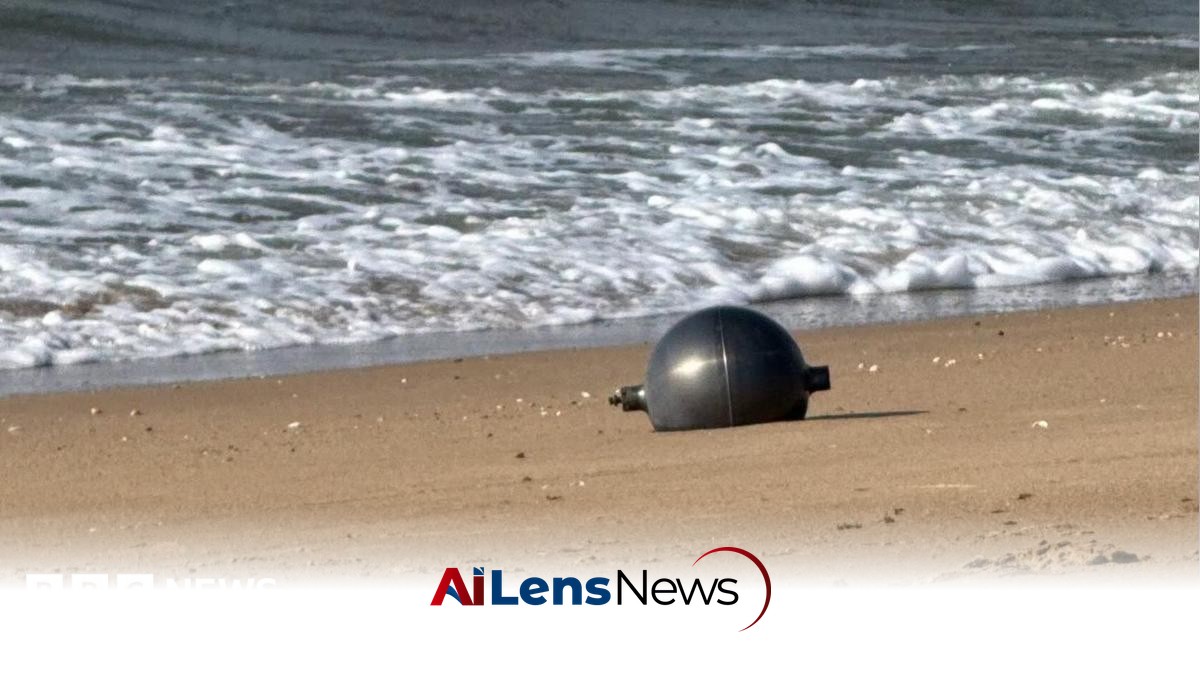


Officials are investigating six pieces of space debris found on Forrest Beach in Queensland, believed to be hazardous.
New Delhi, India Jul 5, 2026 ALN: The authorities in Australia are investigating the origins of mysterious large spheres that washed up on a beach in northern Queensland this weekend.
The six solid objects discovered on Forrest Beach, to the north of Townsville, are thought to be space debris, and the Australian Space Agency (ASA) is now trying to determine where they came from. The agency has been approached for comment, and their involvement underscores the increasing attention that space debris is receiving globally.
Crews in protective suits were reportedly seen placing the spheres in hazmat barrels under police guard, over concerns they may contain hazardous substances. This precaution reflects a growing awareness of the potential dangers associated with space debris, which can sometimes contain toxic materials or chemicals that pose risks to public safety.
Queensland's fire department stated that a 50-meter exclusion zone remains in place, urging anyone who finds a suspicious object in the area not to touch them. This proactive measure is part of a broader strategy to ensure public safety in the face of potential hazards from unverified materials.
Members of the public who encounter them should immediately move away and call emergency services. This incident serves as a reminder of the importance of public awareness and education regarding space debris, especially as the frequency of satellite launches and re-entries continues to increase.
There has been speculation online that the spheres are propellant tanks for spacecraft, which could contain residual amounts of a highly flammable or reactive substance. The presence of such materials raises questions about the environmental impact of space debris and the responsibilities of space-faring nations.
Forrest Beach Takeaway owner Lisa Scobie mentioned that the local community is curious to know their origin. "It's very quiet, not a lot happens here. So having a lot of extra activity... that definitely created a little bit of excitement," she told a public broadcaster. This sentiment reflects the community's engagement with a situation that is both unusual and potentially dangerous, highlighting how such events can capture local interest and concern.
This is not the first time that such mysterious objects have been spotted on Australia's shoreline. In 2023, India confirmed that a giant metal dome that washed up on a Western Australian beach near Perth was from one of its rockets. This incident illustrates the increasing incidence of space debris reaching terrestrial environments and the need for international cooperation in monitoring and managing such occurrences.
India's space agency later stated that it was from one of its Polar Satellite Launch Vehicles (PSLV). The PSLV is known for its reliability and has been instrumental in launching satellites for various countries, but the re-entry of its components raises questions about the long-term sustainability of space activities.
A spherical object similar to those discovered this weekend was also found in remote grassland in Namibia, southern Africa, in 2011. Experts at the time believed it was most likely a fuel tank or bladder tank containing hydrazine, a highly volatile propellant, from an unmanned rocket. Such incidents have prompted discussions among scientists and policymakers about the implications of space debris for both safety and the environment.
The issue of space debris is becoming increasingly critical as the number of satellites in orbit continues to rise. According to recent estimates, there are tens of thousands of pieces of debris orbiting Earth, including defunct satellites, spent rocket stages, and fragments from collisions. This debris poses a risk not only to operational spacecraft but also to the potential for future space exploration.
As countries ramp up their space programs, the management of space debris is becoming a focal point of international dialogue. Organizations such as the United Nations Office for Outer Space Affairs (UNOOSA) and various space agencies are working to develop guidelines and frameworks for debris mitigation and removal. However, the effectiveness of these efforts remains to be seen, especially as new technologies and commercial interests continue to expand in the space sector.
The Australian Space Agency's investigation into the spheres found at Forrest Beach will likely contribute to the broader understanding of space debris and its origins. By tracing the source of these objects, authorities can not only ensure public safety but also provide valuable data that can inform future policies regarding space activities.
In addition to safety concerns, there is also an environmental dimension to the conversation about space debris. The potential for hazardous materials to leak into ecosystems is a serious concern, particularly in sensitive coastal areas like Forrest Beach. Environmental scientists and activists are increasingly calling for stricter regulations on space debris and more responsible practices in satellite launches and operations.
As the investigation unfolds, it will be important for the Australian Space Agency and other relevant authorities to communicate clearly with the public about the findings and any implications for safety and environmental health. Transparency in these matters can help build public trust and ensure that communities are informed about potential risks associated with space debris.
The situation at Forrest Beach serves as a reminder of the interconnectedness of space activities and life on Earth. As humanity continues to explore and utilize outer space, the challenges of managing the debris generated by these endeavors will require collaborative efforts from all nations involved in space exploration.
In conclusion, the discovery of the mysterious spheres at Forrest Beach has sparked curiosity and concern among the local community and beyond. As investigations continue, the implications of this incident will resonate within the broader context of space debris management and the responsibilities of nations engaged in space activities. The outcomes may inform future policies and practices, ensuring that space exploration can continue safely and sustainably for generations to come.
To learn more about the latest developments in Culture & Society, stay updated with our exclusive reports and analyses on AiLensNews.

