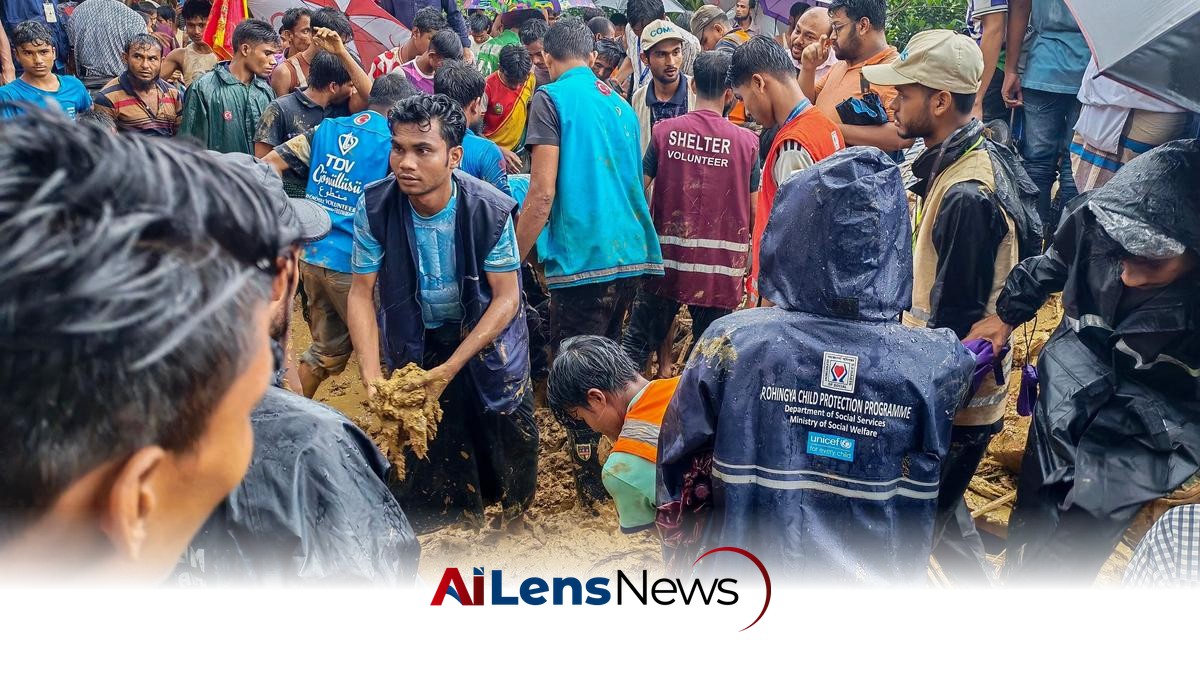


A landslide in a Rohingya refugee camp in Bangladesh has killed five children, with ongoing rescue efforts hampered by worsening weather conditions.
Bangladesh, Bangladesh Jul 9, 2026 ALN: A landslide caused by monsoon rains tragically claimed the lives of at least five children at an Islamic school within a Rohingya refugee camp in Bangladesh’s southeastern Cox’s Bazar district, according to a fire official. This incident has drawn attention to the dire situation faced by the Rohingya community, who have been living in precarious conditions for several years. The loss of young lives in such a manner underscores the urgent need for improved safety measures in the camps and raises questions about the ability of humanitarian efforts to adequately address the ongoing crisis.
The camp, which is home to over 1 million refugees, highlights the precarious living conditions faced by many. The Rohingya people, a Muslim minority group from Myanmar, have been subjected to systemic persecution and violence, leading to their mass exodus to neighboring Bangladesh since 2017. This mass migration has created one of the largest refugee crises in the , with the influx of refugees straining local resources and creating a humanitarian crisis that has garnered international concern. The sheer number of refugees living in such a confined area exacerbates the challenges of providing adequate shelter, healthcare, and education.
Dollar Tripura, the local chief of the Fire Service and Civil Defence, reported that the landslide struck while children were attending classes. The Islamic school was one of many makeshift educational institutions established in the camps, which aim to provide some semblance of normalcy and education for the children amid the chaos of refugee life. Tragically, the landslide occurred during a time when the children were likely engaged in their studies, making the loss even more heartbreaking for the community. The psychological impact of such tragedies on children, who are already dealing with the trauma of displacement, cannot be understated.
In addition to the fatalities, Tripura mentioned that five injured children were rescued, but there are concerns that more victims may be buried under the debris. Rescue operations continued into the evening of July 8, 2026, as efforts were made to locate any remaining survivors. The urgency of the situation is compounded by the fact that the monsoon season in Bangladesh typically brings heavy rains and strong winds, which can lead to further landslides and flooding. The ongoing rescue efforts are a race against time, as the monsoon season is notorious for its unpredictable and violent weather patterns.
This incident follows a similar tragedy just three days prior, when landslides in the same area resulted in the deaths of at least eight individuals. The frequency of such disasters during the monsoon season raises serious questions about the safety and living conditions in the camps. The weather office in Dhaka has forecasted further rain in the coming days, raising fears of additional landslides, which could exacerbate the already dire situation for the Rohingya refugees. The potential for further loss of life is a grim reality that looms over the community, as the monsoon season is expected to last for several months.
In response to the ongoing threat, authorities have begun relocating refugees from high-risk hilly areas, with over 1,000 individuals already moved to safer locations. However, many refugees are hesitant to leave their makeshift homes, despite the warnings issued by officials. This reluctance stems from a variety of factors, including a deep emotional attachment to their homes, fear of the unknown, and concerns over the adequacy of the new accommodations. The challenge of relocation is not just physical; it also involves addressing the psychological and emotional ties that families have to their current living situations.
The monsoon season is an annual challenge for the Rohingya camps, where the combination of poor infrastructure, overcrowding, and environmental vulnerability creates a perfect storm for disaster. Many shelters are constructed from bamboo and tarpaulin, materials that are not durable enough to withstand heavy rainfall and landslides. As the rains continue, the risk for further casualties remains high, particularly among the most vulnerable populations, including children and the elderly. The infrastructure within the camps is often inadequate, with limited access to essential services such as clean water, sanitation, and healthcare, further compounding the dangers posed by natural disasters.
Bangladesh has long called on the international community to assist in the repatriation of Rohingya refugees to Myanmar, but the process remains stalled, leaving many in a state of uncertainty and danger. The Rohingya's return to Myanmar hinges on a variety of complex factors, including assurances of safety and citizenship rights. However, many refugees are reluctant to return, fearing persecution and violence in their home country. The political climate in Myanmar remains volatile, with ongoing tensions and violence against ethnic minorities, making the prospect of safe return an elusive goal for many Rohingya families.
The international response to the Rohingya crisis has been varied, with some countries offering aid and support, while others have remained largely silent. Human rights organizations have repeatedly called for greater action to address the humanitarian needs of the Rohingya, emphasizing the need for sustainable solutions that prioritize the safety and dignity of the refugees. The lack of a unified international response has left many refugees feeling abandoned, as they navigate the challenges of living in overcrowded and unsafe conditions.
As the situation continues to evolve, the tragic events at the Rohingya camp serve as a stark reminder of the vulnerabilities faced by displaced populations around the . The need for comprehensive disaster preparedness and response strategies is critical, particularly in regions prone to natural disasters. Furthermore, it highlights the importance of international cooperation in addressing the root causes of displacement and ensuring that refugees receive the support they need to rebuild their lives. The international community must prioritize not only immediate relief efforts but also long-term strategies that address the underlying issues contributing to the Rohingya crisis.
In conclusion, the landslide incident in Cox’s Bazar is a tragic reflection of the ongoing struggles faced by the Rohingya community. As rescue efforts continue and authorities work to relocate those at risk, the international community must remain engaged and responsive to the needs of the Rohingya, advocating for their rights and safety both in Bangladesh and Myanmar. The situation serves as a call to action for governments, humanitarian organizations, and individuals to come together to find solutions that address the plight of the Rohingya and prevent further loss of life in the future. By fostering collaboration and commitment to addressing these challenges, there is hope for a more secure and dignified future for the Rohingya people.
To learn more about the latest developments in Migration & Refugees, stay updated with our exclusive reports and analyses on AiLensNews.

