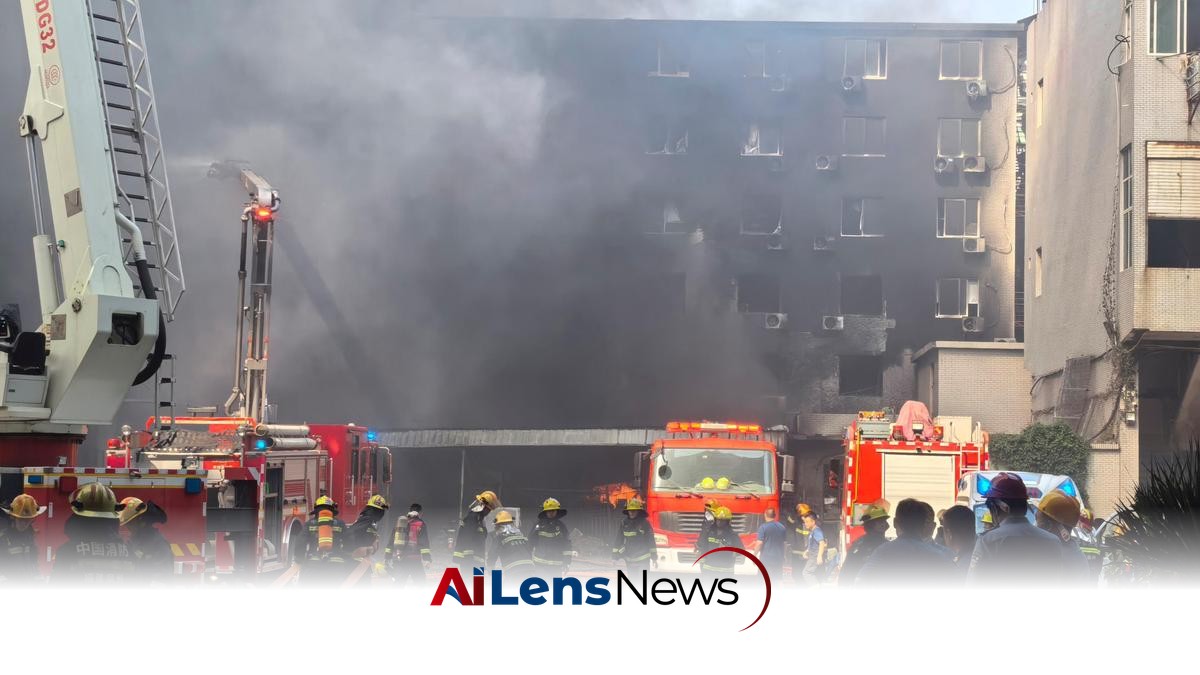


A factory fire in Jinjiang, China, has claimed at least 28 lives, prompting urgent rescue efforts and official responses.
China, China Jul 10, 2026 ALN: A devastating fire erupted at a shoe factory in Jinjiang city, Fujian province, eastern China, on Thursday, leading to the tragic loss of at least 28 lives, as reported by state media. The fire broke out around noon local time, prompting a swift response from emergency services, with over 500 firefighters and rescue personnel deployed to combat the blaze. This incident has raised significant concerns regarding industrial safety standards in China, a nation that has experienced several high-profile industrial accidents in recent years.
As the fire raged, authorities expressed fears that individuals were still trapped inside the multi-storey building. Eyewitness accounts and footage broadcast by state television, CCTV, depicted chaotic scenes as thick black smoke billowed from the factory, obscuring visibility and complicating rescue efforts. Firefighters were seen battling the flames from the ground, while some individuals were reportedly seeking refuge on the roof and near windows, desperately attempting to escape the inferno.
Chinese President Xi Jinping addressed the nation regarding the fire, emphasizing the "heavy human losses" caused by the tragedy. In a statement reported by the state news agency Xinhua, Xi called for an immediate investigation into the cause of the fire and insisted that those responsible be held accountable. Following this directive, local authorities detained the factory owner and several other individuals connected to the operation of the facility, while also freezing the company’s financial accounts to prevent any potential flight of assets.
The Huiteng Shoes factory, where the fire occurred, is situated in Jinjiang, a city widely recognized as a hub for shoe production in China and a significant center for global athletic footwear manufacturing. The city’s industrial profile includes numerous factories and production lines, contributing to both domestic and international markets. However, this incident has raised questions about the safety protocols in place within such facilities, especially considering the materials involved in shoe production, which often include flammable adhesives and synthetic materials.
City fire chief Du Zhenzhou highlighted the challenges faced by emergency responders during the incident, noting that the stairwells and exits were obstructed by shoe materials, which hindered access to the upper levels of the building. This situation underscores a critical issue in industrial safety—adequate emergency exits and unobstructed pathways are essential for ensuring the safety of workers in the event of a disaster.
At the time of the fire, a total of 239 individuals were reported to be inside the factory, including 237 workers and two delivery personnel. While it was reported that 213 people had been successfully evacuated, the discrepancy between these figures and the confirmed death toll has raised concerns and prompted further investigation. The emergency management ministry has called for "all-out" efforts to extinguish the fire, search for any trapped survivors, and provide medical assistance to the injured.
President Xi Jinping’s remarks reflect a growing concern within the Chinese government regarding industrial safety. He noted that there have been "several major industrial safety accidents" in China in the current year alone, highlighting the need for rigorous safety measures across various sectors. His comments come in the wake of a broader campaign launched in November aimed at addressing fire hazards in high-rise buildings, which was prompted by a catastrophic fire in Hong Kong that claimed 168 lives. This campaign aligns with the government’s ongoing efforts to improve safety regulations and prevent future tragedies.
In addition to the recent Jinjiang factory fire, other significant incidents have occurred in China’s industrial landscape over the past year. For instance, a fire in a residential building in Guangdong province resulted in 12 fatalities, and a blast at a fireworks factory in central China killed 37 people, marking one of the deadliest industrial accidents in recent years. These events have collectively raised alarms about the adequacy of safety measures in various industries and the need for comprehensive reforms to protect workers and the public.
The implications of the Jinjiang factory fire extend beyond immediate concerns for the victims and their families; they also highlight systemic issues within China’s industrial safety framework. As the country continues to experience rapid economic growth and urbanization, the pressure to maintain production levels can sometimes overshadow the importance of adhering to safety regulations. This incident serves as a stark reminder of the potential human cost associated with neglecting safety protocols in industrial settings.
In response to this tragedy, it is anticipated that local and national authorities will conduct thorough investigations into the circumstances surrounding the fire, including the safety practices of the Huiteng Shoes factory. These investigations may lead to stricter enforcement of safety regulations and a reevaluation of existing policies to ensure that similar incidents do not occur in the future. The broader implications for the manufacturing sector could include increased scrutiny from both government regulators and the public, as well as potential reforms aimed at improving workplace safety standards.
As the situation develops, the focus will likely remain on the recovery efforts and the investigation into the fire’s cause. The community in Jinjiang, known for its resilience and strong industrial base, will need to come together to support those affected by this tragedy. Furthermore, the incident may serve as a catalyst for change in how industrial safety is approached in China, fostering a culture that prioritizes the well-being of workers alongside economic productivity.
The Jinjiang factory fire is not just an isolated incident; it reflects a broader context of industrial safety challenges faced by China. The rapid pace of industrialization in the country has often led to insufficient attention being paid to safety measures. While the government has made strides in recent years to enhance regulatory frameworks and enforce compliance, incidents like this underline the ongoing need for vigilance and improvement.
In the aftermath of the fire, there may be calls for a nationwide audit of industrial facilities, particularly those in sectors considered high-risk. Such audits could assess compliance with safety regulations, evaluate emergency preparedness, and ensure that facilities are equipped with adequate fire safety measures. The outcomes of these investigations could lead to a reevaluation of safety practices and potentially influence legislation aimed at enhancing worker protections.
Moreover, the Jinjiang incident may provoke public discourse about corporate responsibility and the ethical obligations of factory owners to ensure safe working conditions. As consumers become more aware of the conditions under which their products are made, there may be increased pressure on companies to prioritize safety and accountability over profit margins. This could lead to a shift in corporate practices, where transparency and ethical considerations become integral to business models in the manufacturing sector.
Additionally, the fire may also impact international perceptions of Chinese manufacturing, particularly in the footwear industry. As global consumers and business partners assess the safety standards of Chinese products, companies operating in this space may need to demonstrate their commitment to safety and quality to maintain their reputations and market positions. This could result in a competitive landscape where safety certifications and compliance with international standards become key differentiators in the marketplace.
In conclusion, the tragic fire at the Huiteng Shoes factory has not only claimed lives but has also illuminated critical issues regarding industrial safety in China. As investigations unfold and the community grapples with the aftermath, there is potential for significant change in safety regulations and corporate practices. The hope is that this tragedy will serve as a turning point, prompting a renewed commitment to protecting workers and ensuring that such devastating incidents do not occur in the future.
To learn more about the latest developments in Regions & Countries, stay updated with our exclusive reports and analyses on AiLensNews.

