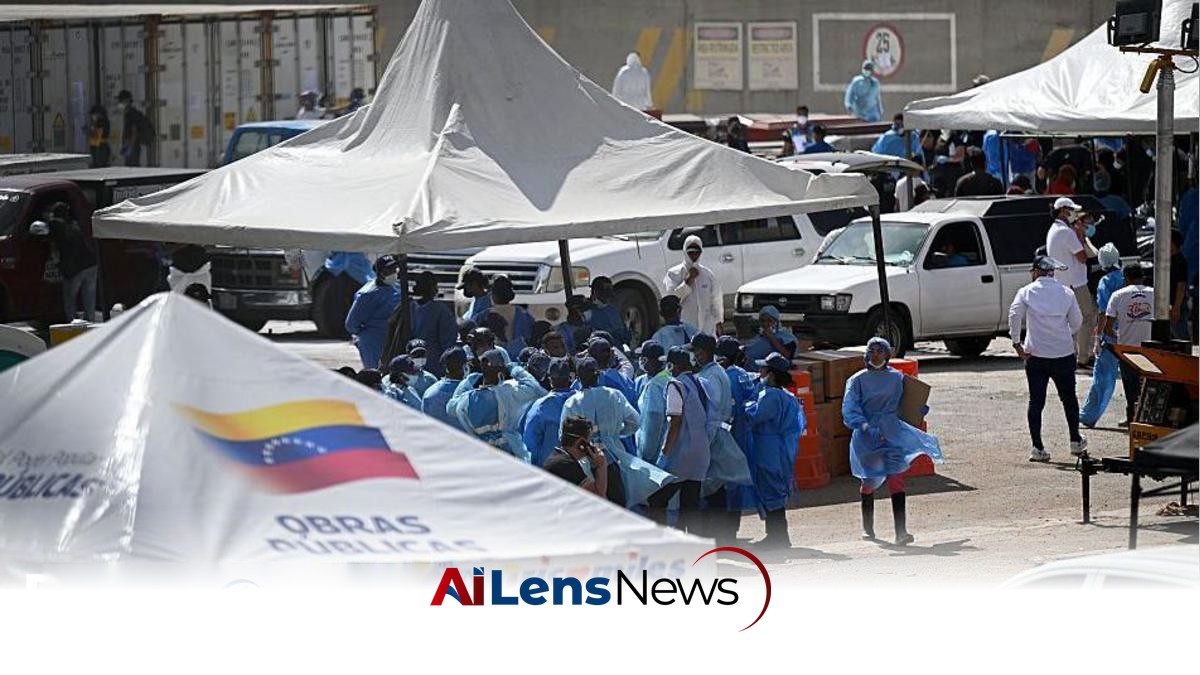


In La Guaira, families face the harrowing task of identifying loved ones after devastating earthquakes have overwhelmed local services.
New Delhi, India Jul 4, 2026 ALN: Warning: This story contains distressing details
In the aftermath of the devastating twin earthquakes that struck Venezuela, families are grappling with the harrowing task of identifying their loved ones at a makeshift morgue located in a port storage facility in La Guaira. This facility has been repurposed to accommodate the overwhelming number of casualties, as local authorities and emergency services struggle to cope with the scale of the disaster.
The earthquakes, which have resulted in a tragic death toll exceeding 2,600, have left communities in shock and mourning. The sheer magnitude of the disaster has overwhelmed local services, leading to improvisation in recovery efforts. With much of the infrastructure in ruins, including hospitals and shelters, the identification of victims has become a grim necessity for grieving families.
As families arrive at the makeshift morgue, they are met with a scene of despair. Many have spent days searching through hospitals, shelters, and the rubble of collapsed buildings in hopes of finding their missing relatives. The atmosphere is thick with anguish as they wait for hours, often in the sweltering heat, to confirm the deaths of their loved ones. The facility, known as Los Silos, has rows of chairs set up both inside and outside, where families sit in silence, their faces reflecting a mixture of dread and resignation.
Those who have come to identify their loved ones face an emotionally taxing ordeal. Armed personnel from the Bolivarian Armed Forces control access to the site, ensuring that only family members are allowed inside. For many, the moment of entering the makeshift morgue is filled with trepidation. One woman, who has been searching for her nephew for nearly a week, expresses her fear, stating, "I'm afraid of what I'm going to see in there, but it's the only way to end this agony." Her search has led her to hospitals and buildings, but she has found no trace of him.
Upon entering the morgue, families are immediately confronted with the overwhelming smell of decomposition. Many instinctively cover their mouths, and while some wear masks, the stench is inescapable. The bodies of the deceased, wrapped in plastic bags and exposed to the sun, lie in rows, arranged according to when they were recovered. The rapid decomposition in the heat complicates the identification process, as many bodies are no longer recognizable.
Inside the facility, families are given two options for identification. Those who believe they can recognize a loved one by their clothing are taken to one area, while most are directed to two television screens displaying images of the deceased. This process is both agonizing and surreal, as over 1,000 images of bodies flash across the screens in a seemingly endless loop. Many of the bodies are swollen, discolored, or bear visible injuries, making identification a challenging task.
As families scan the images for any familiar trace—a tattoo, a piece of clothing, or a personal item—the emotional toll becomes evident. A moment of hope occasionally arises when a family member recognizes a loved one, often leading to tears and shared grief among strangers. In one poignant instance, a woman bursts into tears upon recognizing her son by a dusty blanket, prompting a stranger nearby to embrace her in solidarity.
While the identification process is ongoing, the grim reality of the situation weighs heavily on those waiting. A young man on the phone expresses his distress, stating that he is trying to identify his mother but is struggling due to the condition of the bodies. "This is like a horror movie," remarks Liliana González, a resident of Catia La Mar, as she leaves the morgue after identifying her nephew by a tattoo, despite the fact that he was not listed among the deceased.
Modesta Alemán, who traveled from Carayaca to search for her sister Matilde, highlights the despair felt by families. Her sister lived in Playa Grande, one of the areas hardest hit by the earthquakes. Modesta recalls being told that there were no survivors, although volunteers reported hearing voices from the rubble, indicating that some may still be trapped. Choosing not to enter the morgue, she waits outside, perhaps believing that it is better not to witness the grim reality within.
The identification process can stretch for hours, and once a body is confirmed, arrangements for its removal must be made. This includes taking fingerprints, placing the remains in coffins, and initiating the paperwork required for a death certificate—an essential document for funeral homes to collect the deceased. Jéssica Soto, who has been waiting for two days to identify her 15-year-old daughter and three-year-old granddaughter, describes the agonizing wait for the necessary paperwork and the frustration of having their bodies left in a coffin exposed to the sun.
As families navigate this harrowing experience, they often find solace in the support of those around them. Liliana, who panicked at the thought of identifying her nephew alone, expresses gratitude for the assistance of workers who accompanied her, providing a sense of comfort in an otherwise unbearable situation. The emotional burden of losing a loved one is compounded by the chaotic circumstances surrounding the identification process, leaving families to grapple with their grief in a profoundly challenging environment.
The implications of this disaster extend beyond the immediate tragedy of loss. The overwhelmed local services and the makeshift morgue highlight the urgent need for improved disaster response infrastructure in Venezuela, a country already grappling with economic and social challenges. As families continue to mourn their losses, the calls for better preparedness and support for victims of natural disasters are likely to grow louder, underscoring the importance of addressing vulnerabilities within the community.
In the wake of such a calamity, the resilience of the affected families shines through, even amidst the heart-wrenching process of identifying their loved ones. As they navigate their grief, the stories of those lost will remain etched in their hearts, serving as a reminder of the fragility of life and the need for a compassionate response to those in mourning.
To learn more about the latest developments in Regions & Countries, stay updated with our exclusive reports and analyses on AiLensNews.

