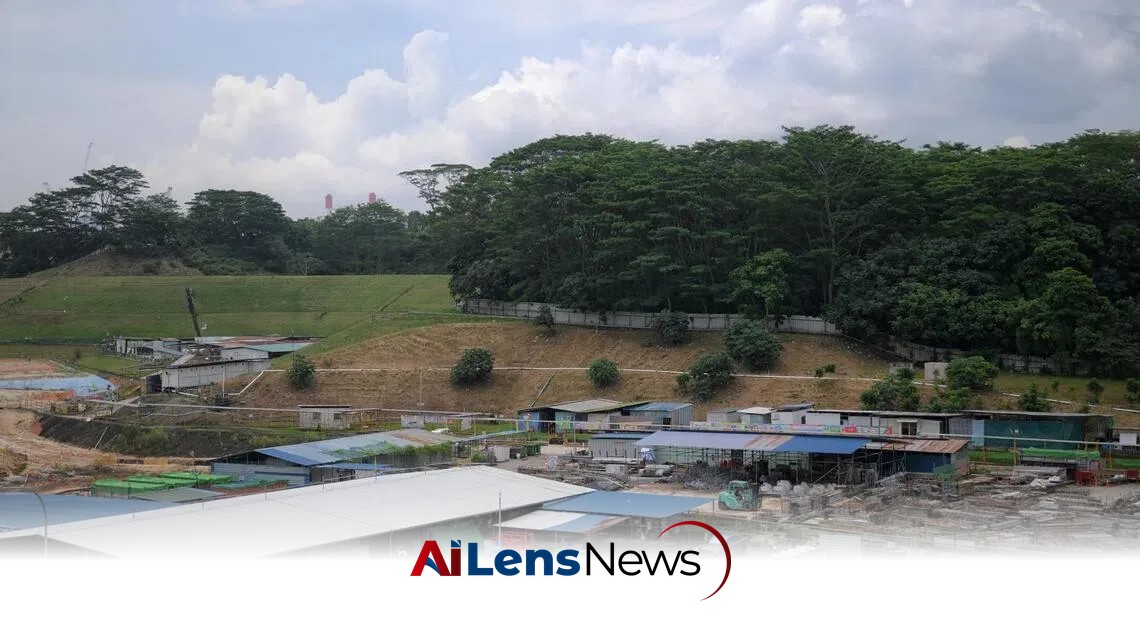


The upcoming Woodlands Gateway project will feature a major mixed-use transport hub, enhancing connectivity and creating over 25,000 jobs in Singapore.
Singapore, Singapore Jul 12, 2026 ALN: SINGAPORE – The Woodlands Gateway project is poised to redefine the northern landscape of Singapore with its ambitious plans for a mixed-use transport hub. This development is set to feature extensive shopping and office spaces, complemented by green areas designed for leisure and relaxation. The hub will provide direct links to multiple rail lines, enhancing the region's connectivity and accessibility.
One of the key features of the Woodlands Gateway is its underground infrastructure, which aims to alleviate surface traffic congestion. Plans include a network of roads designed specifically for heavy vehicles and trucks, allowing them to access industrial offices without contributing to ground-level traffic. This innovative approach is expected to create a more pedestrian-friendly environment, enhancing the overall experience for residents and visitors alike.
In addition to the transport hub, the Gateway’s grounds will be equipped with community facilities, such as parks and sky links, which will facilitate movement for pedestrians and cyclists. These features are intended to integrate the transport hub with the surrounding neighborhoods, promoting a sense of community and encouraging outdoor activities.
According to JTC Corporation, which is overseeing the project, the Woodlands Gateway is envisioned as the first rail entry point from Malaysia, designed to leave a lasting impression on travelers when they enter Singapore. The significance of this gateway cannot be overstated, as it represents a vital connection between Singapore and its neighboring country, Malaysia.
The transport hub is expected to be completed by around 2030, covering an area of approximately 5.66 hectares, which is nearly equivalent to eight football fields. This substantial size reflects the project's ambition to serve as a major transportation node in the region, integrating various modes of transport into a cohesive system.
The first phase of construction will include a bus interchange spanning about 6,500 square meters, along with 28,000 square meters of retail space and 22,000 square meters of flexible office spaces. This mix of facilities is designed to cater to the diverse needs of commuters, residents, and businesses in the area.
Notably, the hub will connect directly to the upcoming Johor Bahru-Singapore Rapid Transit System (RTS) Link, as well as the Woodlands North MRT station on the Thomson-East Coast Line. This connectivity is expected to significantly enhance the flow of people between Singapore and Malaysia, making it easier for workers, travelers, and tourists to navigate the region.
JTC envisions the Woodlands Gateway as an integrated transportation hub that will bring together multiple transport modes into a seamless, efficient, and future-ready interchange. This integration is crucial for accommodating the growing demand for cross-border travel and commerce, especially as regional ties between Singapore and Malaysia continue to strengthen.
Beyond the transport hub, the Woodlands Gateway project will also include two blocks of factories covering 104,000 square meters. This aspect of the development is expected to create additional employment opportunities and stimulate economic growth in the region. The first phase of construction for these facilities is anticipated to be completed by around 2031, with subsequent phases expected to follow by 2034.
In response to inquiries about the project, JTC has stated that the commercial and lifestyle facilities in Woodlands Gateway will cater to the increasing demand from passengers in transit, as well as residents and employees in nearby residential estates and industrial developments. This focus on meeting the needs of a diverse user base is a key element of the project’s design and planning.
Harvey Neo, a professorial research fellow at the Singapore University of Technology and Design (SUTD), commented that the Woodlands Gateway project exemplifies the principles of transit-oriented development. By providing residents with easy access to retail and job options within a transport node, the project aims to enhance the quality of life for those living and working in the area. Neo emphasized that the underground heavy vehicle network will free up valuable above-ground space, which will in turn enhance walkability and user-friendliness for residents and pedestrians.
Furthermore, Neo noted that the opening of the RTS Link will transform Woodlands into a vibrant border town. The Woodlands Gateway district is expected to invigorate the area, which is currently perceived as a mature but somewhat worn-out region. The revitalization of this district could lead to increased economic activity and a more dynamic community atmosphere.
Professor Khoo Peng Beng, head of the architecture and sustainable design pillar at SUTD, highlighted the potential of the project to create a lively environment around the RTS Link connectivity. The successful integration of the transport hub with surrounding developments will be crucial in fostering a vibrant urban landscape that attracts both residents and visitors.
Independent architecture consultant Jeffrey Ho pointed out that the success of the Woodlands Gateway district will depend on the synergy of surrounding developments, including the redevelopment of Kranji Turf Club and Woodlands Industrial Park. These adjacent projects will play a significant role in shaping the overall character and functionality of the area, contributing to its appeal as a business and lifestyle destination.
With the projected establishment of over 25,000 jobs in the Woodlands Gateway precinct, the project is expected to leverage cross-border business opportunities once the RTS Link becomes operational. This development is set to strengthen the position of Woodlands as a business hub, offering an alternative to the more congested city center.
The RTS Link is projected to transport up to 10,000 travelers per hour in each direction when it becomes operational by the end of 2026. This capacity will be crucial in accommodating the anticipated surge in cross-border travel, further underscoring the importance of the Woodlands Gateway as a key transit point.
On June 30, JTC issued an invitation for firms to express interest in providing design consultancy and site supervision services for the Gateway project. Shortlisted firms will be invited to submit detailed proposals for evaluation, marking a significant step forward in the realization of this transformative project. The selection of the right partners will be essential to ensure that the Woodlands Gateway meets its ambitious goals and serves the needs of the community effectively.
In conclusion, the Woodlands Gateway project represents a significant investment in Singapore's future transportation infrastructure and urban development. With its focus on connectivity, community, and sustainability, the project is set to enhance the quality of life for residents and visitors alike while fostering economic growth in the region. As the project progresses, it will undoubtedly play a pivotal role in shaping the future of Woodlands and its surrounding areas.
To learn more about the latest developments in Destinations, stay updated with our exclusive reports and analyses on AiLensNews.

