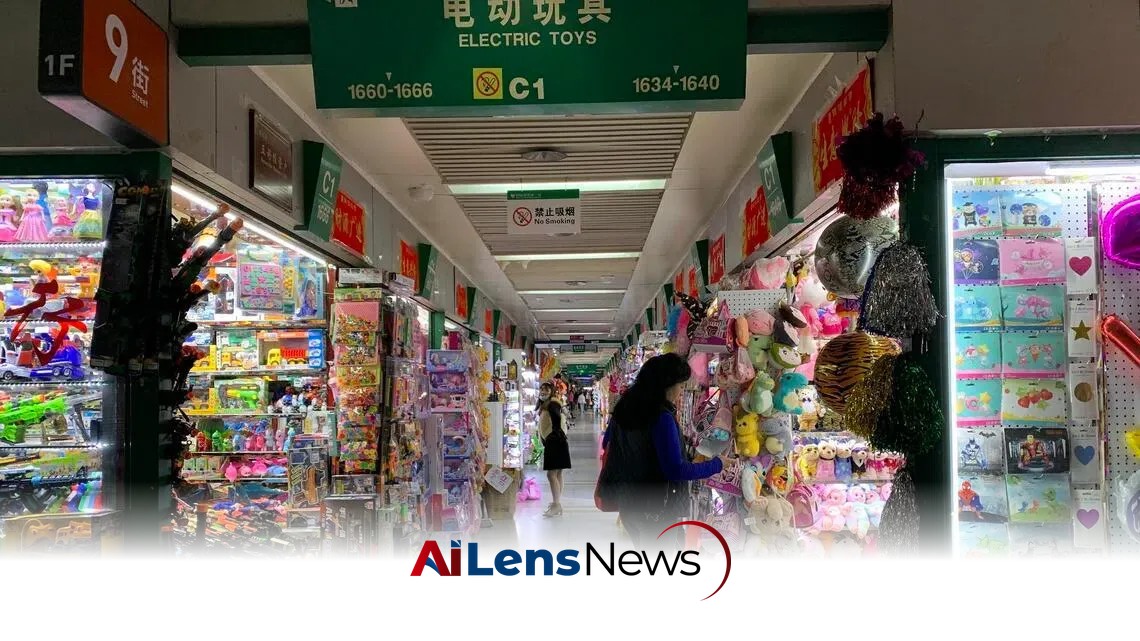


China's wholesale markets, like Yiwu and Shenzhen's Huaqiangbei, are evolving into popular tourist destinations, driven by government initiatives to boost domestic consumption and attract foreign visitors.
Singapore, Singapore Jul 23, 2026 ALN: A growing number of foreign tourists are flocking to China’s wholesale markets to hunt for everything from the latest gadgets and gizmos to fashion and beauty products. This shift marks a significant change in the role these markets play within the broader context of China's economy and its global tourism strategy.
Once the domain of professional traders, these markets and trading hubs have now become a common part of travel itineraries, those in the tourism industry told The Straits Times. Traditionally, wholesale markets in China were frequented primarily by local businesses and international traders looking to source products at competitive prices. However, as China has sought to bolster its economy post-pandemic, these venues have increasingly been rebranded and marketed as tourist attractions, offering unique shopping experiences that cannot be found elsewhere.
This trend comes against the backdrop of Beijing’s broader push to stimulate flagging domestic consumption in the world’s second-largest economy, partly by attracting more foreign visitors and getting them to open their wallets. The Chinese government has recognized the potential of tourism as a key driver of economic growth, especially in light of the challenges posed by the COVID-19 pandemic, which severely impacted global travel and tourism sectors.
Since 2025, Chinese officials have begun promoting what they call the “Shopping in China” initiative, or zhongguo gou, while introducing a raft of measures to make it easier for foreigners to travel to China, be it through expanded visa-free arrangements or more seamless digital payments. These initiatives are part of a broader strategy to revitalize the tourism sector, which has been a significant contributor to China's GDP and employment.
These measures appear to have worked so far, with foreign arrivals hitting 22.9 million in the first half of 2026, up 20.4 per cent year on year. This resurgence in tourism is indicative of a growing confidence among international travelers, as well as the effectiveness of China's marketing and infrastructural improvements aimed at enhancing the visitor experience.
Notably, Chinese news outlet Global Times reported a 62 per cent year-on-year increase in flight bookings by foreign visitors to Yiwu city in the eastern Zhejiang province in the first half of 2026. Yiwu is particularly significant due to its status as the home of the sprawling Yiwu International Trade City, the world’s largest wholesale small commodity market, where more than 70,000 shops sell a variety of products, including cosmetics, stationery, and backpacks. This market has become a focal point for tourists seeking to experience the vibrancy of China's manufacturing and retail sectors.
Official statistics showed that Yiwu received 681,000 inbound visitors in 2025. This is up 19.74 per cent from 2024, reflecting an increasing interest in the city not just as a trade hub but also as a tourist destination. The appeal lies in the sheer variety of products available and the opportunity for visitors to engage directly with the manufacturing process that underpins many global supply chains.
In the southern province of Guangdong, tech hub Shenzhen’s Huaqiangbei district, known for its vast electronics bazaar, ranked among the top 10 most popular areas nationwide for hotel bookings by international tourists in the first half of 2026, according to the Global Times report. This area is renowned for its cutting-edge technology products and has become a pilgrimage site for tech enthusiasts and casual shoppers alike.
In March, Shenzhen Daily reported an average daily footfall of about 750,000 in the Huaqiangbei area. More than 7,000 were foreigners, an increase of more than 50 per cent since the beginning of 2025. This surge in foot traffic highlights the growing allure of these markets as destinations for both shopping and cultural exchange.
Leticia Zhang, 34, a Spanish-speaking tour guide in Shenzhen who hosts visitors from Spain, as well as Central and South America, told ST over WeChat that Huaqiangbei has become one of the city’s must-see spots. Her experiences underscore the transformation of these markets from purely commercial spaces to vibrant tourist hubs. “Whenever I host foreign guests, if they are traveling independently and have shopping needs, we almost always go to Huaqiangbei. Some guests even go there on their own to make purchases, and there are many foreigners in the Huaqiangbei market every day,” said Zhang, who takes an average of two tours in Shenzhen a month.
“Based on my experience leading tours, foreign visitors generally have a very positive opinion of Chinese markets. They appreciate the wide variety of products, high cost-to-performance ratios, and the technological advancements and convenience,” she added. This sentiment reflects a broader trend where tourists are increasingly seeking authentic experiences that allow them to engage with local culture and commerce.
Kevin Zhao, general manager of boutique travel agency Travel to Qin in Shenzhen, which caters exclusively to foreign tourists, believes wholesale market tours are a growing trend in China. “We receive a lot of requests from clients who come to China wanting to do market tours,” Zhao said, adding that Shenzhen, Guangdong capital Guangzhou, and Yiwu are the top three destinations by far. This shift in consumer behavior indicates a significant opportunity for local economies to leverage their unique market offerings to attract international visitors.
While he could not provide exact numbers, Zhao said about 70 per cent to 80 per cent of his clients would include a trip to a wholesale market as part of their itinerary, with strong interest from visitors from India, Southeast Asia, and African countries. The diversity of tourists engaging with these markets reflects the global appeal of Chinese products and the desire for unique shopping experiences.
“The demands vary quite a lot because different clients have different goals,” Zhao told ST by phone. “Some just want to buy a few souvenirs. Others are curious about China because they know its manufacturing sector is advanced, so they want to check out the latest trends. Then there are also serious businesspeople who come to China to source for products and export them back to their home countries,” he added. This multifaceted interest in wholesale markets underscores their potential as both shopping destinations and business hubs.
For Leanro Zhang, who runs Wayeast Travel, a United Kingdom-based China inbound tour company, the interest has been more muted. His company began offering specialized wholesale market tours after some customers requested that a shopping stop to one be added during their regular sightseeing tours. However, of the 20 to 30 bookings his agency now receives each month, only two to three involve visits to such markets. “We have been getting such bookings since mid-2025, but haven’t seen a significant increase in volume,” he said. This indicates that while there is interest, the market for wholesale tours may still be in a nascent stage compared to other more traditional tourist attractions in China.
Wholesale markets and local governments have caught on to the trend too, with clothing markets in Guangzhou, such as the Huimei International Garment City and apM Times International Fashion City, now supporting single-item purchases, making it easier for individual shoppers as they no longer need to buy in bulk. This change is a strategic move to enhance the shopping experience for tourists and make these markets more accessible.
In April, Guangzhou’s municipal government launched a two-year action plan to accelerate the development and upgrading of the more than 500 wholesale and specialized markets in the city, with the aim of growing annual transaction volumes from 1.5 trillion yuan (S$286 billion) today to two trillion yuan by 2028. This ambitious plan reflects a commitment to modernizing the wholesale market sector and integrating it into the broader tourism framework.
The objective is to modernize and internationalize these traditional wholesale markets and establish some of them as bona fide tourist attractions. “In the future, professional markets will not only be places for wholesale, but also for watching fashion shows, drinking coffee, strolling through night markets, and taking photos,” Guangzhou newspaper Yangcheng Evening News reported in May. This vision aligns with global trends where shopping experiences are increasingly integrated with entertainment and cultural offerings.
Gary Ng, a senior economist at financial services firm Natixis in Hong Kong, said China’s visa-free policy has been a game changer in terms of attracting more foreign tourists. By simplifying travel processes, China has positioned itself as a more appealing destination for international visitors. It has also become more affordable to travel there, as accumulated inflation has been much higher globally than in China since the Covid-19 pandemic. This economic context plays a crucial role in shaping travel decisions for potential visitors.
“While foreign tourism spending remains tiny to the overall economy, it can be important for local businesses and the overall tourism ecosystem,” Ng added. The implications of this trend extend beyond just the wholesale markets themselves; it has the potential to stimulate growth in related sectors, such as hospitality, transportation, and local attractions, thereby contributing to a more robust economic landscape in regions that embrace this tourism strategy.
To learn more about the latest developments in Destinations, stay updated with our exclusive reports and analyses on AiLensNews.

