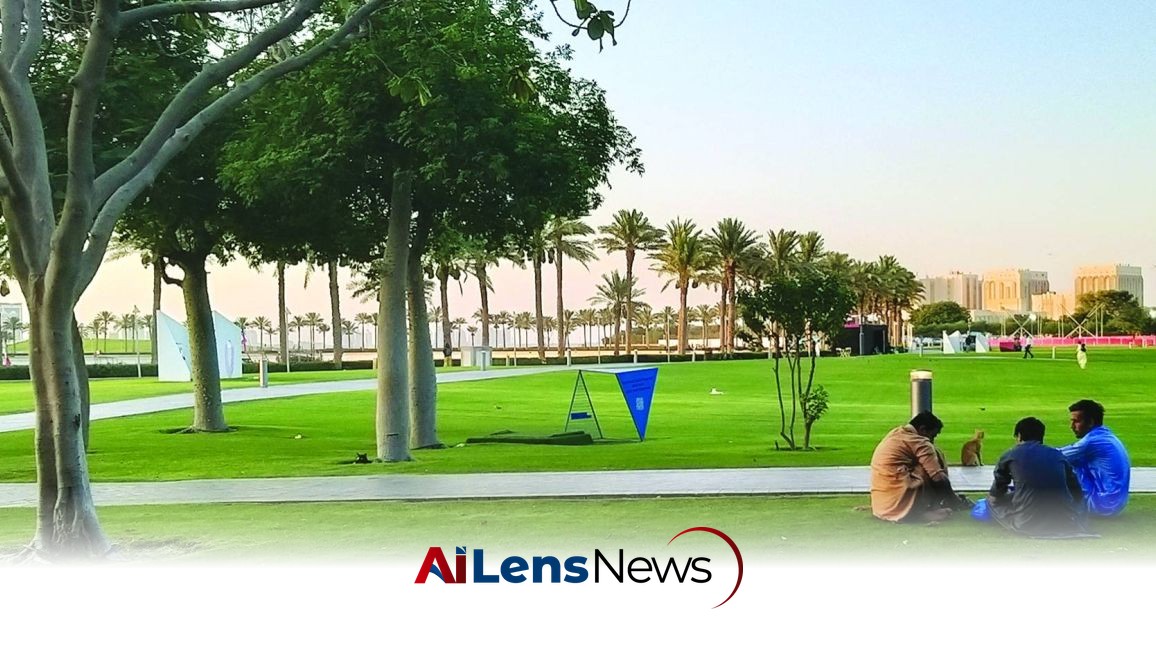


As Doha expands its public transport and pedestrian infrastructure, shaded routes are becoming essential for comfort during the intense summer heat.
Doha, Qatar Jul 25, 2026 ALN: For commuters stepping out of an air-conditioned Metro station into Qatar’s summer heat, the most difficult part of the journey can sometimes be the shortest: the final few hundred metres on foot. This transition from the cool confines of public transport to the sweltering outdoor conditions has become a significant concern for many residents and urban planners alike.
As Doha expands its public transport, pedestrian, and cycling infrastructure, the challenges posed by Qatar’s intense summer climate have gained increased attention. The harsh heat and humidity can make even brief outdoor excursions uncomfortable, leading to a greater focus on how routes connecting Metro stations, bus stops, and other transport hubs to people’s destinations can be made more comfortable and accessible. This is particularly relevant as the country prepares for a future that includes a growing population and increased urbanization, both of which will place additional demands on the transportation network.
The issue of pedestrian comfort in extreme heat is already recognized in Qatar’s official planning framework. The Doha Municipality Vision and Development Strategy, developed under the Qatar National Master Plan, calls for a “network of shaded routes” connecting key facilities and transit stops to enhance thermal comfort for pedestrians and cyclists. This strategic vision not only aims to improve the quality of life for residents but also seeks to promote sustainable urban mobility, encouraging more people to utilize public transport rather than private vehicles.
The policy highlights an increasingly important consideration for cities in hot climates: shade is not simply an amenity or architectural feature, but an essential aspect of making streets and public spaces more usable during periods of intense heat. The emphasis on shaded routes reflects a broader understanding of urban design, recognizing that comfort and usability are crucial for encouraging walking and cycling as viable modes of transportation.
For Qatar residents, the difference between shaded and exposed routes becomes particularly noticeable during summer, when daily routines often shift indoors or towards the cooler hours of early morning and evening. Many find that shaded areas significantly mitigate the discomfort associated with high temperatures, making it easier to navigate from one location to another.
“Shaded areas help a lot during summer. But sometimes we have to wait several minutes for buses, so I hope more will be built for commuters,” Doha resident Ramil R shared, adding that tall buildings and the canopy of trees also provide useful protection from direct sunlight. His comments reflect a common sentiment among residents who rely on public transport and are keenly aware of the challenges posed by the climate.
A frequent Metro commuter, Ramil finds public transport practical, particularly as stations provide welcome relief from the heat. Online discussions and expatriate guides also frequently advise residents to use the Doha Metro and covered walkways during summer to minimize prolonged exposure to the sun. These discussions highlight the extent to which everyday movement in Qatar relies on transitions between air-conditioned cars, Metro stations, buses, and buildings, emphasizing the need for seamless connectivity and comfort.
“Getting around Doha by public transport at this time of year can be challenging for many, but I think it is always better to plan ahead before leaving the house,” said Aristotle, another Doha resident who enjoys going out with his classmates during summer. His experience underscores the importance of preparation in navigating the city’s transport system during peak summer months.
A passenger, for example, may travel comfortably across Doha on the Metro only to face an exposed walk between the station exit and an office, home, shop, or other destination. This final stretch presents a challenge for public transport in a hot-climate city, where even short distances can become daunting when temperatures soar.
“We visit and hop from one mall to another via the Doha Metro, and it’s fun, and we don’t have to wait for the cold months to do this,” Aristotle noted. “There are several ways to avoid direct sunlight, and I think being exposed for a few minutes is manageable.” His perspective reflects a growing trend among residents to adapt their habits and routines in response to the climate, often using the city’s extensive shopping and entertainment options as a means to stay cool.
Qatar’s planning framework has long recognized the importance of connecting public transport with pedestrian-friendly routes. A similar policy to Doha’s appears in the Al Rayyan and Al Shahhaniya Municipality Vision and Development Strategy, which also calls for shaded routes linking key facilities and transit stops. This comprehensive approach aims to create a cohesive network of shaded pathways that enhance the overall experience of commuting in the city.
Several developments across Qatar demonstrate different approaches to addressing outdoor thermal comfort. At Msheireb Downtown Doha, climate-responsive design is integrated into the master plan. According to Msheireb Properties, buildings and streets were designed to increase shading, reduce direct solar exposure, and incorporate principles drawn from traditional Qatari architecture. This innovative design philosophy focuses on creating a harmonious relationship between the built environment and the natural climate, fostering an urban space that is both functional and aesthetically pleasing.
Rather than treating individual buildings in isolation, the district uses the relationship between buildings, streets, and public spaces to create a more pedestrian-friendly environment while providing greater protection from the sun. The integration of shaded areas, water features, and green spaces not only enhances comfort but also promotes social interaction and community engagement.
At Ras Bufontas Free Zone, the Qatar Free Zones Authority has also incorporated climate-responsive features into pedestrian planning. The authority states that pedestrian and cycling networks connect key facilities, while ample shading and specific street orientations help improve airflow and outdoor thermal comfort. This forward-thinking approach reflects a commitment to creating environments that prioritize the well-being of residents and workers alike.
Other locations have gone further by introducing mechanical cooling. At Al Gharrafa Park, the Public Works Authority (Ashghal) installed an integrated cooling and air-conditioning system serving pedestrian and jogging tracks. According to Ashghal, the system is designed to maintain temperatures along the tracks at around 26C to 28C, with trees and climbing plants helping to retain cooler air. This innovative solution exemplifies how technology can be harnessed to enhance outdoor experiences in extreme climates.
Similar temperature-controlled outdoor facilities have provided residents with more opportunities to remain physically active during the hottest months. A 2025 Xinhua report on Qatar’s adaptation to extreme summer heat highlighted the use of cooled and shaded outdoor walking facilities at Umm Al Seneem Park, where residents were able to exercise outdoors despite high temperatures. Such initiatives not only improve public health but also foster a sense of community as residents gather in these shared spaces.
Other destinations across Qatar also offer cooled, air-conditioned, or climate-controlled outdoor spaces where residents and visitors can stroll more comfortably during the summer, even during the daytime. This includes Oxygen Park at Education City, Souq Waqif’s Eastern Square, Centro at Rawdat Al Hamama, Crystal Walk at Gewan Island (Qatar’s longest climatized outdoor pedestrian walkway), 21 High St at Katara, Al Hazm Mall, and West Walk in Al Waab. These developments represent a significant investment in enhancing the quality of life for residents, demonstrating a proactive approach to urban planning that prioritizes comfort and accessibility.
As Doha continues to evolve and expand, the emphasis on walkability and shaded routes will play a crucial role in shaping the city’s future. By prioritizing pedestrian comfort and accessibility, Qatar is not only addressing the immediate challenges posed by its climate but also setting a precedent for other cities in similar environments. The integration of shaded routes and climate-responsive design into urban planning reflects a broader commitment to creating sustainable, livable cities that can withstand the challenges of extreme weather while fostering a vibrant community spirit.
To learn more about the latest developments in Destinations, stay updated with our exclusive reports and analyses on AiLensNews.

