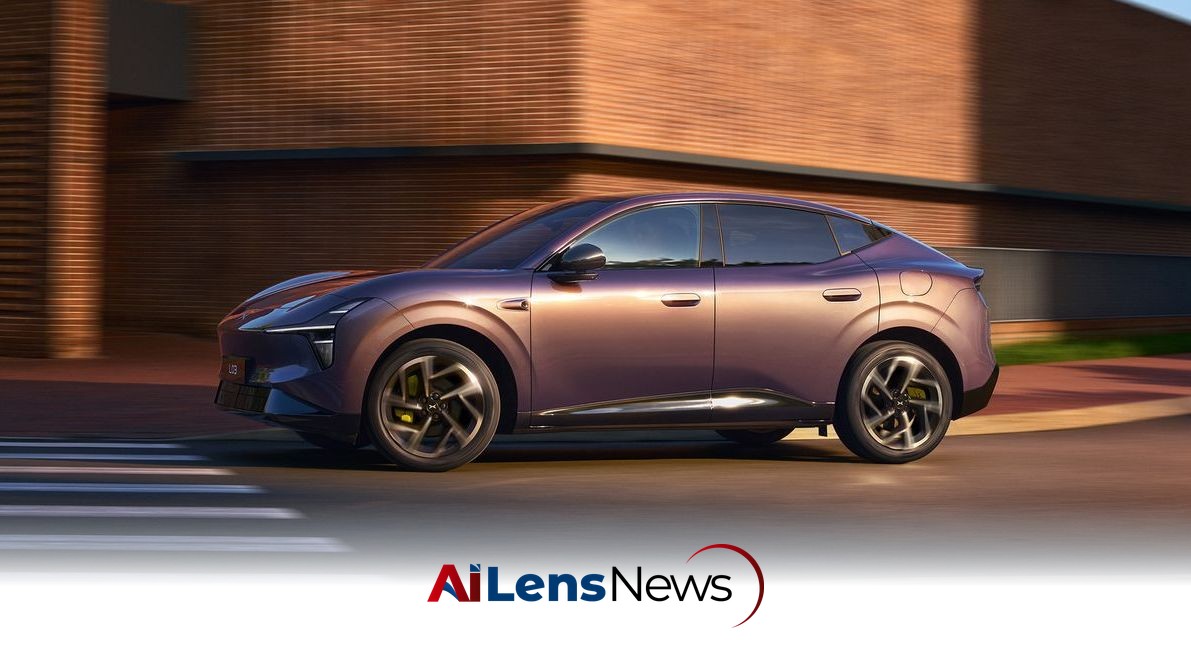


XPeng unveils its budget-friendly L03 electric vehicle, aiming to make a mark in 60 countries with impressive specs and design reminiscent of luxury models.
Washington DC, United States Jul 16, 2026 ALN: As you walk into XPeng's Munich showcase event, you're greeted by, I kid you not, a giant wooden Trojan horse. Not exactly a subtle message from a Chinese brand announcing its first-ever global release of an electric vehicle, right in the backyard of the German auto industry. This dramatic entrance serves as a metaphor for XPeng's ambitions to penetrate the European market, which has long been dominated by established automotive giants.
Founded in 2015, XPeng has rapidly evolved from a nascent startup to a significant player in the electric vehicle (EV) sector. By 2020, the company had begun exporting its EVs to Norway, marking the initiation of its European journey. This was a strategic move, as Norway is one of the leading countries in EV adoption, providing XPeng with valuable insights into consumer preferences and regulatory environments in Europe.
Despite not being among the top 10 EV manufacturers in China by volume, XPeng has carved a niche for itself, especially in the international market. The company has focused on enhancing its reputation outside of China, and the launch of the L03 is a pivotal moment in its strategy to expand globally. This model is particularly significant as it is set to be introduced in 60 countries across Europe, Latin America, the Middle East, and the Asia-Pacific region, signifying XPeng's commitment to becoming a global automotive brand.
The L03 is a substantial move for XPeng, as it represents the company's foray into the budget segment of the EV market. Priced at €35,600 (approximately $40,000), the L03 is strategically positioned below competitors like the Tesla Model Y, with the aim of achieving higher sales volumes. This pricing strategy reflects a broader trend in the automotive industry, where manufacturers are increasingly focusing on affordability to capture a larger share of the market.
In terms of specifications, the L03 boasts impressive features designed to appeal to a wide range of consumers. It claims a WLTP range of 320 miles, which is competitive in the current market. Additionally, the vehicle supports fast charging, allowing it to charge from 10 to 80 percent in just 20 minutes. Such features are critical for attracting buyers who are concerned about range anxiety, a common issue among potential EV owners.
XPeng has also invested in creating a luxurious interior experience, including a panoramic glass roof, heated and cooled massage seats, and 256-color ambient lighting. The L03's aerodynamic design, with a drag coefficient of 0.228, is engineered to enhance efficiency, thereby maximizing range. Furthermore, the vehicle is equipped with advanced technology such as smart parking, a 15.6-inch 2.5K central screen, a 27-inch heads-up display (HUD), and AI-powered voice control, making it a comprehensive package for tech-savvy consumers.
Performance-wise, the L03 does not disappoint. The top models can accelerate from 0 to 60 mph in just 4.5 seconds, while the Standard Range base version achieves this in 7.5 seconds. These figures position the L03 as a competitive option in the growing market for performance-oriented EVs.
In terms of autonomous driving capabilities, the L03 features Level 2 autonomy across most models, with the Ultra version offering L2++ capabilities for next-generation point-to-point, hands-off navigation. This advanced feature is expected to roll out in Europe by 2027, powered by XPeng's Turing 7-nanometer AI chips. The ability to upgrade the vehicle's capabilities via over-the-air updates is a significant advantage, allowing XPeng to keep its technology current without requiring physical modifications.
However, the L03's journey is not without challenges. In China, the model is known as the Mona L03 and is part of XPeng's budget Mona sub-brand. The decision to rebrand it for the global market suggests an attempt to distance the L03 from its budget origins, which XPeng believes may not resonate with international consumers. The specifications of the global version have reportedly been tweaked to align with the expectations of Western markets.
Regarding future autonomous capabilities, Xianming Liu, XPeng's senior director of engineering, has indicated that while the Ultra L03 has the computational power to support Level 4 autonomy, it currently lacks the necessary hardware for full redundancy. This limitation means that the L03 will remain capped at L2++ capabilities, which may hinder its competitiveness in a rapidly evolving market where full autonomy is increasingly becoming a benchmark.
Another point of contention is XPeng's stance on lidar technology. The company has opted to follow a similar path as Tesla, relying on cameras and advanced algorithms for autonomous driving rather than incorporating lidar sensors. While some manufacturers, including XPeng's Chinese competitors like BYD, Zeekr, and Nio, have embraced lidar, XPeng argues that its enhanced computing power and refined camera systems are sufficient to compete effectively. This divergence in technological philosophy reflects broader debates within the automotive industry about the best approach to achieving safe and reliable autonomous driving.
Upon a closer look, the L03 presents a striking visual appeal that may catch the eye of potential buyers. Its design bears a resemblance to the Ferrari Luce, as well as to Denza's Z9 GT, despite the significant differences in their price points. This convergence of design aesthetics raises intriguing questions about how luxury and budget brands are blurring the lines in terms of visual identity. As luxury EVs struggle with differentiation in an increasingly crowded market, XPeng's design choices may inadvertently impact how consumers perceive higher-end vehicles.
XPeng's design team, led by JuanMa López, the former head of exterior design at Ferrari, is focused on creating vehicles that embody luxury and precision, regardless of their price segment. López's experience at Ferrari, where he contributed to the design of iconic models, informs XPeng's approach to aesthetics and craftsmanship. Rafik Ferrag, head of creative design at XPeng, emphasizes that today's consumers expect high-quality design and technology regardless of the price bracket. This shift in consumer expectations challenges traditional notions of automotive design and segmentation.
As XPeng prepares to launch the L03 globally, it faces a landscape filled with both opportunities and challenges. The company's ability to successfully navigate this complex environment will depend on its understanding of local markets, consumer preferences, and regulatory requirements. With the automotive industry undergoing a transformation driven by electrification and technological advancements, XPeng's entry into the global market with the L03 is a significant development that could reshape the competitive dynamics of the EV landscape.
Ultimately, XPeng's L03 aims to offer consumers a compelling blend of affordability, performance, and advanced technology. As the EV market continues to expand, the L03's success may serve as a bellwether for other manufacturers looking to enter or compete in this rapidly evolving sector. The implications of XPeng's global strategy extend beyond just its own brand; they may also influence the strategies of established automakers as they respond to the growing presence of Chinese manufacturers in the international automotive arena.
To learn more about the latest developments in Software & Platforms, stay updated with our exclusive reports and analyses on AiLensNews.

