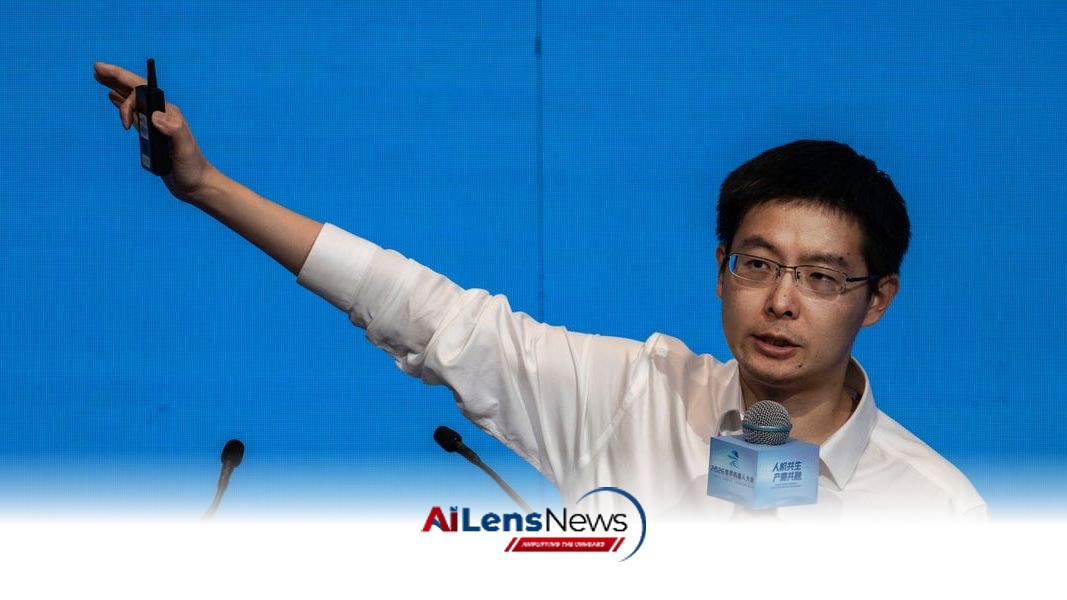



Wang Xingxing, CEO of Unitree Robotics, forecasts significant advancements in humanoid robotics in the coming years, following a successful IPO.
Washington DC, United States Aug 21, 2026 ALN: Unitree Robotics, a company known for its innovative advancements in robotics, is making headlines with its CEO Wang Xingxing's bold predictions regarding the future of humanoid robots. During a keynote address at the 2026 World Robot Conference held in Beijing, Wang expressed his belief that a significant breakthrough in robotics is imminent, potentially occurring within the next two to five years. This announcement follows Unitree's recent initial public offering (IPO) in Shanghai, which successfully raised $900 million, further solidifying the company’s position in the rapidly evolving robotics industry.
The core of Wang's optimism lies in the potential for robots to perform a wide range of tasks in unfamiliar environments without requiring extensive training. He articulated a vision where, in the near future, a humanoid robot could enter a home it has never encountered before and execute approximately 80% of household tasks simply by responding to voice or language commands. This capability, according to Wang, would signify a pivotal moment in robotics akin to the 'ChatGPT moment' for artificial intelligence, where machines exhibit a level of understanding and adaptability previously thought unattainable. He estimates that achieving this level of embodied intelligence could be possible within two to three years, although he also acknowledges the possibility of a longer timeline, extending up to ten years, should the pace of innovation slow.
One of the primary challenges facing the development of household robots is the integration of artificial intelligence with physical interactions in dynamic environments. Wang noted that while Unitree has successfully tested its robots in controlled settings such as automotive factories, the ability of these machines to generalize their skills across diverse tasks in real-world scenarios remains a significant barrier. This issue highlights the complexity of creating robots that can not only understand commands but also navigate the unpredictable nature of human environments, which often require nuanced decision-making and adaptability.
Unitree Robotics, founded in 2016, initially gained fame for its four-legged robotic dogs, which showcased the company's engineering prowess and innovative spirit. Over the years, Unitree has expanded its focus to include humanoid robots, a move that has positioned the company as a key player in the global robotics boom. The rise of Unitree reflects China's increasing competitiveness in the field of physical artificial intelligence, as the nation seeks to establish itself as a leader in technological innovation.
Unitree’s recent IPO was met with overwhelming market enthusiasm, as evidenced by a staggering 460% surge in its stock price on the first day of trading. This remarkable increase brought the company's valuation to approximately $50 billion, underscoring investor confidence in the future of robotics and the potential for significant returns in this burgeoning sector. The IPO not only marks a milestone for Unitree but also signals a broader trend of increasing investment in robotics and artificial intelligence, as companies and investors alike look to capitalize on the advancements in technology.
Wang's optimistic outlook stands in contrast to some perspectives within the tech community. For instance, Nvidia CEO Jensen Huang has suggested that the 'ChatGPT moment' for robots may have already occurred, indicating that advancements in robotics are progressing more rapidly than some anticipate. Huang has characterized the physical AI market as a colossal opportunity, estimating its value at $50 trillion, with humanoid robots alone accounting for approximately $40 trillion of that potential market. This staggering figure illustrates the vast economic implications of successful humanoid robot integration into everyday life.
Venture capitalist Vinod Khosla has echoed similar sentiments regarding the timeline for household robots, predicting that we may witness a 'ChatGPT moment' within the next two to three years. Khosla envisions a future where humanoid robots are commonplace in homes, initially performing specialized tasks such as cooking. He estimates that these robots could be priced between $300 to $400 a month, making them accessible to a wider demographic, particularly those who currently employ household assistance. This affordability could lead to a significant shift in how households operate, with robots taking on roles traditionally filled by human workers.
Currently, Unitree’s G1 model, priced at $13,500, is recognized as one of the most affordable humanoid robots available on the market. While this price point may still be out of reach for many consumers, the anticipated reduction in costs over the coming years could facilitate broader adoption of humanoid robots in domestic settings. The potential for robots to assist with daily chores and tasks could not only enhance convenience but also free up time for individuals to engage in other pursuits, thereby transforming the fabric of daily life.
As the robotics industry continues to evolve, the implications of advancements in humanoid robotics extend beyond mere convenience. The integration of robots into everyday life raises questions about labor markets, ethical considerations, and the future of human-robot interactions. As companies like Unitree Robotics push the boundaries of what is possible with humanoid robots, society must grapple with the challenges and opportunities that arise from this technological revolution. The coming years will undoubtedly be critical in shaping the trajectory of robotics and its role in our daily lives.
To learn more about the latest developments in Artificial Intelligence, stay updated with our exclusive reports and analyses on AILensNews.

