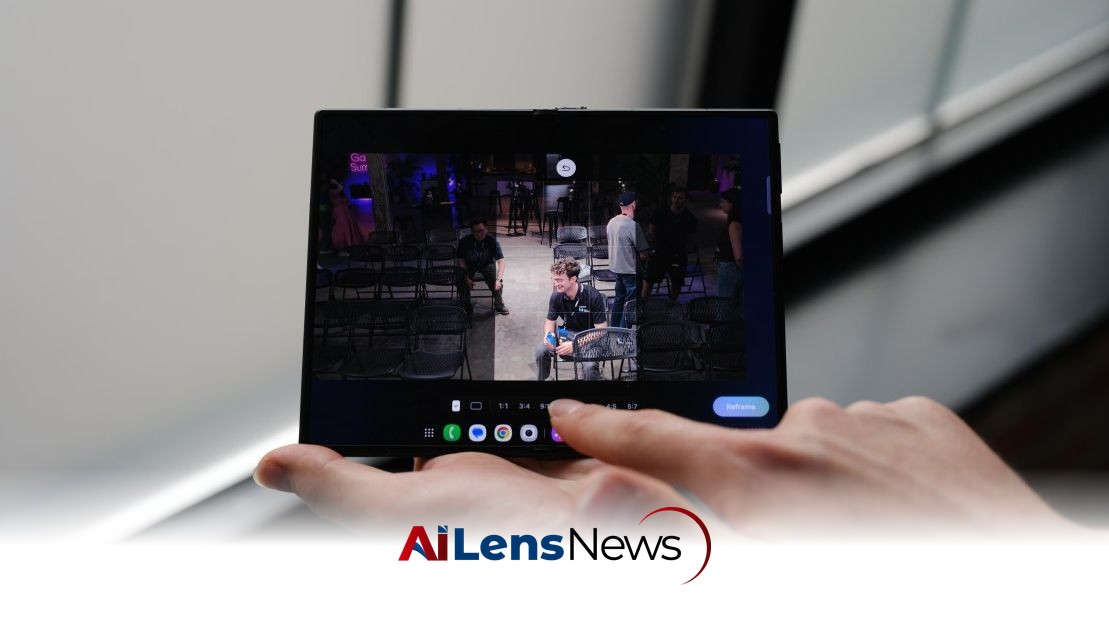


Samsung's latest foldable phones, the Galaxy Z Fold 8 and Z Flip 8, showcase incremental upgrades and new features. Here's how they stack up against each other.
Washington DC, United States Jul 22, 2026 ALN: Samsung has been a pioneer in the smartphone industry, particularly in the innovative segment of foldable devices. Over the years, the company has consistently pushed the boundaries of mobile technology, and its latest offerings, the Galaxy Z Flip 8 and Z Fold 8 series, are no exception. Introduced at the July 2026 Unpacked event, these devices are set to launch on August 7th, 2026, and aim to further solidify Samsung's leadership position in the foldable smartphone market.
The Galaxy Z Flip 8 and Z Fold 8 series continue the legacy of Samsung's foldable phones, which have attracted significant attention since their initial release. The Z Flip 8, designed to be the more budget-friendly option, starts at a price point of $1,199.99, making it accessible to a broader range of consumers. On the other hand, the Z Fold 8 is positioned as a premium device, beginning at $1,899.99. For those seeking the utmost in specifications and features, the Z Fold 8 Ultra is available at a price of $2,099.99, targeting users who are willing to invest in top-tier mobile technology.
One of the most significant changes in the Z Fold 8 is its design and form factor. While it retains the Z Fold name, the device adopts a more compact and shorter design compared to its predecessors. It features a 7.6-inch main display and a 5.5-inch cover display, marking a departure from earlier models that prioritized larger screen sizes. This design shift reflects a growing consumer preference for devices that are not only functional but also portable. The Z Fold 8 Ultra continues to cater to users who desire a larger display, boasting an impressive 8-inch main display and a 6.5-inch cover display, which is ideal for multitasking and media consumption.
Both the Z Fold 8 and Z Fold 8 Ultra utilize Samsung's Dynamic AMOLED technology, which is known for delivering vibrant colors, deep contrasts, and an overall superior viewing experience. The main display resolution of the Z Fold 8 stands at 1848 x 2448 pixels, while the Ultra model offers a higher resolution of 2504 x 2256 pixels. These enhancements are particularly important for users who engage in activities such as gaming, video streaming, and productivity tasks, where display quality significantly impacts the overall experience.
Camera capabilities have also seen notable improvements, particularly in the Z Fold 8 Ultra, which features a remarkable 200-megapixel main camera. This represents a substantial upgrade from the 50-megapixel camera found in the standard Z Fold 8. The Ultra model also includes a telephoto lens with 3x optical zoom, appealing to photography enthusiasts who seek versatility and high-quality images from their mobile devices. Meanwhile, the Z Flip 8, while not as advanced in camera specifications, still offers a respectable dual-camera setup, including a 50-megapixel wide camera and a 12-megapixel ultrawide camera, making it suitable for casual photography.
Battery life is another critical consideration for users of foldable devices, given their multifunctional nature. The Z Fold 8 is equipped with a robust 4,800mAh battery, while the Z Fold 8 Ultra features a slightly larger 5,000mAh battery to support its more demanding specifications. The Z Flip 8, on the other hand, maintains a 4,300mAh battery, which is unchanged from its predecessor. While battery capacities are essential, the efficiency of the Snapdragon 8 Elite Gen 5 processor across all models is expected to enhance overall performance and battery life, ensuring that users can rely on their devices for daily use without frequent recharging.
In terms of processing power, all three models are powered by the Snapdragon 8 Elite Gen 5 for Galaxy processor, which is engineered to deliver high performance while optimizing power consumption. This is particularly crucial for foldable devices, which require robust processing capabilities to handle multitasking, gaming, and other demanding applications. The RAM configurations across the models vary, with the Z Fold 8 and Z Fold 8 Ultra offering options for 12GB and 16GB of RAM for the 1TB storage model, while the Z Flip 8 is limited to 12GB. This variety in RAM options allows users to select a model that best suits their needs, whether they prioritize multitasking capabilities or storage capacity.
Another significant aspect to consider is the software experience. All three devices run on Android 17, which introduces new features and optimizations specifically tailored for foldable devices. Samsung has been proactive in enhancing its software ecosystem to leverage the unique capabilities of foldable screens. This includes improvements in multitasking, app compatibility, and user interface adjustments that take advantage of the larger displays. Such enhancements are crucial for providing a seamless user experience, particularly for those who utilize their devices for both work and leisure.
While hardware specifications are vital, the overall user experience remains equally important. Samsung has invested heavily in refining the software experience for its foldable devices, ensuring that users can smoothly transition between the cover and main displays. Features such as Flex Mode, which allows the device to stand at an angle for hands-free video calls or media consumption, continue to be a highlight of the foldable experience. This functionality not only enhances usability but also showcases the innovative potential of foldable technology.
In terms of connectivity, the Z Fold 8 and Z Fold 8 Ultra support both sub-6GHz and mmWave 5G, while the Z Flip 8 is limited to sub-6GHz. This difference in connectivity options may influence user decisions based on their network availability and usage patterns, particularly as 5G technology continues to expand globally. Additionally, all models support Wi-Fi 7 and Bluetooth 6.0, ensuring fast and reliable wireless connections, which are essential for tasks such as streaming, downloading, and online gaming.
Water and dust protection remains a priority for Samsung, with all three models carrying an IP48 rating. This level of resistance is essential for users who lead active lifestyles, providing peace of mind against accidental spills, dust exposure, and other environmental factors that could potentially damage their devices. The durability of these devices is a key selling point, particularly in a market where consumers are increasingly looking for products that can withstand daily wear and tear.
In conclusion, the Samsung Galaxy Z Flip 8 and Z Fold 8 series represent the latest advancements in foldable smartphone technology. While the Z Flip 8 may appeal to those seeking a stylish and compact device, the Z Fold 8 and Z Fold 8 Ultra cater to users who demand larger displays and enhanced functionality. The incremental updates across the series reflect Samsung's strategy of refining its offerings while maintaining a competitive edge in an evolving market. As foldable devices continue to gain traction, Samsung's commitment to innovation and quality will likely play a significant role in shaping the future of mobile technology. The company's focus on user experience, combined with cutting-edge specifications, positions the Galaxy Z Flip 8 and Z Fold 8 series as compelling options for consumers looking to embrace the next generation of smartphones.
To learn more about the latest developments in Mobile & Apps, stay updated with our exclusive reports and analyses on AiLensNews.

