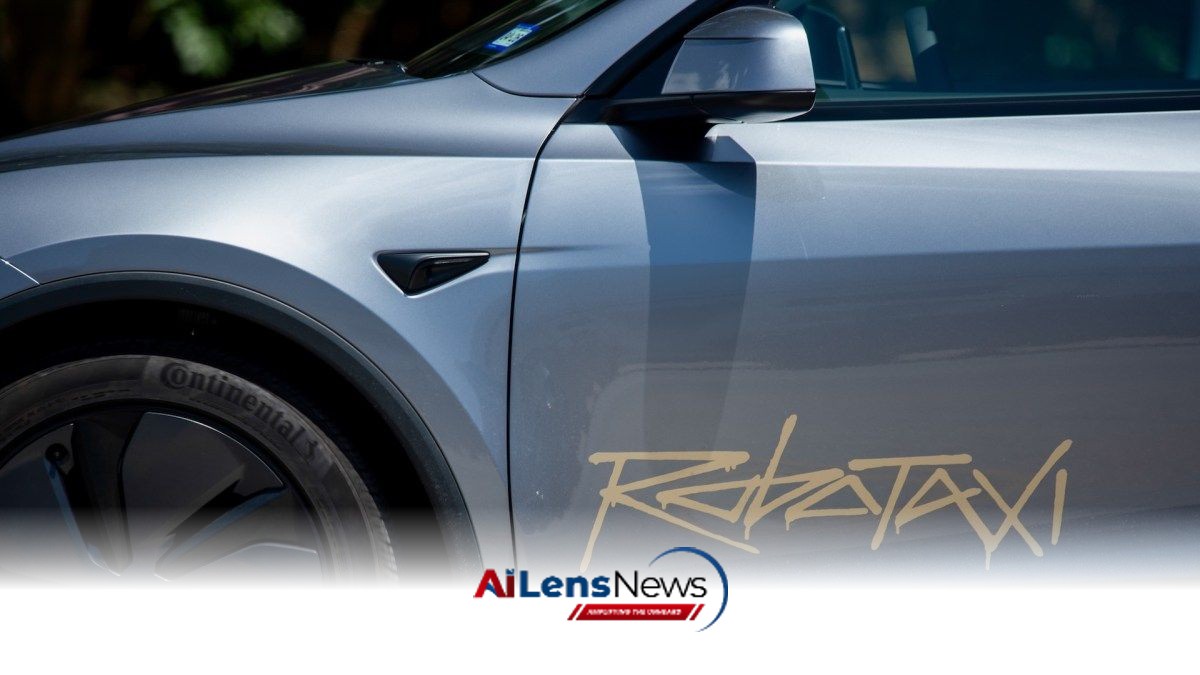



Nevada's Transportation Authority has granted permits for Tesla, Uber, and Waymo to deploy up to 8,000 robotaxis in Clark County over the next year.
Washington DC, United States Aug 21, 2026 ALN: Nevada, get ready for the robotaxis.
The Nevada Transportation Authority unanimously approved three permits Thursday that will allow Tesla, Uber, and Waymo to operate commercial robotaxi services in Clark County, home to Las Vegas. Together, these permits would deploy up to 8,000 robotaxis across the county over the next 12 months. This landmark decision marks a significant step in the evolution of autonomous transportation and reflects the growing acceptance of self-driving technology in urban settings.
Tesla’s permit allows it to deploy up to 5,000 robotaxis, while Waymo is authorized to operate up to 1,000 autonomous vehicles over the next year. Uber was also approved for 1,000 robotaxis, which it will operate through partnerships with Hyundai subsidiary Motional and Zoox. Zoox already holds an autonomous vehicle network company permit that allows it to operate 100 robotaxis. These approvals come at a time when the demand for innovative transportation solutions is increasing, particularly in densely populated areas like Las Vegas.
However, whether these companies will be able to launch the full number of robotaxis remains uncertain. Testimony from Tesla representatives and the other companies suggests the answer is no. Eric Early, Tesla’s Cybercab chief engineer, acknowledged during the meeting that while the permit allows for a maximum of 5,000 vehicles, he does not foresee the company being in a position to deploy that many within the next year. "The 5,000 has always been a ceiling for us... I think we would be extremely happy and satisfied if we could get ourselves up to 2,500, maybe a bit higher than that in the next year," he stated, indicating that the rollout may be more gradual than initially anticipated.
Even if these three companies roll out only half of those totals, Clark County — and Las Vegas specifically — is shaping up to be a major robotaxi battleground, with Tesla, Uber (via its autonomous vehicle partners Motional and Zoox), and Waymo all competing for the same riders. This competitive landscape could lead to innovations in service offerings and pricing strategies as each company attempts to capture market share in the burgeoning robotaxi sector.
The implications of large-scale robotaxi deployment are profound, particularly for the local workforce. Depending on who you ask, these companies will either deliver a whole new category of jobs designed to maintain, charge, and clean these vehicles or will wipe out an entire category of workers: human taxi and gig drivers. This duality raises critical questions about the future of work in the transportation sector and the potential need for retraining and transition programs for displaced workers.
Representatives from the Livery Operators Association and local taxi companies opposed the permits, arguing that the approvals move too far, too fast. They expressed concerns about the potential for oversaturation in the commercial transportation industry and the impact on roadway congestion. Kimberly Maxson-Rushton, a lawyer representing the Livery Operators Association, articulated these concerns at the hearing, stating, "These applications raise two grave concerns... One deals with the oversaturation of the commercial transportation industry as a whole in Nevada. And the second one deals with the overcrowding of the roadways, and specifically the Golden Triangle."
The Golden Triangle, an area between the airport and Las Vegas Boulevard and the surrounding area, is where most of the AV testing has occurred to date. This region has been a focal point for autonomous vehicle testing due to its high traffic volume and the variety of driving conditions. Motional is also testing in the downtown area and in a shopping district known as Town Square, further highlighting the importance of these locations in the broader context of autonomous vehicle deployment.
Uber has tried to position itself as the Goldilocks option in this fight, advocating for a hybrid approach in which ride-hailing networks are made up of humans and robotaxis. This strategy aims to balance the benefits of automation with the existing workforce, allowing for a smoother transition into a future where autonomous vehicles are more prevalent. The company has even lobbied for a system that would require robotaxis to operate on a ride-hailing network that also uses human drivers, a stance that puts it at odds with Waymo and doubles as a hedge against its own autonomous ambitions falling short of Tesla’s or Waymo’s.
Uber made a similar pitch during the NTA meeting, noting that a hybrid approach would allow cities to gradually integrate vehicles to meet peak demand rather than flooding the market all at once. This gradual integration could mitigate some of the concerns raised by local taxi operators and provide a framework for collaboration between traditional and autonomous transportation services.
As the robotaxi landscape continues to evolve, the decisions made in Nevada could serve as a model for other states considering similar regulations. The balance between innovation, public safety, and the economic impact on local communities will be critical as policymakers navigate the complexities of autonomous transportation. The outcome of this initiative could influence public perception of robotaxis, shaping the future of urban mobility in cities across the United States and beyond.
To learn more about the latest developments in Software & Platforms, stay updated with our exclusive reports and analyses on AILensNews.

