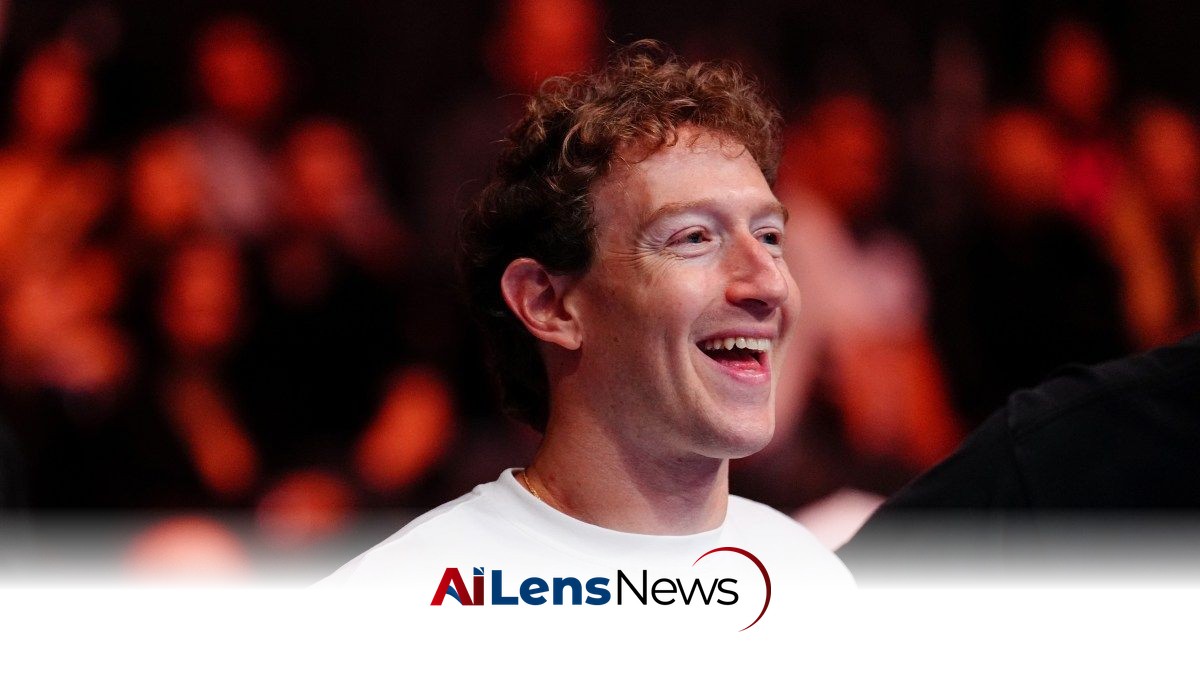


The latest episode of the Equity podcast explores the skepticism surrounding Mark Zuckerberg's optimistic AI vision, highlighting concerns about Meta's past.
Washington DC, United States Aug 17, 2026 ALN: Meta CEO Mark Zuckerberg published a 6,500-word essay this week declaring that “The Future is for Everyone” and painting an optimistic picture of a future powered by AI, where “everyone will have an exceptionally capable personal agent that understands you, your goals, and everything you care about.”
On the latest episode of the Equity podcast, Kirsten Korosec, Rebecca Bellan, and I discussed why not everyone is buying Zuckerberg’s vision — including our colleague Russell Brandom, who wrote that the manifesto is “exactly why people don’t like AI.”
Comparing Zuckerberg to Anthropic CEO Dario Amodei (who spent the weekend pushing back against the idea that he’s an AI doomer), Rebecca said the Meta CEO seems to be positioning himself “almost like an anti-Dario.” The problem, however, is Zuckerberg and Meta’s history.
“You look back to the social media days, [Zuckerberg] was saying that he wants to make sure that everyone has an outlet for talking to their friends and having a social network,” Rebecca said. “And what do we have instead? We have ragebaiting and s, and not connection.”
Keep reading for a preview of our conversation, edited for length and clarity.
Rebecca Bellan: Cynically, I think that this is an attempt for Meta to win in a different way. They’re not winning in the frontier, closed-model space. They’re not necessarily even winning in the open space. But when it comes to personal empowerment, as Mark Zuckerberg talks about in his letter, “The Future Is for Everyone,” that’s where he’s trying to win. He’s trying to provide the models that people will use for their own personal AI on their own personal devices.
I think last year, when he published a [similar] “Futures for Everyone” letter, [the promise] was that a lot of that AI would go onto the glasses, the wearables, but it’s not really clear what the final hardware form factor for this would be, and I guess he’s like leaving it up to the individual to choose.
So his idea is that you’re using [Meta’s new AI model] Glimmer for managing your schedule, drafting messages, organizing files, it’s always on, it can operate anytime, anywhere, with or without an internet connection.
But then there is still Muse Spark, so that maintains a way for them to have some level of control over, still, its most capable models, and provide a revenue outlet for people who want to scale their compute, and people who want to like do larger projects, or companies that might want to do larger projects.
Anthony Ha: I imagine the part of the context here is also — Meta has made some very serious investments in AI, last year there [were] also all these stories about how much money they were trying to pay for AI scientists, but in terms of who we think of as the leading companies, the frontier labs, Meta doesn’t tend to come up in the conversation.
Another way it doesn’t come up in the conversation is in, you know, what are the popular consumer AI chatbots? Certainly, people are interacting with Meta AI tools in Instagram, in Facebook, but it’s not a company that you think of when, “I’m going to go use my personal assistant.” Meta isn’t that yet, and so it feels, to a certain extent, this is an attempt to reposition them and try to claim space that they really haven’t been that successful at before. Is that fair?
Rebecca: I think that is really fair to say. And I would take it with a grain of salt because Mark Zuckerberg loves to put out a vision of what his companies will do for people and how they will empower people. And so far, what that looks like for Meta — I mean, of course, Llama is great; it’s a great tool and open source, but I think that on a consumer level, how are people using Meta AI? Well, there’s like a lot of creepy-ass chatbots.
My TLDR is: I think that [Zuckerberg’s] letter and his idea of personal empowerment is putting a bad taste in a lot of people’s mouths because it’s him who’s saying it. Russell Brandom, our AI editor, wrote about this this week. You look back to the social media days, he was saying that he wants to make sure that everyone has an outlet for talking to their friends and having a social network. And what do we have instead? We have ragebaiting and s, and not connection.
Kirsten Korosec: Yeah, I think that the manifesto didn’t strike the right note for a lot of people. And to Russell’s point, which he makes in this column, is it’s what’s making people hate AI or hate on AI — because, to your point, it is coming from Zuckerberg, and I do think also it feels very Pollyannish in a way. He’s put these thoughts out there in the past, and it really doesn’t provide what I think is a more realistic picture, but instead casts AI as this great tool for humanity. That might be the case, but there will also be extreme costs to that, and I think that’s why the negative reaction to it has been so widespread.
Rebecca: It feels like he’s positioning himself as almost like an anti-Dario. I don’t know. There’s a lot of talk among the frontier labs: “We’re pacing the frontier, pulling back, focus on safety. We need to slow down development.” They’re not doing any of that, of course, but they’re talking about it, and because of all these recent cybersecurity incidents that we’ve had.
Whereas Mark Zuckerberg, on the other hand, is like, “No, no, we do not slow down. We cannot afford to give an inch to China, and slowing down would only hurt the individual, who can be empowered by this technology.”
But I mean, I was like, “Oh, maybe I’ll try to download Muse Glimmer and see what I can do with it.” Can I download it to my MacBook? No. You need specific hardware. I forget what the hardware is — it’s not actually that accessible to the average person.
Kirsten: It’s not for everyone. Not yet.
To learn more about the latest developments in Artificial Intelligence, stay updated with our exclusive reports and analyses on AiLensNews.

