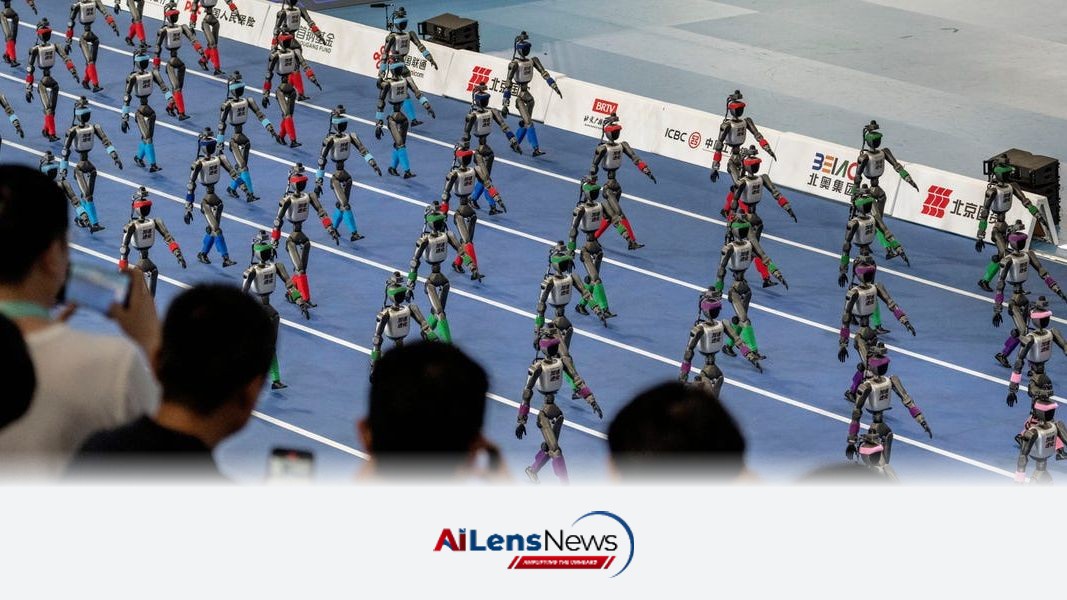



The second World Humanoid Robot Games in Beijing highlights advancements and setbacks in robotics, featuring events like sprinting and soccer.
Washington DC, United States Aug 23, 2026 ALN: The second World Humanoid Robot Games kicked off on Saturday in Beijing, showcasing a blend of innovation and challenges within the humanoid robotics field. This event is significant, as it highlights the rapid advancements in robotics technology while also shedding light on the limitations that persist in this burgeoning industry. Humanoid robots participated in a variety of activities, including sprinting, playing soccer, and boxing, but the event also served as a reminder of the current technological constraints, with robots occasionally crashing into walls and exhibiting erratic behaviors.
In a notable test run, a humanoid robot named "Lightning" reportedly completed the 100-meter sprint faster than Usain Bolt's world record set in 2009, according to Chinese state media. This claim, while impressive, raises questions about the accuracy of the timing methods used and the conditions under which the robot operated. The event featured preliminary versions of the 100-meter and 400-meter sprints, a 7-on-7 soccer match, and brief demonstrations of other activities, all livestreamed by Sports Insider on YouTube. These competitions are not just for entertainment; they provide valuable data on robot performance and areas for improvement.
Despite their high speeds, many robots struggled to slow down, leading to several crashes into a blue padded wall at the end of the track. The inability of the robots to decelerate effectively highlights a critical challenge in robotics: the balance between speed and control. Some robots even lost limbs during these collisions, showcasing the fragility of current designs. After each race, a four-man stretcher team was on hand to carry the damaged robots off the track, emphasizing the physical vulnerabilities of these machines. In one instance, a robot briefly caught fire before being extinguished, which raises concerns about safety protocols in the design and operation of humanoid robots.
This year's competition promises more events than last year's, with additions like tug-of-war, weightlifting, tennis, and traditional Chinese martial arts, according to reports from the Chinese government. The expansion of events reflects a growing interest in demonstrating the versatility of humanoid robots and their potential applications in various fields, from sports to rehabilitation. However, the practical implications of these events extend beyond entertainment; they serve as a testing ground for new technologies that could eventually lead to more functional and reliable robots in everyday life.
The opening ceremony featured over 100 robots parading around the track, accompanied by an orchestral crescendo. This spectacle was designed to captivate the audience and showcase the progress made in humanoid robotics. This was preceded by a soccer match between two teams of seven robots each, which displayed a somewhat slow pace as some robots appeared to lose interest and remain motionless while the ball rolled past. Such moments illustrate the challenges of programming robots to engage in dynamic sports, where unpredictability is a key factor.
In a dramatic moment, a blue team robot delivered a fierce kick to an opponent, earning it a yellow card. This incident, while humorous, underscores the complexity of creating robots that can understand and adhere to the rules of human sports. The ceremony also included a low-speed tennis match between a human and a robot, with the human winning the point. According to state media, over 2,000 robots are expected to participate over the five-day event, indicating a robust interest in this field and a commitment to advancing robotic capabilities.
The humanoid robotics industry is known for its impressive demonstrations, yet the limitations of current AI systems have hindered widespread adoption in practical applications. Both China and the United States are investing heavily in this sector as AI technology continues to advance. The competition between these two nations is not just about technological superiority; it also reflects broader geopolitical dynamics, as advancements in robotics could have implications for national security, economic competitiveness, and labor markets.
Shares in Unitree, a Chinese robotics company famous for its agile humanoid robots, surged as much as 629% during its trading debut, closing up 460%. This dramatic increase in stock value highlights the investor confidence in the potential of humanoid robots to transform industries. Humanoid robots are seen as a source of national pride in China, coinciding with the ongoing 2026 World Robot Conference in the same city, further emphasizing the importance of robotics to China's national identity and technological aspirations.
Analysts from Morgan Stanley predict that the emerging market for humanoid robots could be worth $7.5 trillion by 2050, with Unitree and its local competitors currently dominating the field. This projection illustrates the immense economic potential of humanoid robotics, which could revolutionize sectors such as manufacturing, healthcare, and entertainment. In contrast, U.S. humanoid robots are still far from mass commercial launches, indicating a potential gap in technological advancement and market readiness between the two countries.
Attendance at Actuate, a San Francisco conference for robot builders, has tripled since its inception two years ago, reflecting increased interest from Silicon Valley investors in humanoid robotics. Robotics startups raised a record $15 billion globally in 2025, with another $18.8 billion raised so far this year. A $1 trillion payment package for Elon Musk is linked to Tesla's delivery of one million Optimus robots, showcasing the significant financial stakes involved in the race to develop humanoid robotics.
However, U.S. robot innovation faces challenges due to hardware shortages. At Actuate, data vendors outnumbered actual robots, indicating a potential imbalance in the supply chain that could hinder progress. Recent FCC restrictions on new foreign-made advanced robotic devices have made it more difficult for U.S. firms to source affordable Chinese components, complicating the landscape for American robotics companies striving to innovate and compete on a global scale.
Despite these hurdles, there may still be opportunities for the U.S. to catch up. Unitree's CEO recently stated that the industry's "ChatGPT moment" could be a decade away, suggesting significant advancements may still be on the horizon. This statement reflects a broader sentiment within the robotics community that while current technology may have limitations, the rapid pace of AI development could lead to breakthroughs that transform the capabilities of humanoid robots in the near future. As the competition heats up, both nations will likely continue to push the boundaries of what is possible in robotics, setting the stage for a new era of innovation.
To learn more about the latest developments in Robotics & Automation, stay updated with our exclusive reports and analyses on AILensNews.

