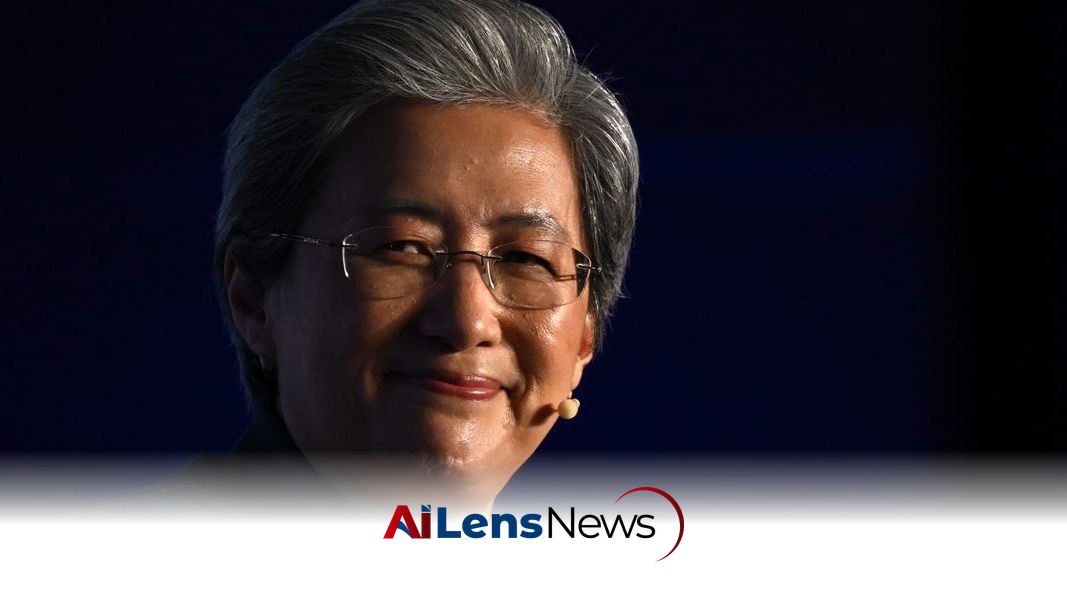


AMD's new partnership with Cerebras aims to enhance AI inference through a disaggregated approach, challenging Nvidia's dominance in the market.
Washington DC, United States Jul 23, 2026 ALN: Advanced Micro Devices (AMD), a prominent player in the semiconductor industry, is making significant strides in the field of artificial intelligence (AI) by partnering with Cerebras Systems, a startup known for its innovative chip technology. This collaboration marks a pivotal moment in the evolution of AI inference, a process that involves generating responses from complex AI models. AMD's CEO, Lisa Su, announced this partnership during a recent event, emphasizing the company's belief that the future of AI will not be dominated by a single chip but rather by a more diversified approach.
The concept of AI inference has gained traction as organizations increasingly rely on AI technologies for various applications, from natural language processing to image recognition. Traditionally, AI inference was handled by a singular type of hardware that managed both the processing of prompts and the generation of responses. However, AMD argues that these tasks are fundamentally different and require specialized hardware to optimize efficiency and performance. This is where the idea of "disaggregated inference" comes into play. Disaggregated inference splits workloads across different types of hardware, allowing for a more tailored and effective processing environment.
AMD's new Helios server system is at the forefront of this initiative. Designed to handle vast amounts of requests, Helios aims to rival Nvidia's offerings in terms of performance and cost. Cerebras, on the other hand, is renowned for its massive, wafer-sized chip that excels in generating near-instantaneous responses. By combining the strengths of both companies, AMD and Cerebras hope to create a powerful ecosystem for AI inference that leverages the unique capabilities of each type of hardware.
This partnership is particularly timely as demand for AI chips has surged, driven by the explosive growth of AI applications across various sectors. Companies like AMD, Nvidia, and Broadcom are racing to meet this demand, with Nvidia currently holding a dominant position in the AI training market. However, as the focus shifts from training AI models to deploying them in real-world applications, competition among chipmakers has intensified. The collaboration between AMD and Cerebras represents a strategic move to capitalize on this trend and establish a foothold in the increasingly competitive landscape of AI inference.
Analysts have noted that the shift toward disaggregated inference is not just a trend but a necessary evolution in the industry. A report from UBS highlighted that the limitations of current architectures are prompting companies to explore new setups that enhance efficiency and reduce costs. This aligns with AMD's vision for Helios, which is designed to integrate various types of AI chips into a cohesive system. The report also pointed out that other major players, such as Nvidia and Amazon Web Services, are pursuing similar strategies, indicating a broader industry shift.
However, the transition to disaggregated inference is not without its challenges. One of the primary concerns is orchestration—ensuring that different chips can work together seamlessly to deliver optimal performance. This requires sophisticated software and management systems to coordinate the various components involved in the inference process. AMD's partnership with Cerebras aims to address these challenges by harnessing the strengths of both companies to create a more efficient and effective AI inference system.
During the Advancing AI event, AMD unveiled the Helios server system, which is designed to bundle multiple types of AI chips to maximize performance. This system is AMD's response to Nvidia's Vera Rubin NVL72 rack, which has been a benchmark in the industry for AI inference. By showcasing the capabilities of Helios, AMD aims to attract AI labs and cloud giants, including notable names like OpenAI, Meta, Microsoft, Oracle, and Anthropic, all of which have been exploring partnerships with AMD to enhance their AI infrastructure.
In a direct challenge to Nvidia, AMD claims that Helios can deliver up to 30% more inference tokens per dollar compared to Nvidia's Vera Rubin NVL72 rack. This assertion highlights AMD's commitment to providing cost-effective solutions for AI inference, which is a critical consideration for companies looking to deploy AI at scale. Lisa Su reinforced this message during her presentation, stating that "Every Helios can deliver more performance for the largest models, more capacity for longer context, and the bandwidth to scale across thousands of racks." This emphasizes the scalability and performance capabilities of the Helios system, positioning it as a competitive alternative in the market.
The implications of AMD's partnership with Cerebras extend beyond just the technical specifications of the Helios server system. As AI continues to permeate various aspects of business and society, the demand for efficient and effective AI inference solutions will only grow. By investing in disaggregated inference, AMD is positioning itself as a leader in the next generation of AI technology, potentially reshaping how companies approach AI deployment.
Furthermore, this partnership could have significant ramifications for the broader semiconductor industry. As more companies recognize the limitations of traditional architectures, there may be a shift toward more collaborative efforts, where companies pool resources and expertise to develop innovative solutions. This could lead to a more dynamic and competitive landscape, fostering innovation and driving advancements in AI technology.
In conclusion, AMD's collaboration with Cerebras represents a strategic move to redefine the landscape of AI inference. By embracing the concept of disaggregated inference and leveraging the strengths of both companies, AMD aims to provide a more efficient and cost-effective solution for AI applications. As the demand for AI technologies continues to rise, this partnership could play a crucial role in shaping the future of AI deployment, ultimately benefiting businesses and consumers alike as they harness the power of artificial intelligence in their daily operations.
To learn more about the latest developments in Software & Platforms, stay updated with our exclusive reports and analyses on AiLensNews.

