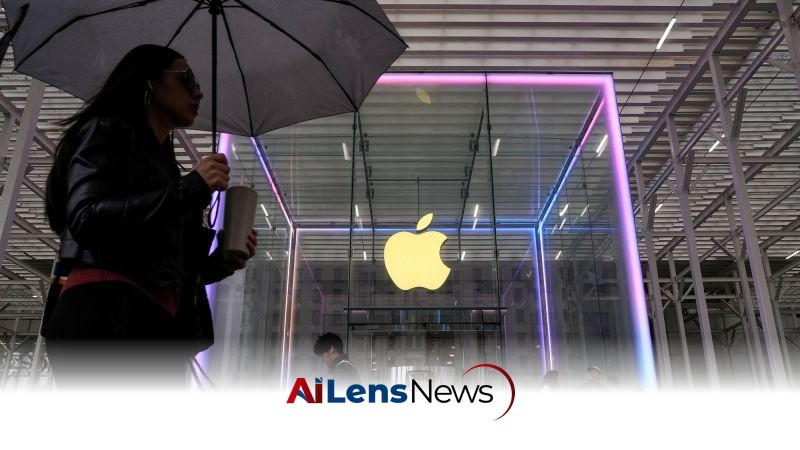


Apple has filed a lawsuit against OpenAI, alleging the AI company has misappropriated trade secrets to develop its upcoming gadgets, potentially impacting its IPO plans.
Washington DC, United States Jul 11, 2026 ALN: Apple has initiated legal proceedings against OpenAI, alleging that the artificial intelligence company has unlawfully appropriated the iPhone maker's trade secrets to develop new AI-based devices. This lawsuit, filed in the District Court of Northern California, marks a significant escalation in the ongoing competition between two of the most influential players in the tech industry.
The allegations come at a time when OpenAI is poised to unveil a new line of AI gadgets, developed in collaboration with Apple's former design chief, Jony Ive. The project, which is reportedly shrouded in secrecy, aims to create devices that integrate AI capabilities to enhance user experiences for smartphone owners. However, the lawsuit could jeopardize these plans and complicate OpenAI's anticipated initial public offering (IPO), which has generated considerable excitement in the tech community.
In a statement regarding the lawsuit, Drew Pusateri, a spokesperson for OpenAI, emphasized the company's commitment to ethical practices, stating, "We have no interest in other companies’ trade secrets. We remain focused on building innovative technology that empowers people everywhere." This response reflects OpenAI's intent to distance itself from the allegations and maintain its reputation as a pioneer in the AI sector.
The lawsuit specifically names OpenAI, along with two of its executives—Chang Liu and Tang Tan—both of whom have previous ties to Apple. Liu, who left Apple in January 2026, is accused of failing to comply with the company’s exit protocols, including not returning a work-issued laptop and allegedly accessing a colleague’s work computer after his departure. Apple claims that Liu downloaded numerous confidential files, which included sensitive information about unreleased products and proprietary data crucial to Apple's future projects.
In addition to Liu, the lawsuit implicates Tang Tan, who is alleged to have utilized confidential information while recruiting individuals for OpenAI. Reports suggest that Tan instructed prospective hires to bring Apple components to interviews, potentially using this strategy to gain insight into Apple's operations. Furthermore, Tan is accused of sharing information regarding key meetings with Apple suppliers and emailing himself data about these suppliers before leaving the company.
Apple's lawsuit also highlights a broader concern regarding the movement of talent within the tech industry. The company alleges that other former Apple employees have similarly taken confidential information to OpenAI, raising questions about the ethical implications of talent poaching in a fiercely competitive landscape. Apple has long prided itself on its innovation and proprietary technology, and the protection of its intellectual property is a core component of its business strategy.
In its legal filing, Apple indicates that it reached out to OpenAI to discuss its concerns during the early stages of its investigation. However, Apple claims that it did not receive a response, which may suggest a breakdown in communication between the two companies. This lack of dialogue could further exacerbate tensions, especially given the previously established partnership announced in 2024, which aimed to integrate OpenAI's ChatGPT technology into Apple's product ecosystem.
The legal dispute arises against the backdrop of a rapidly evolving tech landscape, where artificial intelligence is becoming increasingly integral to how consumers interact with devices. OpenAI has emerged as a leader in AI development, particularly with its ChatGPT product, which has captured significant attention for its conversational capabilities and potential applications across various sectors.
Apple, on the other hand, has been seen as a traditional tech giant, focusing on hardware and software integration. The company has been working on enhancing its own AI capabilities, with plans to launch a revamped version of its virtual assistant, Siri, which promises to offer more personalized and context-aware responses by leveraging user data from iPhones. This competitive dynamic underscores the urgency for both companies to innovate and differentiate themselves in a crowded marketplace.
The lawsuit also reflects a broader trend within the tech industry, where companies are not only competing for market share but also for talent. The aggressive recruitment of skilled engineers and executives from rival firms has become a common practice, leading to increased scrutiny over the ethical boundaries of such actions. The tech industry is characterized by its rapid pace of change, and companies are often willing to take significant risks to secure a competitive advantage.
As the race for dominance in AI technology intensifies, the implications of this lawsuit extend beyond the immediate legal ramifications for OpenAI. If Apple is successful in its claims, it could set a precedent that impacts how technology companies approach talent acquisition and the handling of confidential information. Furthermore, the outcome of this case may influence investor confidence in OpenAI, particularly as the company prepares for its IPO.
The ongoing developments in this lawsuit coincide with a pivotal moment in the evolution of consumer technology. As AI continues to reshape the landscape, companies are exploring new ways to integrate these capabilities into hardware products. OpenAI's rumored smart speaker and other devices are indicative of a shift towards creating AI-driven hardware that can seamlessly interact with users in their daily lives.
Analysts have noted that the convergence of AI and hardware could fundamentally alter how consumers engage with technology. As AI agents become more sophisticated, there is a growing belief that traditional methods of interaction—such as using apps or navigating screens—may become less relevant. Instead, devices equipped with advanced AI capabilities could anticipate user needs and streamline everyday tasks, leading to a more intuitive and efficient user experience.
In this context, the competition between Apple and OpenAI serves as a microcosm of the larger battle among tech giants to define the future of computing. Each company is vying to establish itself as a leader in AI integration, with the potential to shape the next generation of consumer technology. As this lawsuit unfolds, it will be crucial to monitor how it affects not only the parties involved but also the broader tech ecosystem.
In conclusion, the lawsuit filed by Apple against OpenAI represents a significant moment in the ongoing rivalry between two of the most influential companies in the tech industry. As both firms navigate the complexities of innovation, intellectual property, and talent acquisition, the outcome of this legal battle could have far-reaching implications for the future of AI and consumer technology.
This story has been updated with additional information.
To learn more about the latest developments in Artificial Intelligence, stay updated with our exclusive reports and analyses on AiLensNews.

