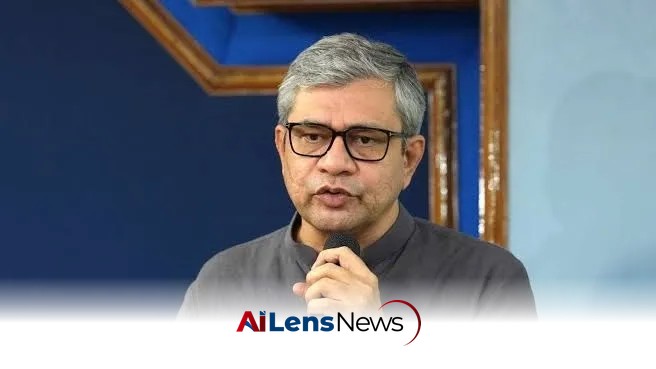


Union Minister Ashwini Vaishnaw highlights a global talent shortage in the semiconductor industry and encourages India's IT sector to seize this opportunity for growth.
Kohima, India Jul 12, 2026 ALN: HYDERABAD, JUL 11: Union Minister Ashwini Vaishnaw on Saturday emphasized the significant talent shortage in the semiconductor industry, estimated at one million globally. He urged the IT industry in India to capitalize on this opportunity. The semiconductor industry, which is crucial for powering a wide range of electronic devices, has been experiencing unprecedented growth. This growth is driven by the increasing demand for advanced technologies such as artificial intelligence, the Internet of Things (IoT), and 5G communications.
During an interaction with representatives from the IT sector, Vaishnaw noted that due to Prime Minister Narendra Modi’s focused push on the semiconductor industry, twelve plants are currently at various stages of development, with three already manufacturing chips. These chips are being exported to countries such as Japan, the United States, and Europe. The establishment of these plants is part of India’s broader strategy to reduce its dependence on foreign semiconductor imports and to establish itself as a global hub for semiconductor manufacturing.
“The talent shortage in the semiconductor industry is estimated to be around one million globally,” said the Union Minister for IT and Electronics. This shortage is particularly acute in areas such as design, fabrication, and testing of semiconductor devices. He expressed confidence that the IT industry in India, which has a proven track record in designing and developing innovative solutions in electronics and IT, can seize this opportunity effectively. The Indian IT sector has long been recognized for its skilled workforce and innovation capabilities, which positions it well to address the challenges posed by the semiconductor talent gap.
To support the industry, the government has provided advanced semiconductor design tools to 315 universities across the country. This initiative aims to enhance the skill set of students and professionals in the semiconductor field, thereby creating a more robust talent pipeline. Vaishnaw highlighted that electronics exports have now become the third largest export category in India, with mobile phones emerging as the largest exported item. This shift not only signifies the growth of the electronics sector but also reflects the increasing global competitiveness of Indian manufacturers.
“Last year, electronics exports reached the third largest category in our country, a transformation we could hardly have imagined a few years ago,” he stated. This transformation is attributed to various government initiatives aimed at boosting domestic manufacturing, such as the Production-Linked Incentive (PLI) scheme, which incentivizes companies to increase their production capabilities within India.
The PLI scheme has been a cornerstone of the Indian government’s strategy to attract investment in the semiconductor sector. By offering financial incentives, the government aims to encourage both domestic and foreign companies to set up manufacturing facilities in India. This initiative is expected to not only create jobs but also enhance technological capabilities within the country. The semiconductor sector is pivotal in driving innovation across multiple industries, making it essential for India to establish a strong foothold in this domain.
In addition to his remarks on the semiconductor industry, Vaishnaw, who also oversees the Railways portfolio, discussed various initiatives aimed at transforming the railway sector. He mentioned projects such as bullet trains, station redevelopment, and the introduction of Vande Bharat trains, noting that over 1,000 stations are undergoing redevelopment. These projects are part of a larger vision to modernize India’s railway infrastructure, making it more efficient and passenger-friendly.
Vaishnaw's comments reflect a broader strategy by the Indian government to enhance the country's position in the global semiconductor market and to bolster the IT industry's role in this critical sector. The semiconductor industry is not just a matter of economic importance; it is also a strategic asset in the context of global technology competition. Countries around the world are recognizing the importance of securing their semiconductor supply chains, especially in light of recent global disruptions.
The semiconductor shortage that emerged during the COVID-19 pandemic has highlighted vulnerabilities in the global supply chain. As a result, countries are now more focused on building resilient and self-sufficient semiconductor ecosystems. India’s move to develop its semiconductor manufacturing capabilities is aligned with global trends and could provide a significant boost to its economy. The pandemic has underscored the critical role that semiconductors play in various sectors, from healthcare to automotive, further emphasizing the need for countries to secure their supply chains.
Furthermore, the push for semiconductor development is expected to have far-reaching implications for various sectors in India, including automotive, telecommunications, and consumer electronics. Each of these sectors relies heavily on semiconductors for their products. By fostering a robust semiconductor ecosystem, India could potentially reduce its import bills and create numerous job opportunities in high-tech manufacturing and design. The automotive industry, for example, increasingly depends on semiconductors for electric vehicles and advanced driver-assistance systems, making this sector particularly relevant in discussions about semiconductor production.
In conclusion, the emphasis placed by Union Minister Ashwini Vaishnaw on the semiconductor industry underscores the Indian government's commitment to harnessing the potential of this critical sector. As the global demand for semiconductors continues to rise, India is poised to play a significant role in the global supply chain, provided it can effectively address the existing talent gap and continue to invest in infrastructure and technology development. The collaboration between the government and the IT sector will be crucial in realizing this vision, paving the way for a more technologically advanced and economically self-reliant India.
The implications of a successful semiconductor industry in India extend beyond economic growth. It could also lead to advancements in research and development, fostering innovation in various fields such as artificial intelligence, machine learning, and robotics. As India positions itself as a key player in the semiconductor market, it will not only enhance its economic standing but also contribute to global technological advancements. The journey towards establishing a robust semiconductor ecosystem is complex and requires a multifaceted approach, including education, investment, and international collaboration.
To learn more about the latest developments in Future Tech Trends, stay updated with our exclusive reports and analyses on AiLensNews.

