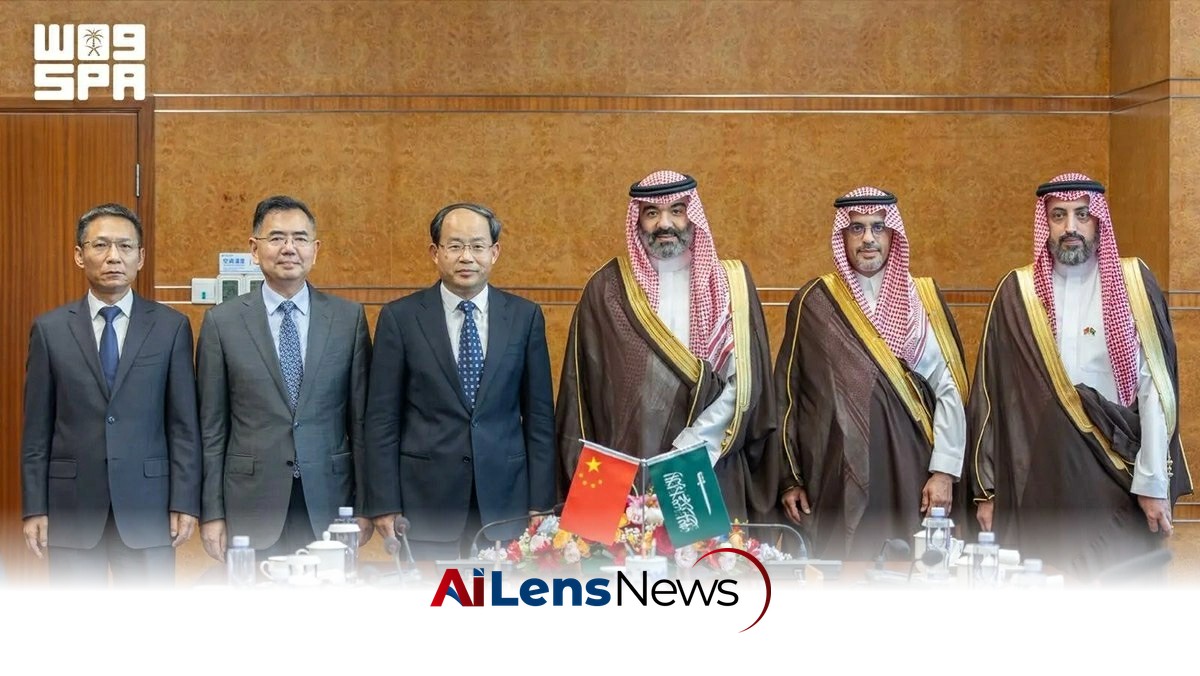


Saudi Arabia's Minister of Communications met with Chinese leaders to strengthen ties in AI and space, discussing technology transfer and cooperation.
Riyadh, Saudi Arabia Jul 14, 2026 ALN: BEIJING — The Minister of Communications and Information Technology of Saudi Arabia, Abdullah Alswaha, recently visited China to bolster partnerships in the fields of artificial intelligence and space technology. This visit underscores Saudi Arabia's strategic intent to enhance its technological capabilities and foster international collaborations that align with its Vision 2030 initiative, which aims to diversify the economy and reduce its dependence on oil.
During his visit, Alswaha was accompanied by key figures including Haytham AlOhali, the Governor of the Communications, Space and Technology Commission (CST), and Abdulrahman Alharbi, the Saudi Ambassador to China. Their presence highlights the importance Saudi Arabia places on these discussions, as they seek to engage with one of the world's leading technology hubs.
One of the significant meetings took place between Alswaha and China's Minister of Science and Technology, Yin Hejun. This meeting was pivotal in exploring avenues for expanding cooperation in various sectors, particularly artificial intelligence, the digital economy, technology transfer, and talent exchange programs. The focus on talent exchange is particularly noteworthy, as it reflects Saudi Arabia's commitment to developing human capital in the technology sector, which is crucial for sustaining growth and innovation.
In addition to discussions about talent exchange, the two sides explored opportunities to enhance the presence of major Chinese technology companies in Saudi Arabia. This aspect is critical as it aligns with Saudi Arabia's goal of attracting foreign investments and fostering a conducive environment for technological advancements. The influx of Chinese technology firms could significantly contribute to the local economy and help in the establishment of a robust tech ecosystem.
In the realm of space technology, Alswaha met with Dr. Shan Zhongde, the Administrator of the China National Space Administration and Vice Minister of Industry and Information Technology. This meeting focused on potential cooperation in space technologies, innovation partnerships, and capability development in the space sector. Saudi Arabia has been actively working to enhance its space capabilities, as evidenced by its recent ventures, including the launch of satellites and participation in international space missions. Collaborating with China, which has made significant strides in space exploration, could provide Saudi Arabia with valuable insights and technologies to further its objectives in this domain.
Moreover, Alswaha's discussions with the executive leadership of Moonshot AI, the developer of the Kimi LLM large language model, revolved around the development of large language models and AI-powered generative technologies. The focus on technology transfer and commercialization is particularly relevant for Saudi Arabia, as it seeks to support the growth of its digital economy and emerging technology sectors. By leveraging advancements in AI, Saudi Arabia aims to enhance various sectors such as healthcare, education, and finance, thereby improving the overall quality of life for its citizens.
Another significant meeting involved ByteDance China Chairman Zhang Lidong. The discussions centered on cooperation in generative artificial intelligence, data centers, and the development of algorithms and large language models. Expanding ByteDance's presence in Saudi Arabia could play a crucial role in contributing to the Kingdom's technology innovation ecosystem. As one of the leading technology companies globally, ByteDance's involvement could enhance the competitiveness of Saudi Arabia's digital economy, providing opportunities for local startups and tech companies to thrive.
These meetings are part of Saudi Arabia's broader strategy to build high-value international partnerships, attract advanced technologies and investments, and develop national capabilities. The Kingdom's Vision 2030 initiative emphasizes the importance of diversifying the economy and enhancing its global presence in technology and innovation. By fostering relationships with leading technology powers like China, Saudi Arabia aims to position itself as a regional leader in technological advancements.
The implications of these partnerships extend beyond mere technological exchange. They signify a shift in the global technological landscape, where countries are increasingly looking to collaborate rather than compete in isolation. For Saudi Arabia, these collaborations could lead to significant advancements in its technological infrastructure, benefiting various sectors of the economy.
Furthermore, the focus on artificial intelligence and space technology reflects a global trend where nations are racing to harness the potential of these fields. AI has the potential to revolutionize industries, improve efficiencies, and drive economic growth. Similarly, advancements in space technology can lead to breakthroughs in communication, navigation, and even resource exploration.
As Saudi Arabia continues to engage with global technology leaders, it will be essential for the Kingdom to ensure that it is not only a consumer of technology but also a contributor to the global tech ecosystem. This involves investing in local talent, fostering innovation, and creating a regulatory environment that encourages entrepreneurship and technological development.
In conclusion, Minister Abdullah Alswaha's visit to China represents a significant step in Saudi Arabia's efforts to enhance its technological capabilities and strengthen its global partnerships. The discussions held during this visit could pave the way for transformative changes in the Kingdom's economy and society, aligning with its long-term vision for sustainable development and technological advancement.
Saudi Arabia's Vision 2030 initiative, launched in 2016, is a comprehensive plan aimed at reducing the country's dependence on oil, diversifying its economy, and developing public service sectors such as health, education, infrastructure, recreation, and tourism. The initiative also emphasizes the importance of technology and innovation, recognizing that a robust digital economy is essential for the Kingdom's future growth.
The partnership with China, a global leader in technology and innovation, is particularly strategic for Saudi Arabia. China has made significant investments in artificial intelligence and space technology, establishing itself as a dominant force in these fields. By collaborating with Chinese companies and institutions, Saudi Arabia can tap into this expertise, which is crucial for its own technological ambitions.
The discussions around talent exchange programs are particularly relevant in the context of Saudi Arabia's educational reforms. The Kingdom has been investing heavily in education and training to equip its workforce with the skills needed for a modern economy. Collaborations with Chinese institutions can enhance these efforts, providing Saudi students and professionals with exposure to cutting-edge technologies and practices.
Moreover, the discussions regarding the presence of Chinese technology companies in Saudi Arabia highlight the Kingdom's commitment to creating a favorable investment climate. By attracting foreign firms, Saudi Arabia aims to create jobs, foster innovation, and stimulate economic growth. This aligns with its broader economic diversification goals, which seek to reduce reliance on the oil sector and promote sustainable development.
In the realm of space technology, Saudi Arabia's ambitions are also noteworthy. The Kingdom has been investing in its space program, launching satellites and developing partnerships with international space agencies. Collaborating with China, which has successfully launched numerous missions and developed advanced space technologies, could provide Saudi Arabia with the necessary tools and knowledge to enhance its capabilities in this area.
As the global landscape continues to evolve, the importance of international partnerships in technology and innovation cannot be overstated. Countries are increasingly recognizing that collaboration can lead to shared benefits, whether in terms of economic growth, technological advancements, or addressing global challenges. For Saudi Arabia, building strong ties with leading technology powers like China is a strategic move that could yield significant dividends in the coming years.
In summary, Minister Abdullah Alswaha's visit to China is a clear indication of Saudi Arabia's commitment to enhancing its technological capabilities and fostering international collaborations. The discussions held during this visit could lead to transformative changes in the Kingdom's economy and society, aligning with its long-term vision for sustainable development and technological advancement. As Saudi Arabia continues to navigate the complexities of the global technological landscape, its ability to forge meaningful partnerships will be crucial for its success in the years ahead.
To learn more about the latest developments in Artificial Intelligence, stay updated with our exclusive reports and analyses on AiLensNews.

