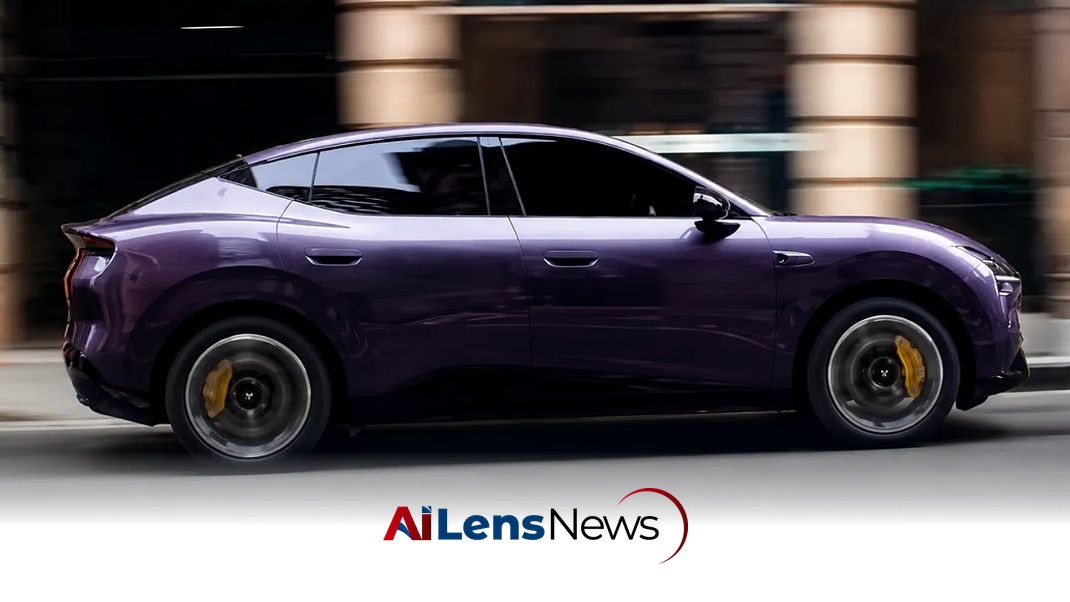


Xpeng's new L03 electric SUV is priced lower than Tesla's Model Y in key European markets, intensifying competition in the EV segment.
Doha, Qatar Jul 18, 2026 ALN: The Chinese automaker Xpeng has made a significant move in the European electric vehicle (EV) market with the launch of its new L03 electric SUV-coupe, strategically priced to undercut the Tesla Model Y across several key European markets. This launch marks a critical moment in the ongoing competition between established automakers and emerging players in the EV sector, particularly as Chinese manufacturers intensify their efforts to capture market share in Europe.
During a global brand event held in Munich, Xpeng opened orders for the L03 in over 60 countries, signifying its largest international product launch to date. The company has announced that deliveries are expected to commence in the fourth quarter of this year, which adds urgency to the competitive dynamics in the EV market as consumers increasingly look for affordable electric options.
The pricing strategy for the L03 is particularly noteworthy. In Germany, for instance, the rear-wheel-drive Standard Range version of the L03 starts at €35,600, which is approximately €3,400 less than the starting price of Tesla's entry-level Model Y. This pricing strategy is aimed at positioning the L03 as a more accessible option for consumers who are considering purchasing an electric SUV, especially in a market where price sensitivity is a significant factor.
In Norway, a country that has seen a substantial rise in electric vehicle sales, the price difference is even more pronounced. The L03 is priced at 299,900 kroner, which is about 100,000 kroner (approximately $10,000) lower than the Model Y. This strategic pricing not only highlights Xpeng's commitment to affordability but also underscores the competitive pressure it aims to exert on Tesla, which has been a dominant player in the EV market.
The launch of the L03 comes at a time when competition among electric vehicle manufacturers in Europe is intensifying, particularly from Chinese brands. The L03 is designed with a value-first strategy, featuring a length of 4.65 meters and being offered in four battery-electric variants in Germany, all of which utilize lithium iron phosphate (LFP) batteries. This choice of battery technology is significant as LFP batteries are known for their safety, longevity, and cost-effectiveness, making them an appealing option for consumers.
Despite the L03 utilizing a 400-volt electrical architecture, it supports impressive charging speeds of up to 236 kW, allowing for a rapid charge from 10% to 80% in about 20 minutes. This capability is crucial in addressing one of the primary concerns of potential EV buyers: charging time. The vehicle is equipped with a range of standard features, including a heat pump, heated and ventilated front seats, a panoramic glass roof, and a 6 kW vehicle-to-load capability, which enhances its appeal to consumers looking for a well-equipped electric SUV.
Xpeng is also expected to release a range-extender version of the L03, known as the L03 Power X, later this year. This variant is claimed to offer an impressive driving range of up to 1,000 kilometers, with a starting price of €38,600 in Germany. Such features are likely to attract consumers who prioritize range and versatility in their electric vehicles.
The competitive landscape in the European EV market is evolving rapidly. Tesla has already taken steps to address slowing demand by introducing a lower-priced version of the Model Y, known as the Model Y Standard. However, Xpeng has strategically positioned the L03 below this offering while providing a longer list of standard features. This comparison between the two vehicles illustrates the differing approaches taken by the manufacturers.
While Tesla's base Model Y boasts a longer certified driving range of 534 km compared to the 445 km range of the entry-level L03, Xpeng counters with faster peak charging capabilities and a more extensive array of standard equipment. Furthermore, Xpeng plans to offer a Long Range version of the L03 that approaches Tesla's range while remaining competitively priced. This strategic positioning may appeal to consumers who are looking for value without compromising on performance.
Norway is particularly significant in this context, as it has established itself as a leading market for electric vehicles. The country's recent tax policy changes, which apply a 25% VAT only to the portion of an EV's purchase price exceeding 300,000 kroner, create a unique pricing opportunity for Xpeng. By pricing the L03 at 299,900 kroner, Xpeng remains just below this threshold, preserving the vehicle's tax advantage and making it an even more attractive option for consumers.
When comparing vehicle prices across different markets, it is essential to consider the implications of value-added tax (VAT) in Europe. Direct comparisons with U.S. sticker prices can be misleading due to these taxes. Excluding VAT, the pricing of the L03 translates to approximately similar figures as the Chevrolet Equinox EV in the United States. However, the L03 offers significantly faster charging and higher-performance dual-motor variants, which may appeal to a different segment of consumers.
Despite its competitive pricing and features, American consumers are unlikely to see the L03 in the U.S. market anytime soon. Existing tariffs on Chinese-built electric vehicles effectively prevent Xpeng from entering the American market, making Europe the primary battleground for the company. This situation highlights the challenges and barriers that Chinese manufacturers face in expanding their footprint in the U.S. market, despite their aggressive strategies in Europe.
The launch of the L03 is emblematic of how rapidly Chinese automakers are reshaping the landscape of the European electric vehicle market. As competition intensifies, traditional automakers and new entrants alike are being forced to reevaluate their strategies and offerings. Tesla, while still retaining significant structural advantages such as its established Supercharger network, local production facilities in Berlin, and a more mature service infrastructure, is now facing increased pressure from these emerging players.
Although Xpeng's European dealer and service network is still comparatively limited, and some of its advanced driver-assistance capabilities are awaiting broader regulatory approval, the company has demonstrated that pricing can be a powerful competitive tool. By offering a well-equipped electric SUV at a price that undercuts Tesla in Europe’s most competitive EV segment, Xpeng is challenging the notion that consumers must choose between affordability and quality.
Ultimately, whether buyers prioritize lower upfront costs over Tesla's established ecosystem and brand strength will be a determining factor in how much pressure this new challenger puts on the market leader. As the electric vehicle market continues to evolve, the implications of Xpeng's entry with the L03 could have lasting effects on pricing strategies, consumer choices, and the overall dynamics of the EV landscape in Europe.
To learn more about the latest developments in Software & Platforms, stay updated with our exclusive reports and analyses on AiLensNews.

