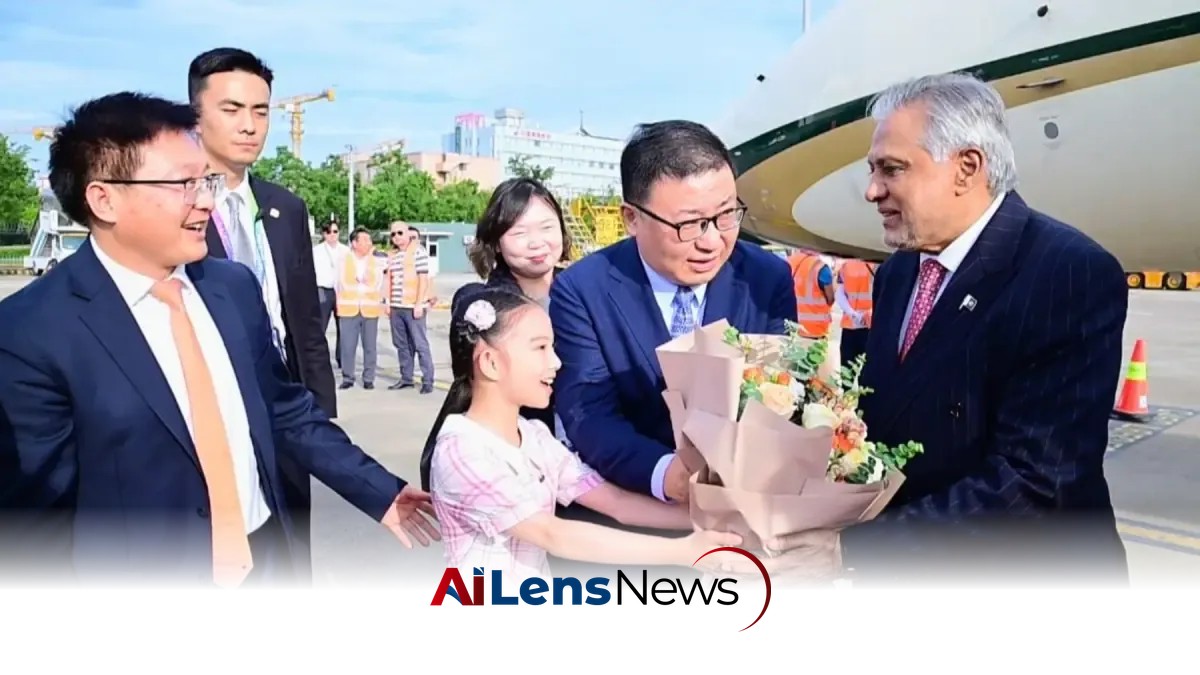


Deputy Prime Minister Ishaq Dar visits Shanghai to sign Pakistan's founding membership in the World Artificial Intelligence Cooperation Organisation, promoting global AI governance.
Islamabad, Pakistan Jul 16, 2026 ALN: Deputy Prime Minister and Foreign Minister Ishaq Dar's recent two-day visit to Shanghai, China, marks a significant step for Pakistan in the realm of artificial intelligence (AI) governance. The primary objective of this visit was to sign an agreement for Pakistan to join the World Artificial Intelligence Cooperation Organisation (WAICO) as a founding member, a move that underscores Pakistan's commitment to participating in international AI governance frameworks.
WAICO was proposed by China last year, reflecting the growing global recognition of the need for structured governance in the rapidly evolving field of artificial intelligence. As AI technologies continue to advance and permeate various sectors, the establishment of such an organization aims to facilitate cooperation among nations to ensure that AI development is aligned with ethical standards and serves the collective good of humanity.
Upon his arrival in Shanghai, Ishaq Dar was warmly welcomed by several dignitaries, including Shanghai Vice Mayor Wu Wei, Pakistan’s Charge d’Affaires to China Aizaz Khan, and Consul General of Pakistan in Shanghai Shahzad Ahmad Khan. This reception highlights the importance of Dar's visit and the strengthening ties between Pakistan and China, especially in the context of technological collaboration.
In addition to the signing ceremony for WAICO, Dar's itinerary included participation in the World Artificial Intelligence Conference (WAIC) 2026. This conference serves as a platform for leaders and experts in the field of AI to gather and discuss the future of AI technologies, advancements, challenges, and the implications of these technologies on global society. During his time at WAIC, Dar is expected to engage with other international leaders to foster collaboration in AI, emphasizing the need for inclusive and equitable AI governance.
The Foreign Office of Pakistan has indicated that Dar will utilize this opportunity to share Pakistan’s perspective on enhancing international cooperation in artificial intelligence. A key focus of his discussions will be on addressing the priorities and developmental needs of the Global South, a term that encompasses developing countries that often face unique challenges in accessing and utilizing advanced technologies. Dar's emphasis on bridging the global AI divide and promoting equitable access to AI technologies indicates a proactive approach to ensuring that the benefits of AI are distributed fairly, rather than concentrated in wealthier nations.
Moreover, the Foreign Office statement highlighted the importance of capacity-building and sustainable development in the context of AI. As AI continues to transform industries, it is crucial that developing nations are equipped with the necessary skills and resources to leverage these technologies effectively. This approach aligns with global efforts to promote sustainable development goals and ensure that technological advancements contribute to shared prosperity across different regions.
Last July, during the opening of WAIC in Shanghai, Chinese Premier Li Qiang underscored the importance of governance and open-source development in AI, announcing the establishment of WAICO as a Chinese-led initiative for international AI cooperation. This underscores China's ambition to take a leading role in shaping global AI governance, a move that is both strategic and indicative of the country's broader technological aspirations.
During a previous visit to China by Prime Minister Shehbaz Sharif in May, Pakistan had already expressed its support for China's initiative to establish WAICO. This support reflects a growing recognition of the need for collaborative frameworks in managing the complexities associated with AI technologies. Islamabad's commitment to working with Beijing to advance global governance in AI signifies a strategic partnership that could yield significant benefits for both nations.
As the WAIC unfolds, expectations are high for Chinese President Xi Jinping's address, where he is anticipated to outline a bold vision for China's role in global AI governance. This will be Xi's first attendance at the annual WAIC, signaling the importance Beijing places on AI as a catalyst for economic growth and a critical component of its strategic technological landscape.
Huawei, a prominent Chinese technology firm, is set to showcase its latest AI computing cluster, the Atlas 950 SuperPoD, during the WAIC. This system represents a significant step in China's efforts to develop domestic alternatives to US technology, particularly in the realm of AI. The Atlas 950 is designed for large-scale AI training and inference, linking thousands of Huawei’s Ascend AI processors to function as a cohesive computing unit. This launch is emblematic of China's ambitions to establish a self-sufficient AI ecosystem, reducing reliance on foreign technology providers.
In addition to Huawei, the conference will see participation from various Chinese chipmakers, such as Biren and MetaX, who are expected to unveil new computing clusters. This highlights the competitive landscape of AI technology development in China, where domestic firms are increasingly striving to build capabilities independent of US technology.
The WAIC is not merely a technological showcase; it has evolved into a geopolitical arena where competing visions for AI governance are articulated. Recent dialogues between Washington and Beijing have revealed stark differences in their approaches to AI regulation, with the US advocating for minimal regulation to foster innovation, while China promotes its low-cost, open-source AI models as solutions to global AI inequality.
As the international community grapples with the implications of AI technologies, the WAIC serves as a crucial platform for discussions on governance, ethics, and the future of AI. The conference coincides with a High-Level Meeting on Global AI Governance in Shanghai, where significant announcements regarding WAICO and the Global AI Governance Initiative are anticipated.
China is expected to promote its open-source AI models as accessible alternatives to Western technologies, arguing that they can democratize access to AI. This aligns with the narrative that the development of AI should not lead to monopolistic practices but should instead focus on serving humanity's broader needs.
Notably, the WAIC will also host several prominent international figures, including UN Secretary General Antonio Guterres and leaders from various nations, further emphasizing the conference's significance on the global stage. The attendance of renowned scholars and researchers, including Turing Award and Nobel laureates, highlights the intellectual weight of the discussions taking place at WAIC.
In conclusion, Ishaq Dar's signing of the founding membership agreement for WAICO in Shanghai represents a pivotal moment for Pakistan's engagement in the global AI governance landscape. As the country seeks to navigate the complexities of AI technology and its implications for development, participation in WAICO positions Pakistan to play a more active role in shaping the future of AI governance. The outcomes of the WAIC and the ongoing discussions on AI governance will likely have far-reaching implications for nations worldwide, particularly those in the Global South, as they seek to harness the benefits of AI while addressing the challenges that accompany its rapid advancement.
To learn more about the latest developments in Artificial Intelligence, stay updated with our exclusive reports and analyses on AiLensNews.

