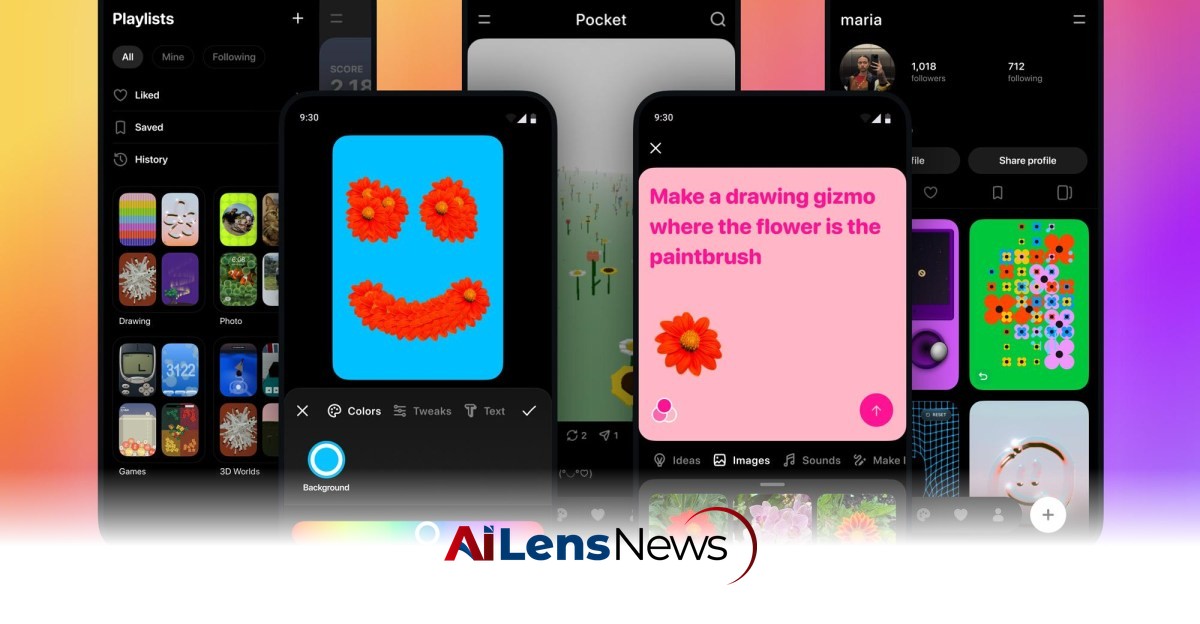


Meta's new app Pocket allows users to create and share interactive AI 'gizmos,' diverging from the original Pocket's read-it-later functionality.
New Delhi, India Jul 3, 2026 ALN: The landscape is in a constant state of evolution, with companies vying for user engagement through innovative applications that harness the power of artificial intelligence (AI). In this context, Meta, the parent company of Facebook and Instagram, has recently announced the launch of a new app called Pocket, which aims to provide users with interactive AI experiences. This development comes on the heels of Mozilla's decision to shut down its well-loved read-it-later Pocket app last year, marking a significant shift in the app's branding and purpose.
Meta's Pocket app is designed to allow users to create and share small interactive experiences, referred to as "gizmos," which are built from AI prompts. This new direction reflects CEO Mark Zuckerberg's vision of integrating AI into social media, transforming how users interact with digital content and with each other. Zuckerberg has articulated the potential for AI to enhance social media by enabling users to create personalized, engaging experiences that can be easily shared across platforms.
The introduction of Pocket aligns with Meta's broader strategy to embrace AI nology, which has become a focal point for the company in recent years. In March, it was reported that Meta hired engineers from Atma Sciences Inc., a company known for developing an app called Gizmo, which shares similarities with the newly launched Pocket. By acquiring a non-exclusive license to utilize Atma's nology, Meta appears to be leveraging existing innovations to expedite the development of its own offerings in the interactive AI space.
According to the app's description on Google Play, users can "scroll a feed of gizmos from people around the world." These gizmos are interactive and responsive, reacting to user inputs such as touch and device orientation. They are designed to engage users through sound effects, music, and even the use of the device's camera, allowing for a rich, multimedia experience. The app's help center elaborates on the concept of a gizmo as a "playable AI-generated experience," indicating that users can not only create these experiences but also share them with others, who may remix them to create new variations.
Despite the excitement surrounding the launch of Pocket, the app is not yet widely available. Reports indicate that users in the United States are currently unable to access it, as it is marked as unavailable in their region on the Google Play store. Additionally, attempts to locate Pocket on Apple's App Store have been unsuccessful, suggesting that the app's rollout may be limited to certain markets or regions at this time. Meta has acknowledged this limitation in its help center, noting that the app is "not yet available everywhere," and the company has not provided a timeline for when broader access might be expected.
The implications of Meta's Pocket app extend beyond its immediate functionality. As social media platforms increasingly integrate AI into their services, the nature of user interaction is likely to change significantly. The ability to create and share AI-generated content could democratize content creation, allowing users who may not have traditional artistic skills to produce engaging experiences. This shift could lead to a more diverse range of content on social media, as users explore the creative possibilities offered by AI.
Moreover, the concept of remixing AI-generated content raises questions about intellectual property and ownership in the digital age. As users create gizmos and share them with the community, the lines between original content and derivative works may become blurred. This could prompt discussions about the rights of creators and the responsibilities of platforms that host user-generated content. The legal frameworks surrounding and intellectual property may need to evolve to accommodate these new forms of content creation.
In addition to these considerations, the launch of Pocket also reflects a growing trend among companies to capitalize on the popularity of AI. With advancements in machine learning and natural language processing, AI has become more accessible and user-friendly, enabling a wider audience to engage with this nology. Companies like Meta are positioning themselves at the forefront of this trend, aiming to capture the interest of users who are eager to explore new ways of interacting with digital content.
Meta's strategic pivot towards AI-driven applications is not merely a response to current trends; it is also a proactive move to stay competitive in a rapidly changing digital landscape. As more companies invest in AI capabilities, Meta's entry into this space with Pocket could signify a shift in how social media platforms operate and compete for user attention. The success of Pocket may influence other companies to develop their own interactive AI experiences, potentially leading to a surge in similar applications.
As Meta's Pocket app begins to roll out, it will be essential to monitor user feedback and engagement levels. The success of the app will likely depend on its ability to deliver a seamless and enjoyable user experience, as well as its capacity to foster a vibrant community of creators and consumers. If users respond positively to the interactive features and the creative possibilities offered by gizmos, Pocket could become a significant player in the evolving landscape of social media.
In summary, while the original Pocket app served as a read-it-later service, Meta's new Pocket app aims to redefine social interaction through AI-generated content. As the landscape evolves, it will be interesting to see how users respond to this innovative approach. The future of social media may very well hinge on the successful integration of AI, and Meta's Pocket could be a critical step in that direction, potentially reshaping how individuals connect, share, and create in the digital realm.
As we look forward, it is crucial to consider the broader societal implications of AI integration in social media. The potential for increased engagement and creativity must be balanced with the ethical considerations surrounding user data privacy, the accuracy of AI-generated content, and the potential for misinformation. As platforms like Pocket gain traction, the responsibility to ensure a safe and responsible environment for users will fall on both the companies that create these nologies and the communities that utilize them.
To learn more about the latest developments in Artificial Intelligence, stay updated with our exclusive reports and analyses on AiLensNews.

