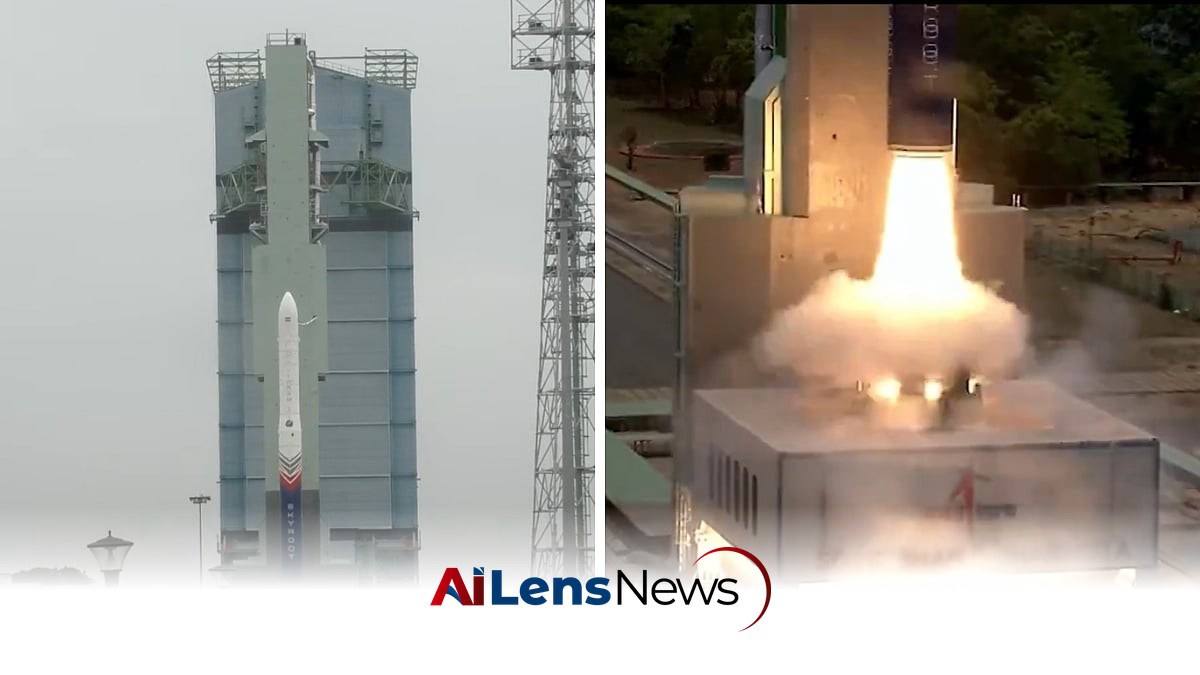


Skyroot Aerospace successfully launched Vikram-1, India's first privately developed orbital rocket, from Sriharikota, enhancing the nation's commercial space capabilities.
New Delhi, India Jul 18, 2026 ALN: Sriharikota: Hyderabad-based space startup Skyroot Aerospace scripted history on Saturday by successfully launching Vikram-1, India's first privately developed orbital launch vehicle, marking a major milestone for the country's rapidly growing private space sector.
The mission, named Mission Aagaman, lifted off at 12:06 pm from the First Launch Pad at the Satish Dhawan Space Centre (SDSC-SHAR) in Sriharikota, Andhra Pradesh, after it was delayed from the initial launch time of 11:30 am. The mission was put on a planned hold by the team to run additional checks. This careful approach demonstrates the commitment to safety and reliability that is crucial in aerospace operations, especially for a mission of such significance.
The Vikram-1 launch is expected to pave the way for India's entry into the global private orbital launch market. Developed entirely by an Indian private company, Vikram-1 represents a major leap in strengthening the country's commercial space capabilities and expanding the role of private enterprises in the space industry. The launch signifies a shift in India's space exploration paradigm, which has traditionally been dominated by state-run organizations such as the Indian Space Research Organisation (ISRO).
Ahead of the mission, Skyroot Aerospace confirmed that all necessary airspace and maritime clearances had been obtained. Authorities also declared restricted airspace and maritime zones along the rocket's flight path and impact corridor to ensure safe execution of the launch. Such measures are standard practice in the aerospace industry to mitigate risks associated with rocket launches, which can involve unpredictable factors such as weather and technical malfunctions.
Mission Aagaman is Skyroot's second space mission, following the successful launch of the Vikram-S suborbital rocket on November 18, 2022, which made history as India's first privately developed rocket to reach space. The successful trajectory of Vikram-S laid the groundwork for the more ambitious Vikram-1 mission, showcasing the technical capabilities and innovative spirit of Skyroot Aerospace. This progression reflects the rapid advancements in technology and engineering within the Indian private sector, which is increasingly becoming a player on the global stage.
Adding a symbolic touch to the landmark mission, Prime Minister Narendra Modi's handwritten postcard bearing the words 'Vande Mataram' travelled aboard Vikram-1. The company said the Prime Minister's handwritten message was among several commemorative payloads carried on the inaugural orbital mission. This inclusion of a personal touch from the nation's leadership highlights the significance of this event not just for the company but for the entire nation, symbolizing unity and national pride in India's growing capabilities in space technology.
The rocket also carried handwritten notes from Skyroot employees, investors, policymakers, and well-wishers from around the world. Describing the initiative as "a celebration carried by many hands and shared by millions," the company said the keepsakes symbolize the collective aspirations and support behind India's emerging private space ecosystem. The involvement of various stakeholders in this mission underscores the collaborative nature of modern space endeavors, which often require a confluence of expertise, investment, and innovation.
According to Skyroot Aerospace, these symbolic payloads reflect the collaborative efforts that have helped shape a new era of innovation and entrepreneurship in the country's space programme. The ethos of collaboration is particularly relevant in the context of space exploration, where the challenges are immense, and the need for diverse skills and resources is paramount. This mission serves as a testament to what can be achieved when the private sector, government, and academia join forces.
The successful launch of Vikram-1 is expected to majorly boost India's standing in the global commercial space industry by demonstrating the capabilities of indigenous private launch companies and opening new opportunities in the satellite launch market. With increasing demand for satellite launches driven by advancements in telecommunications, remote sensing, and navigation technologies, the entry of private players like Skyroot Aerospace is timely and strategic. The launch not only enhances India's competitiveness but also contributes to the overall growth of the global space economy.
As the landscape of the space industry evolves, the involvement of private companies is becoming increasingly vital. Countries around the world are witnessing a surge in private sector participation, with companies like SpaceX and Blue Origin leading the way in the United States. India, with its rich history in space exploration and a burgeoning tech ecosystem, is poised to leverage its strengths to carve a niche in this competitive arena. The success of Vikram-1 could inspire more startups to enter the space sector, fostering innovation, job creation, and technological advancements.
Moreover, the launch of Vikram-1 is likely to encourage further investment in the Indian space sector. Investors are often drawn to sectors that demonstrate growth potential and successful track records. With the successful launch of Vikram-1, Skyroot Aerospace may attract additional funding and partnerships, facilitating further research and development efforts. This could lead to the creation of more advanced launch vehicles and satellite technologies, enhancing India's capabilities in both commercial and scientific missions.
In conclusion, the launch of Vikram-1 marks a significant milestone not only for Skyroot Aerospace but also for India's private space sector as a whole. It demonstrates the potential of indigenous innovation and the importance of collaboration across various sectors. As India continues to develop its private space capabilities, the implications of this launch will likely resonate for years to come, positioning the country as a key player in the global space industry and inspiring future generations to explore the final frontier.
To learn more about the latest developments in Software & Platforms, stay updated with our exclusive reports and analyses on AiLensNews.

