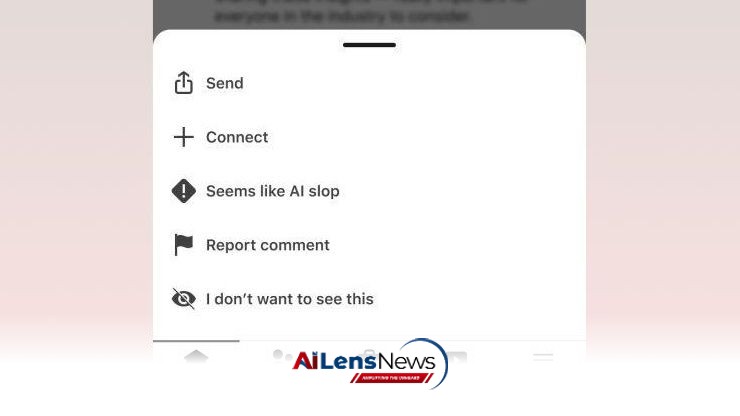



LinkedIn's AI slop button, introduced to combat AI-generated content, has gained significant traction, with over a million users clicking it since its launch.
New Delhi, India Aug 22, 2026 ALN: LinkedIn's new AI slop button is apparently getting a lot of use, reflecting a growing concern among social media platforms regarding the authenticity of user-generated content. This innovative feature is part of LinkedIn's ongoing efforts to ensure that the content shared on its platform maintains a level of quality and engagement that aligns with its professional networking ethos.
LinkedIn officially announced the introduction of the “Seems like AI slop” button on July 30th. This button allows users to flag posts they believe are generated by artificial intelligence, a concern that has become increasingly prevalent as AI nology continues to evolve. According to a post from chief product officer Hari Srinivasan, the feature has resonated with users, as “over a million people” have clicked on the button since its launch. The button is accessible from the three dots menu on individual posts, making it easy for users to engage with and report content they suspect lacks genuine human input.
The impetus for this feature can be traced back to a study conducted by AI detector Pangram, which revealed that 41 percent of LinkedIn’s longform posts were flagged as fully AI-generated. This statistic raised alarms about the potential for misinformation and the dilution of authentic professional discourse on the platform. In response to these findings, LinkedIn has not only introduced the AI slop button but has also rolled out “new and improved” classifiers designed to better identify AI-generated content. Additionally, the company has removed a feature that previously allowed users to enhance their posts with AI, signaling a shift in strategy aimed at preserving the integrity of user interactions on the site.
Srinivasan emphasized the importance of addressing the issue of AI-generated content, stating, “AI slop is a top priority for all of us.” This commitment appears to be yielding results; in his Thursday post, he noted that users are experiencing “40% less views on what we classify as AI slop from just a few weeks ago.” This decline in visibility for flagged content suggests that LinkedIn's measures may be effectively discouraging the proliferation of AI-generated posts, thus promoting more authentic interactions among users.
In conjunction with the AI slop button, LinkedIn is also implementing a new notification system that will inform users when their posts have been flagged by others as potentially AI-generated. This message will alert users with a note stating, “Some members told us this post seems like AI.” Such feedback aims to foster awareness and encourage users to reflect on the nature of their content, prompting them to strive for more authentic communication.
Srinivasan noted the company’s approach to this issue, emphasizing that they are assuming good intent from users. He remarked, “I know I’m increasingly conscious on how to not sound like AI & the goal is to provide helpful feedback.” This perspective highlights LinkedIn's commitment to not only curbing the spread of AI-generated content but also to nurturing a culture of constructive feedback within its user community.
Moreover, earlier this year, LinkedIn announced its intention to crack down on comments generated at scale with minimal human involvement. This move aligns with the broader trend among social media platforms to combat the rise of automated content and ensure that user interactions remain meaningful and engaging. By addressing these issues proactively, LinkedIn seeks to maintain its reputation as a professional networking site where genuine connections and insights can flourish.
The implications of these developments extend beyond LinkedIn itself. As AI nology continues to advance, other social media platforms may look to implement similar measures to address the challenges posed by AI-generated content. The proliferation of such tools could lead to a more significant cultural shift in how content is created and consumed online, emphasizing authenticity and human connection over sheer volume and automation.
In conclusion, LinkedIn's introduction of the AI slop button represents a proactive step in addressing the challenges posed by AI-generated content within its platform. By encouraging users to engage critically with the content they consume and share, LinkedIn aims to foster an environment that prioritizes authenticity and meaningful interactions. As the conversation around AI and content generation continues to evolve, LinkedIn's initiatives may serve as a model for other platforms grappling with similar issues in the digital landscape.
To learn more about the latest developments in Social Media & Creator Economy, stay updated with our exclusive reports and analyses on AILensNews.

