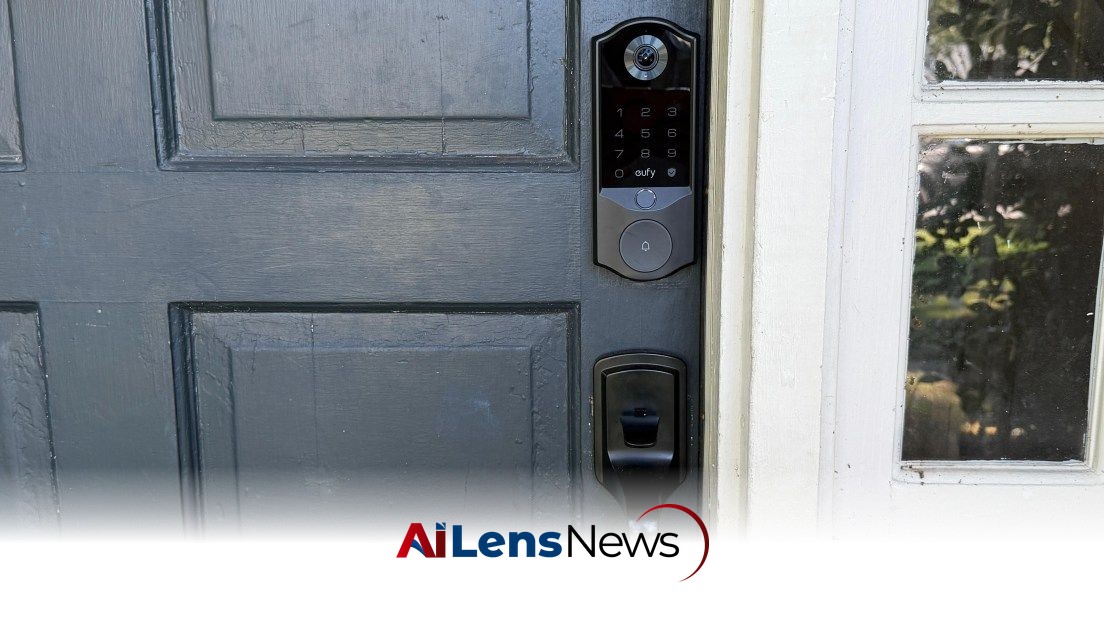


Facial recognition smart locks offer a hands-free, secure way to unlock your door, enhancing convenience and safety for homeowners.
New Delhi, India Jul 18, 2026 ALN: Hands-free unlocking is increasingly being recognized as the future of smart locks, representing a significant evolution in home security nology. The ideal smart home experience minimizes friction, and having your door unlock automatically as you approach is a prime example of this seamless interaction. This innovation eliminates the need for remembering passcodes or fumbling with keys, thereby enhancing convenience. One promising nology that facilitates this hands-free unlocking is facial recognition. Given that many people already unlock their smartphones using facial recognition nology, it stands to reason that this method could also be applied to home entry systems.
While hands-free unlocking through geofencing has been available for some time, it often suffers from delays and inconsistencies. This approach typically requires an app to run in the background on your smartphone, which can complicate the unlocking process. In contrast, newer nologies, such as facial recognition and ultrawideband (UWB) radio, offer a more reliable and efficient experience. In my testing, UWB emerged as superior, requiring only that your phone or smartwatch be on your person for quick and accurate identification as you approach your door. However, it's worth noting that locks equipped with UWB nology tend to be on the pricier side, and there are currently limited options available in the market.
During my evaluation of various smart locks, I had the opportunity to examine the Schlage Sense Pro, which opened my eyes to the practical benefits of facial recognition unlocking. Initially, I had viewed this nology as an unnecessarily complicated solution to a problem that already had established answers. However, I soon realized its value for individuals like my husband, who frequently leaves his phone inside while working outdoors or in the garage. For those who prefer not to rely on a device for unlocking their doors, yet still desire the speed and convenience of hands-free access, facial recognition can be an ideal solution.
The nology behind facial recognition in smart locks typically employs infrared sensors to construct a three-dimensional map of the user’s face. Different manufacturers utilize various niques, including structured light, stereo infrared cameras, or time-of-flight sensing, but the overarching aim remains the same: to create an accurate and secure identification system. The three-dimensional aspect is particularly critical, as it captures depth and contours of the face, making it difficult for someone to unlock the door using merely a photograph.
Facial recognition smart locks are designed to enhance home security by ensuring that only authorized users can gain access. This is particularly important in an age where home burglary rates remain a concern for many homeowners. According to various studies, homes without security systems are up to three times more likely to be broken into than those with some form of security measure in place. By integrating advanced nologies like facial recognition, homeowners can add an additional layer of security that traditional locks simply cannot provide.
In my exploration of the current market, I tested four notable smart locks equipped with facial recognition capabilities: the Eufy FamiLock E40 priced at $300, the Lockly Visage Zeno at $350, Lockin’s Veno Solar Face for $199, and the Switchbot Lock Vision Pro available for $230. Additionally, there is an upcoming model on Kickstarter, along with several variations from Switchbot. Each of these locks brings unique attributes to the table, catering to different user preferences and security needs.
Among the options I evaluated, the Eufy FamiLock E40 from Anker stood out as the premier choice. If I am investing in a smart lock for my home, I want a comprehensive solution, and the FamiLock E40 delivers just that. In addition to its impressive facial recognition capabilities, it incorporates a fingerprint reader, a keypad, and a traditional physical key, all while functioning as a video doorbell. This versatility makes it a smart addition to any front door.
In terms of performance, the E40 excelled in speed, unlocking my door in under a second based on facial recognition alone. I found that I barely had to pause before entering, which is a significant advantage for users in a hurry. Notably, the E40 was also the only model that consistently recognized my face while I was wearing sunglasses, a feature where the other locks struggled. Furthermore, it includes a backup battery that ensures the keypad remains functional even if the main battery fails, which adds an extra layer of reliability.
For users entrenched in Apple’s ecosystem, the Lockly Visage Zeno emerges as a compelling alternative. This smart lock not only features facial recognition but also integrates seamlessly with Apple Home Key, offering a sleek design and impressive battery life of over nine months, with an additional spare battery included. However, it is worth noting that the Zeno is the most expensive option among those tested and lacks support for the Matter protocol, although it remains compatible with other major platforms.
The Lockly Visage Zeno also features a user-friendly app that allows homeowners to manage access permissions and view entry logs, providing an extra layer of security and peace of mind. The ability to grant temporary access to guests or service providers is particularly beneficial for those who may need to allow others into their homes without being present.
Facial recognition nology in smart locks not only enhances convenience but also has broader implications for home security. As these nologies become more prevalent, they could potentially reduce the overall crime rates in residential areas. With more homeowners adopting smart locks equipped with facial recognition, burglars may find it increasingly difficult to target homes that utilize advanced security measures.
However, the adoption of facial recognition nology also raises important questions about privacy and data security. Homeowners must consider how their biometric data is stored and used by manufacturers. Ensuring that this sensitive information is encrypted and protected from unauthorized access is crucial in maintaining user trust. Manufacturers need to be transparent about their data handling practices to reassure consumers that their information is secure.
In conclusion, facial recognition smart locks represent a cutting-edge solution for contemporary home security, combining convenience with enhanced safety features. While the initial investment may be higher compared to traditional locks, the advantages they provide in terms of ease of use and advanced functionality make them a worthwhile consideration for homeowners looking to modernize their security systems. As nology continues to advance, it is likely that facial recognition will become an increasingly common feature in home security, paving the way for a future where entering our homes is as effortless as walking up to the door. The integration of such nology not only promises greater convenience but also the potential for a more secure living environment, reflecting the ongoing evolution of home security solutions.
To learn more about the latest developments in Tech Reviews, stay updated with our exclusive reports and analyses on AiLensNews.

