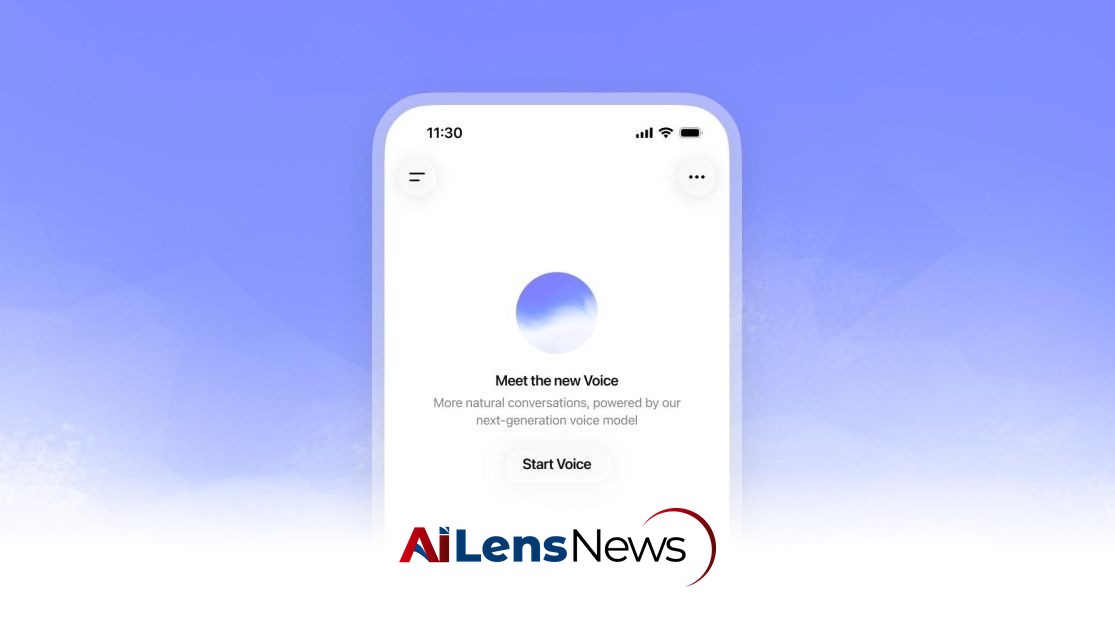


OpenAI has introduced GPT-Live-1, a new voice model for ChatGPT that enhances conversational flow by interrupting less and allowing for simultaneous speaking and listening.
New Delhi, India Jul 8, 2026 ALN: OpenAI, the organization behind the development of the ChatGPT platform, is making significant strides in enhancing the capabilities of its voice interaction features. The latest iteration, known as GPT-Live-1, is positioned as a major upgrade aimed at creating a more natural and engaging conversational experience. This development reflects broader trends in artificial intelligence (AI) where user experience and interaction quality are becoming paramount. The push towards more sophisticated AI interactions is not just a nological advancement; it is a response to the growing demand for more intuitive and human-like communication between users and machines.
The primary goal of the GPT-Live-1 model is to facilitate a more fluid and dynamic exchange between users and the AI. Unlike its predecessor, which operated on a turn-based model, GPT-Live-1 introduces a full duplex system. This means that the AI can listen and respond simultaneously, mimicking the way humans communicate. During a recent press briefing, Kundan Kumar, OpenAI’s research lead, emphasized that this new model is designed to feel more like “talking to another person.” This change is crucial in making interactions with AI feel less mechanical and more intuitive. The ability to engage in a more conversational manner is expected to enhance user satisfaction significantly, as it aligns closely with how humans naturally interact.
One of the standout features of GPT-Live-1 is its ability to handle interruptions more gracefully. Users will find that the AI is less likely to cut them off mid-sentence, and it will patiently wait for them to resume speaking after a pause. This capability is particularly important in creating a conversational flow that feels natural, as interruptions can often disrupt the user’s thought process and lead to frustration. Atty Eleti, OpenAI's product lead, highlighted this aspect, noting that the model’s ability to process inputs and produce outputs continuously is a significant leap forward in voice nology. This improvement not only enhances user experience but also reflects a deeper understanding of human communication patterns, which often involve overlapping speech and pauses.
Moreover, the upgraded model is designed to enhance the depth of conversations by integrating advanced capabilities for real-time information retrieval. When a user poses a question that requires reasoning or web searching, GPT-Live-1 can seamlessly transition to utilizing OpenAI's more powerful text models, such as GPT-5.5. This ensures that the responses are not only timely but also accurate and relevant. The model is also equipped to enrich conversations with AI-generated visuals, providing users with supplementary information like weather forecasts or sports scores, which can enhance the overall user experience. The integration of visual elements into voice interactions represents a significant step towards creating a multi-modal AI that can cater to diverse user needs and preferences.
Another innovative feature introduced with GPT-Live-1 is real-time translation. This functionality allows users to engage in multilingual conversations without having to pause for the AI to process and translate their speech. This is particularly beneficial in a globalized world where communication across language barriers is increasingly common. Users can now converse in their native language while the AI translates their speech on the fly, making interactions smoother and more inclusive. This feature not only broadens the accessibility of AI nology but also fosters a more inclusive environment where language differences do not hinder communication.
OpenAI has also introduced new interactive features that allow users to manage the AI's responses more effectively. For instance, users can instruct ChatGPT Voice to pause its speaking until it is called upon again. This level of control is a significant improvement over previous models, where the AI would continue to speak until the user interrupted it. Additionally, the AI acknowledges its engagement by using conversational cues such as “mhmm” or “yeah,” which further enhances the feeling of a two-way dialogue. These enhancements are part of a broader trend in AI development that seeks to create more engaging and responsive interactions, thereby making AI tools more user-friendly and relatable.
In light of ongoing concerns regarding the ethical implications of AI, OpenAI has implemented built-in safeguards within GPT-Live-1. These measures are designed to prevent the model from generating harmful responses and to terminate conversations in situations deemed “higher-risk.” This is particularly pertinent given the legal challenges currently facing OpenAI, which include allegations that ChatGPT has contributed to delusional thoughts and negatively impacted users' mental health. The organization has responded to these concerns by training the model to provide “expert-vetted crisis helpline support” in discussions surrounding sensitive topics such as self-harm. Furthermore, the model is designed to offer “age-appropriate” responses, ensuring that interactions with younger users are handled with care and consideration. This proactive approach to user safety and mental health reflects a growing recognition of the responsibilities that come with developing advanced AI nologies.
The rollout of GPT-Live-1 is set to take place across multiple platforms, including iOS, Android, and the web. This accessibility is crucial as it allows a broader audience to benefit from the advancements in voice interaction nology. The model will be available to ChatGPT Voice users on Go, Plus, and Pro plans, while a more compact version, GPT-Live-1 mini, will serve as the default for free users. This tiered approach ensures that while premium users access the most advanced features, a wider audience can still experience the benefits of enhanced voice interactions. Such an inclusive rollout strategy is essential in democratizing access to cutting-edge AI nologies, allowing users from various backgrounds and economic statuses to engage with these advancements.
Looking ahead, the implications of these advancements in voice AI are profound. As conversational AI continues to evolve, we are likely to see a greater integration of these nologies into daily life, from customer service applications to personal assistants and beyond. The ability to engage with AI in a more human-like manner could lead to increased adoption of these nologies across various sectors, enhancing productivity and user satisfaction. Moreover, as businesses and individuals become more accustomed to interacting with AI in natural language, we may see shifts in how services are delivered, potentially leading to more personalized and efficient customer experiences.
In conclusion, OpenAI’s introduction of the GPT-Live-1 model marks a significant advancement in the field of voice interaction nology. By prioritizing natural conversation flow, real-time information retrieval, and user control, OpenAI is setting a new standard for how individuals engage with AI. As the nology continues to develop, it will be essential for developers to consider the ethical implications and ensure that safeguards are in place to protect users. The future of voice AI holds great promise, and OpenAI’s efforts reflect a commitment to creating a more interactive and user-friendly experience. As these advancements unfold, they will likely shape the landscape of AI interactions, influencing how users perceive and utilize these nologies in their everyday lives.
To learn more about the latest developments in Artificial Intelligence, stay updated with our exclusive reports and analyses on AiLensNews.

