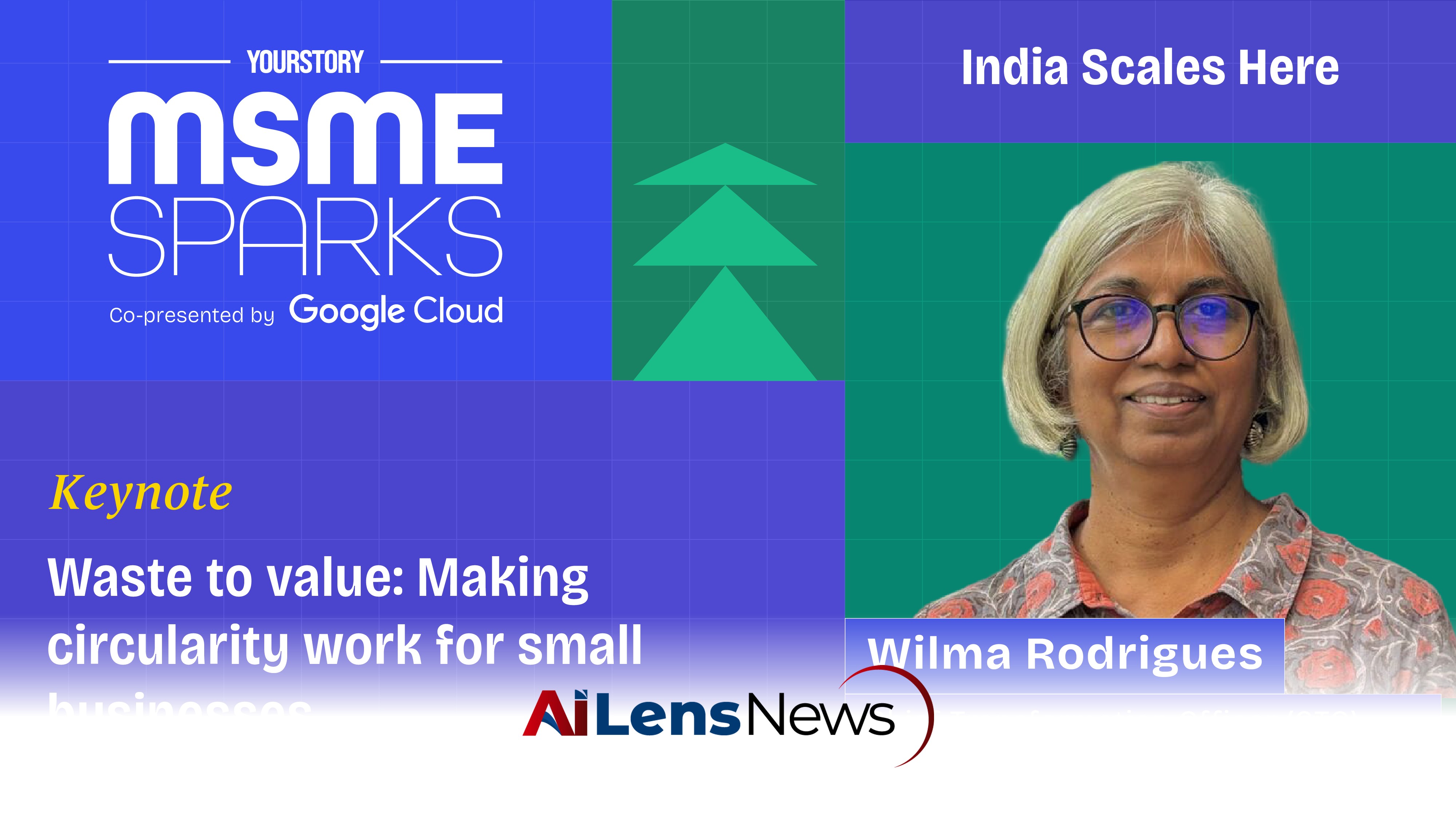


At MSME Sparks 2026, Wilma Rodrigues emphasized the importance of circular business models in waste management, highlighting their potential for India's MSMEs.
New Delhi, India Jul 10, 2026 ALN: Sustainability has emerged as a critical focal point in the global discourse on environmental responsibility, shifting from a mere corporate social responsibility (CSR) initiative to a significant business opportunity. Wilma Rodrigues, Chief Transformation Officer at Saahas Zero Waste, is at the forefront of this transformation. During her keynote address at MSME Sparks 2026, a five-day event in Bengaluru dedicated to the Micro, Small, and Medium Enterprises (MSME) ecosystem in India, Rodrigues emphasized the importance of viewing waste as a resource rather than a liability. Her presentation, titled ‘Waste to Value: Making Circularity Work for Small Businesses’, highlighted the pressing need for circularity within India's vast MSME sector, which comprises around five crore enterprises.
India is grappling with a considerable waste management challenge, generating approximately 62 million tonnes of waste annually. Alarmingly, Rodrigues pointed out that about 80% of this waste is either dumped or incinerated, with only a small fraction undergoing proper recycling. This is particularly concerning as India seeks to adopt closed-loop systems akin to those prevalent in developed economies, where waste is minimized and resources are reused effectively.
Rodrigues articulated a compelling argument about the interconnectedness of the economy and nature, stating, "Fifty percent of the global economy comes from nature." She noted that the exponential economic growth witnessed over the past century has largely been facilitated through a linear economic model, which is increasingly unsustainable. As MSMEs, Rodrigues urged, it is imperative to adopt a more mindful approach that reverses this trend, embracing principles of sustainability and circularity.
Saahas Zero Waste operates through three distinct verticals, each targeting different aspects of waste management. The first is a zero-waste program aimed at bulk generators, such as educational campuses and technology parks. The second is an extended producer responsibility (EPR) initiative that addresses the management of plastic and electronic waste. The third vertical is a closed-loop retail arm, which focuses on selling recovered products back to local communities, promoting the idea of reusing materials rather than discarding them.
Rodrigues clarified that contrary to the popular narrative of transforming waste into wealth, the majority of Saahas' revenue does not stem from the resale of recovered materials. Instead, approximately 40% of the company's income is derived from material sales to recyclers and consumers, while a more substantial portion comes from service fees. This is indicative of the reality that roughly 70% of the waste the company processes lacks inherent economic value, necessitating a model that relies on service fees to sustain operations.
Rodrigues highlighted a critical issue facing the waste management sector: the limited flow of capital into this space. She attributed this to a prevailing belief that waste management does not require fees or significant investment. This mindset, she argued, is a significant barrier to progress, stymieing innovation and growth within the sector. Despite these challenges, Saahas has shown resilience, achieving peak revenues of approximately Rs 86 crore in FY24, although it faced a decline to around Rs 60 crore with marginal losses in the subsequent two years. Rodrigues identified regulatory churn in EPR as a contributing factor to this downturn, emphasizing that the company chose to absorb the financial impact rather than compromise on its environmental and social commitments.
With a workforce of over 400 employees, predominantly women, Saahas processes around 100 tonnes of solid waste daily. The company has successfully diverted 40,000 tonnes of waste in the previous year alone, utilizing various channels such as recycling, composting, biogas production, and reuse. Rodrigues proudly noted a 96% landfill diversion rate, underscoring the effectiveness of their waste management strategies.
Technology plays a vital role in Saahas' operations, aiding in the closing of the waste loop. However, Rodrigues stressed that human involvement is equally crucial. She stated, "People have to be part of the system, whether it is collection of segregated waste, aggregation and sorting, or recycling, and that means paying them appropriately." This perspective aligns with multiple United Nations Sustainable Development Goals (SDGs), particularly those focused on poverty alleviation, decent work, sustainable cities, and partnerships for the goals.
Despite its success, Saahas has raised only modest amounts of capital to date, approximately Rs 8 crore, primarily from what Rodrigues described as "aligned investors" who are willing to adopt a patient approach to investment. Looking ahead, the company aims to scale its operations to become a Rs 200 crore business within the next five years. To achieve this ambitious goal, Rodrigues is exploring a transition toward steward ownership, a model she encouraged the audience to investigate further through the Purpose Foundation.
During the Q&A session, Rodrigues urged entrepreneurs, particularly those in Tier II and Tier III cities, to consider entering the waste sector through partnerships rather than attempting to navigate the landscape independently. She cited the new Solid Waste Management Rules 2026 as a favorable development that could provide significant support to emerging businesses in this space.
Rodrigues also addressed the persistent waste management challenges faced by Bengaluru, noting that nearly 40% of the city's waste is generated from tech parks and bulk waste producers. She called upon citizens and businesses alike to take responsibility for managing their waste locally, rather than relegating it to public spaces. Her rallying cry was clear: "We have to be the change we want to see. That's the way forward, not just for Bengaluru, but for Chennai, for the NCR…for all of India."
The implications of Rodrigues' insights extend far beyond the realm of waste management. They touch on broader themes of sustainability, economic resilience, and social equity. As the world grapples with the consequences of climate change and environmental degradation, the need for innovative solutions in waste management becomes increasingly urgent. Saahas Zero Waste's model serves as a potential blueprint for other businesses looking to embrace sustainability as a core principle rather than an afterthought. By reimagining waste as a resource and leveraging community engagement, the company is not only addressing immediate environmental challenges but also paving the way for a more sustainable and equitable future.
To learn more about the latest developments in Events & Summits, stay updated with our exclusive reports and analyses on AiLensNews.

