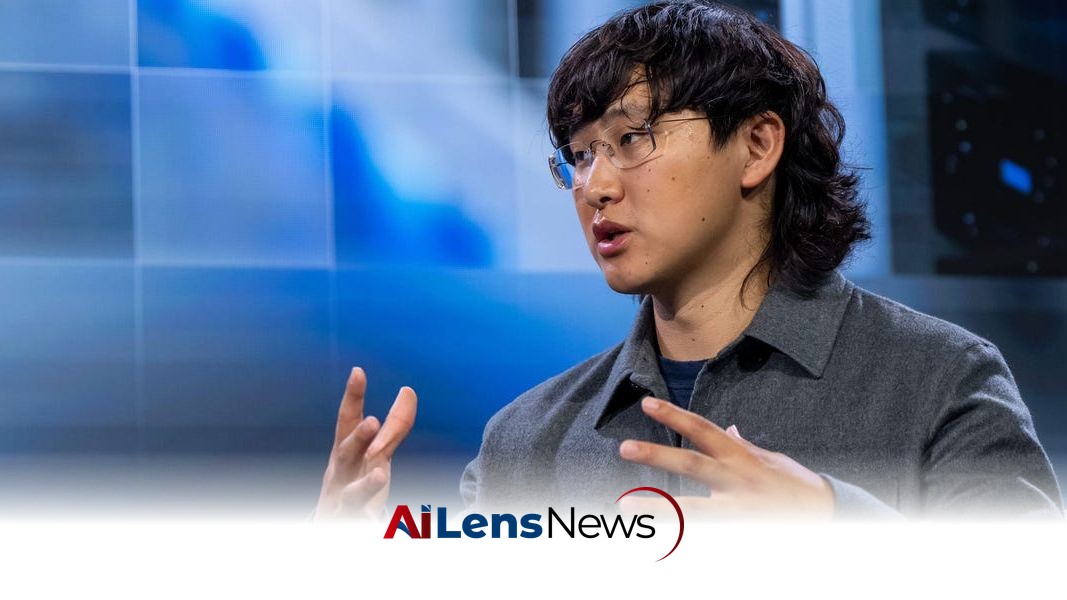


Alexandr Wang highlights how AI empowers startups to compete with industry giants, marking a transformative era for entrepreneurship.
Washington DC, United States Jul 30, 2026 ALN: In recent years, the rapid advancement of artificial intelligence (AI) has transformed various sectors, and the startup landscape is no exception. Alexandr Wang, a prominent figure in the AI industry, has articulated how this technology has leveled the playing field for new businesses aspiring to compete against established giants. His insights were shared during a talk at a Y Combinator event, where he discussed the profound implications of AI for entrepreneurs.
Wang, who co-founded Scale AI and served as its CEO, is no stranger to the challenges faced by startups. Scale AI, founded in 2016, was one of the pioneers in the data labeling sector, which is crucial for training AI models. The company quickly gained traction by employing thousands of contractors worldwide to curate data, a process essential for the development of effective AI systems. In June 2022, Wang transitioned to Meta as part of a significant acquisition deal worth $14.3 billion, reflecting the increasing importance of AI in the tech ecosystem.
During his talk, Wang emphasized that the current moment represents a unique opportunity for entrepreneurs. He described this era as a "once in a civilization opportunity" for visionaries to create and innovate. This perspective aligns with a broader sentiment in the tech community that AI is not just a tool but a transformative force that can redefine industries. Wang remarked, "It's probably a once in a civilization opportunity to be a dreamer and to have a vision and to have ambition and to impose a view of how the future world should look by building something amazing." This statement underscores the optimism surrounding AI's potential to empower startups.
Reflecting on his own experiences, Wang recounted the difficulties he faced when launching Scale AI. He likened the startup journey to the biblical tale of David versus Goliath, where smaller entities must navigate a landscape dominated by larger, resource-rich competitors. "You had to be clever, and you had to find an angle into the market and figure out a way to compete even though you had much fewer resources," he explained. However, he believes that the advent of AI agents—software systems capable of executing complex, multi-step tasks—has shifted this dynamic. Now, he posits, it is more akin to "Goliath versus Goliath," suggesting that even startups can leverage AI to compete on equal footing with established firms.
AI agents possess a range of capabilities, from automating customer support to writing code, which can significantly enhance operational efficiency for startups. Wang's assertion that startups embracing AI in ambitious ways can surpass established companies highlights the transformative potential of this technology. As startups increasingly incorporate AI into their business models, they can streamline operations, reduce costs, and ultimately innovate at a pace that was previously unattainable.
Wang's views resonate with those of other influential figures in Silicon Valley. OpenAI CEO Sam Altman, who also spoke at the Y Combinator event, echoed the sentiment that now is an unprecedented time for startups. He stated, "I think we'll go through a very steep period, which again, never a better time to do a startup than right now." Altman's optimism reflects a growing consensus among tech leaders that the current landscape is ripe for innovation, driven largely by advancements in AI.
Vinod Khosla, a well-known venture capitalist, has also weighed in on the impact of AI on entrepreneurship. He predicts that AI will catalyze a small-business boom, enabling entrepreneurs to automate various tasks that traditionally required human intervention, such as legal and accounting work. Khosla's forecast is ambitious; he speculated that by 2035, the corporate workforce could shrink significantly, with a substantial increase in the number of micro-entrepreneurs. He stated, "I would guess by 2035, 10 years from now, that's a very short time, we will have 1/4 the number of corporate employees, maybe less, and we will have 50 million micro entrepreneurs doing their thing, being their own boss." This prediction illustrates the far-reaching implications of AI on the future of work and entrepreneurship.
The implications of AI's integration into the startup ecosystem extend beyond mere operational efficiency. They also raise important questions about the nature of work, the role of human labor, and the ethical considerations surrounding AI deployment. As startups increasingly rely on AI, they must navigate challenges related to data privacy, algorithmic bias, and the potential for job displacement. These concerns necessitate a thoughtful approach to AI development and implementation, ensuring that the benefits of technology are equitably distributed.
Moreover, the rise of AI-driven startups could lead to a shift in investment patterns within the venture capital landscape. Investors may prioritize funding for companies that effectively leverage AI technologies, potentially sidelining traditional business models that do not integrate these advancements. This shift could result in a new wave of innovation, as entrepreneurs explore novel applications of AI across various sectors, from healthcare to finance to entertainment.
As the startup landscape continues to evolve in response to AI advancements, it is crucial for entrepreneurs to stay informed about emerging technologies and market trends. The ability to adapt and innovate in this rapidly changing environment will be key to success. Wang's insights serve as a reminder of the transformative power of AI and the opportunities it presents for those willing to embrace it.
In conclusion, Alexandr Wang's reflections on the role of AI in the startup ecosystem highlight a pivotal moment in the history of entrepreneurship. As AI continues to advance, it is reshaping the competitive landscape, enabling startups to challenge established players in unprecedented ways. With the support of visionary leaders like Wang, Altman, and Khosla, the future of startups appears promising, driven by the innovative potential of artificial intelligence. Entrepreneurs who harness this technology effectively may not only thrive in their endeavors but also contribute to a broader transformation of the business landscape.
To learn more about the latest developments in Startup Ecosystem Trends, stay updated with our exclusive reports and analyses on AiLensNews.

