

Ollama has secured $65 million in Series B funding, bringing its total to $88 million, as it continues to support developers with AI tools.
New Delhi, India Jul 9, 2026 ALN: The popular open source AI tool Ollama has raised a $65 million Series B, led by Theory Ventures, founder and CEO Jeff Morgan tells.
This round follows a previous $15 million Series A led by Benchmark’s Peter Fenton. All told, the company has now raised $88 million.
Ollama, which launched in 2023, helps developers run open-weight AI models on their personal computers, allowing them to get up and running in mere minutes. It has gained substantial praise from developers across various training sites, videos, blogs, and social media platforms. The tool has amassed an impressive 176,000 stars and nearly 17,000 forks on GitHub, showcasing its popularity and utility within the developer community.
Developers can utilize Ollama to discover models and access larger, more complex ones that the company hosts on its neocloud platform. This service is offered through several subscription tiers, ranging from free options to more advanced plans costing up to $100 per month. A notable feature of Ollama is its usage tracking, which is based on GPU time rather than token limits, providing developers with a more flexible and user-friendly experience.
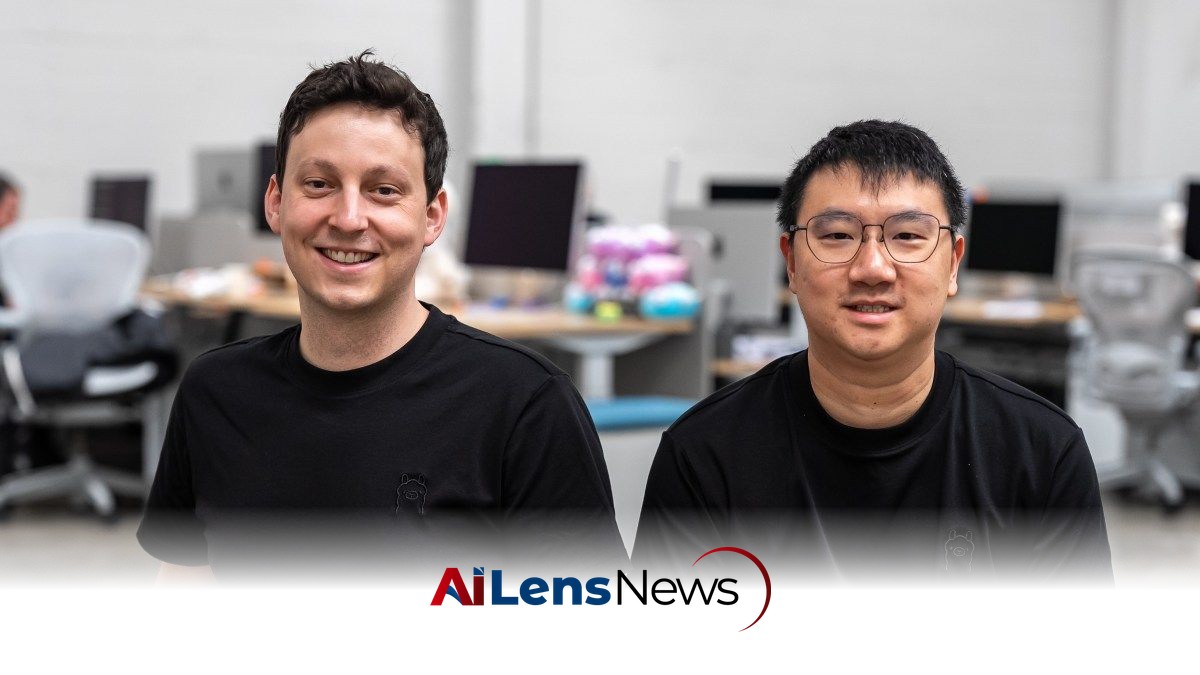
The mission of Ollama to simplify the process for developers resonates with the founders' previous experiences in the tech industry. Morgan and his co-founder Michael Chiang were instrumental in the development of Docker Desktop. They joined Docker after their previous startup, Kitematic, was acquired. Docker is renowned for creating containers that facilitate the seamless movement of cloud applications across different environments, effectively abstracting away the complexities associated with hardware configurations.
In essence, Ollama aims to replicate the transformative impact that Docker and Docker Desktop had on cloud computing, applying similar principles to the realm of artificial intelligence.
“Open models started coming out in 2023 but they were really hard to use,” Morgan remarked. Initially, these models were primarily targeted at researchers, making it challenging for programmers to implement them effectively. Three years after its launch, Ollama has achieved significant adoption, with over 8.9 million developers using the platform every month, including a presence in 85% of Fortune 500 companies, all while operating with a lean team of just 14 employees.
This impressive growth trajectory is what attracted Benchmark’s Peter Fenton to lead the earlier funding round and join Ollama's board. Fenton commented on the rarity of such creative capabilities in building a product that achieves ubiquity among developers, citing the extensive user base that Jeff and Michael cultivated with Docker.
Although Morgan and Fenton opted not to disclose specific revenue figures or the startup's new valuation, Morgan indicated that a significant turning point for Ollama occurred around January, coinciding with the rise of OpenClaw. This period marked a shift in the perception of larger open models, as they began to demonstrate their ability to perform complex tasks, including coding. The surge in interest surrounding assistants like OpenClaw highlighted the potential for open models to deliver tangible results in real-world applications.
The implications of this shift are profound, particularly for enterprises and AI application-layer startups. There is a growing sentiment in the industry that these organizations will increasingly gravitate towards more affordable open models, reserving the use of proprietary models like those from Anthropic for specific, high-stakes scenarios. Fenton emphasized the importance of recognizing that the market for open and closed AI models is not mutually exclusive, suggesting that both will continue to coexist and thrive.
He noted that companies facing high inference costs—the expenses related to using AI models—are under pressure to transition to open-weight models as a viable solution. This trend is already being observed, with numerous startups and enterprises opting for open models to meet their operational needs, which bodes well for Ollama's cloud business.
Ollama's growth is part of a larger trend in the tech industry, where AI is fostering a new wave of open-source projects that are evolving into companies attracting venture capital investment. Alongside Ollama, there are several other open-source inference providers, such as Inferact, which developed vLLM, and RadixArk, the creator of SGLang. Additionally, alternatives like OpenClaw and NanoClaw are emerging, along with startups like Arcee that are focused on building their own open models from the ground up.
However, not all users of Ollama have embraced the company's shift towards monetization. Approximately a year ago, a wave of blog posts and social media discussions surfaced, expressing dissatisfaction with how the cloud business was diverting attention from the original free project. Critics cited Ollama as an example of the so-called "Enshittification" of development tools, a term used to describe the degradation of quality in free services as companies pursue profitability.
In response to these concerns, Morgan articulated his vision for the cloud service as an evolution of Ollama's open-source mission. He explained that many state-of-the-art, large, open models are often too resource-intensive for individual developers to run on their personal computers. By providing a cloud-based solution, Ollama aims to facilitate access to these powerful models, thereby empowering developers to leverage cutting-edge technology without the burden of significant hardware investments.
Fenton further reassured users that the core product, which remains free for desktop use, has not changed. He emphasized that the platform continues to serve as a valuable resource for discovering and running local models, maintaining its commitment to the developer community.
As the landscape of AI technology continues to evolve, Ollama's journey illustrates the dynamic interplay between open-source innovation and commercial viability. The company stands at the forefront of a movement that seeks to democratize access to AI tools, enabling a broader range of developers to harness the power of artificial intelligence in their projects. This development not only enhances individual productivity but also contributes to the overall advancement of the field, fostering a culture of collaboration and shared knowledge among developers worldwide.
To learn more about the latest developments in Funding & Investments, stay updated with our exclusive reports and analyses on AiLensNews.

