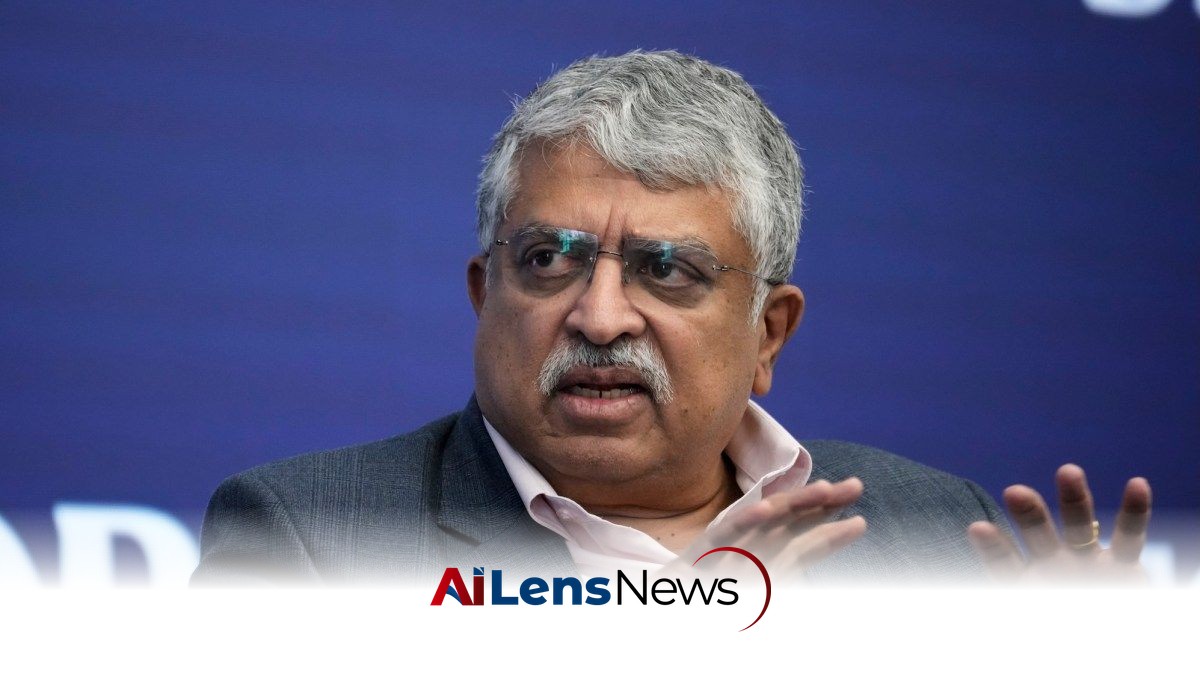


Nandan Nilekani steps down as general partner at Fundamentum Partnership, which is launching a $200 million fund targeting AI and fintech startups in India.
New Delhi, India Jul 9, 2026 ALN: Nandan Nilekani, co-founder of Indian IT services giant Infosys, will no longer serve as a general partner at Fundamentum Partnership, the venture capital firm he co-founded nearly a decade ago.
Nilekani will be stepping down from his role as Fundamentum launches its third fund, targeting to raise about $200 million. He will be the fund’s anchor investor and continue advising the firm and mentoring portfolio companies, his co-founder Sanjeev Aggarwal stated.
Aggarwal described the shift as “just a title thing,” saying Nilekani would continue to advise the firm, mentor portfolio company founders, and provide strategic guidance. “He is an integral part of our firm. The one thing that he enjoys the most is mentoring the teams that we back, and he will continue to do so in Fund III.”
Nilekani, 71, is one of India’s best-known technology leaders. Besides co-founding Infosys, he led the creation of Aadhaar, India’s biometric identity system, and has been a leading advocate of the country’s digital public infrastructure, including the Unified Payments Interface (UPI), a real-time payments network used by hundreds of millions of Indians. He has championed the Open Network for Digital Commerce (ONDC), an initiative aimed at making e-commerce more open and interoperable in the country.
The transition in Nilekani's role comes at a significant time for Fundamentum, which was established in 2017. The firm was created with the vision of supporting Indian startups at the Series B stage and beyond, a critical juncture for many companies looking to scale. Nilekani and Aggarwal, who previously helped build Helion Venture Partners, recognized the need for more substantial investment in this phase of startup development, which is often marked by increased capital requirements and market competition.
Fundamentum’s portfolio includes notable companies such as Spinny, an online used-car marketplace, PharmEasy, an online pharmacy, Kuku FM, an audio storytelling platform, and AppsForBharat, which developed the Sri Mandir devotional app. This diverse range of investments reflects the firm’s strategy of backing innovative startups that leverage technology to solve real-world problems, particularly in the consumer technology and healthcare sectors.
Despite stepping back from a general partner role, Nilekani’s continued involvement as an anchor investor and mentor is indicative of his ongoing commitment to nurturing the Indian startup ecosystem. His extensive experience and insights are invaluable to the founders and teams within Fundamentum's portfolio, particularly as they navigate the complexities of scaling their businesses in a rapidly evolving market.
The leadership change also broadens Fundamentum’s senior investment team. Alongside Aggarwal, Fund III will be led by Prateek Jain, who joined Fundamentum at its inception in 2017; fintech investor Mayank Kachhwaha, who joined ahead of Fund II; and finance chief Sanjay Chaturvedi, who has been with the firm for nearly a decade. This team brings a wealth of experience and a diverse skill set that is vital for identifying and supporting the next generation of successful startups in India.
Fundamentum’s third fund aims to back eight to 10 early-stage startups building consumer technology, fintech, and AI products, issuing initial checks of about ₹100 crore (around $10.5 million) each. The firm has yet to announce a first close but has already begun deploying capital, Aggarwal said, adding that he expects the fundraising to conclude over the next 12 to 18 months. This proactive approach to capital deployment suggests a sense of urgency and confidence in the current market conditions and the potential of the startups they aim to support.
Fund III will see Nilekani making his largest-ever commitment to a venture capital fund, Aggarwal said, though he declined to disclose the investment amount. The fund expects to raise roughly half of its target from international investors, with the remainder sourced from Indian institutions, family offices, founders, and the firm’s partners. This strategy reflects a growing trend in the Indian venture capital landscape, where domestic investors are increasingly participating in funding rounds, thereby reducing reliance on foreign capital.
The shift in investor dynamics highlights the maturation of India’s venture capital ecosystem over the past decade. Aggarwal noted that when he launched Helion, there was little domestic capital available, and most funds were reliant on U.S. investors. However, the landscape has changed dramatically, with a significant rise in interest from Indian investors looking to back local venture capital firms. This development not only strengthens the domestic market but also fosters a more robust startup ecosystem that can thrive independently.
Aggarwal emphasized that Fundamentum sees India’s biggest AI opportunity in applications built on existing global models, particularly across financial services, content, and vernacular consumer applications. This perspective underscores the unique positioning of Indian startups, which often focus on applying advanced technologies to meet local needs rather than competing directly with global giants in developing foundational AI models. This approach allows Indian companies to innovate rapidly and cater to the specific demands of the Indian market.
In contrast to the U.S. and China, where substantial investments have been made into developing frontier AI models, India’s focus on application-layer startups reflects a strategic alignment with the country’s current technological capabilities and market requirements. This distinction is crucial as it allows Indian entrepreneurs to leverage existing technologies to create solutions that resonate with local consumers, thereby driving growth and adoption.
The leadership reshuffle follows the departure of general partner Ashish Kumar, who recently launched AI-focused venture fund Fundamentum Frontier Advisors (F2A), which also has Nilekani as an anchor investor. Aggarwal clarified that F2A is a separate firm with no operational connection to Fundamentum, and Kumar is not involved in Fund III. This separation allows both firms to pursue their respective strategies while benefiting from Nilekani's insights and experience.
Fundamentum has made 17 investments across its first two funds, with Aggarwal mentioning that the firm has returned about half of the capital from its first fund to investors. The second fund is now focused on follow-on investments, demonstrating the firm’s commitment to supporting its portfolio companies through subsequent funding rounds as they scale. This strategic focus on follow-on investments is essential for ensuring that successful startups have the necessary resources to continue their growth trajectories.
As the Indian startup ecosystem continues to evolve, the leadership changes at Fundamentum and the launch of Fund III mark a significant moment in the venture capital landscape. With seasoned leaders like Nilekani and Aggarwal at the helm, the firm is well-positioned to capitalize on emerging opportunities in technology and innovation, further contributing to India's growth as a global hub for entrepreneurship and investment.
To learn more about the latest developments in Funding & Investments, stay updated with our exclusive reports and analyses on AiLensNews.

