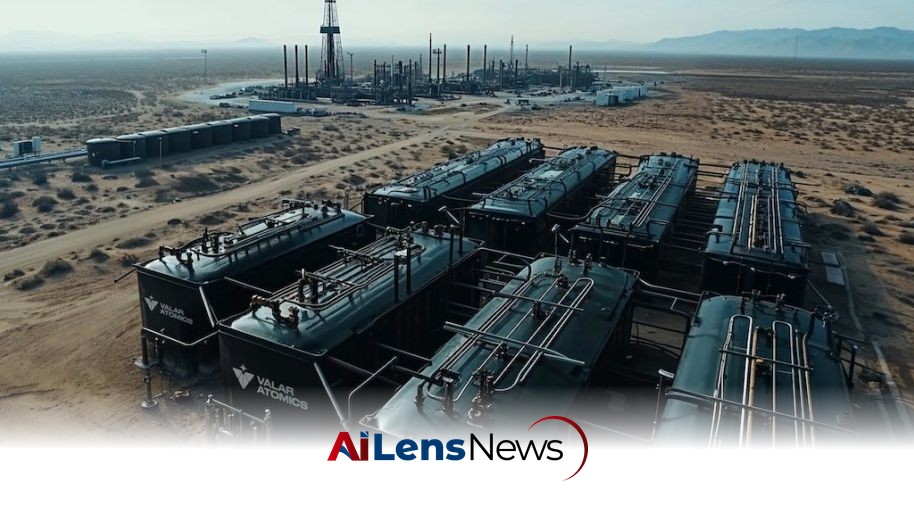


Valar Atomics is in discussions to raise $1 billion in equity, aiming for a $6 billion valuation, as it develops small modular nuclear reactors.
New Delhi, India Jul 18, 2026 ALN: Valar Atomics, a startup building small modular nuclear reactors (SMRs) — essentially miniaturized, factory-built power plants designed to be cheaper and faster to deploy than traditional reactors — is in talks to raise a new round of capital, according to three sources familiar with the company. The three-year-old company is seeking a valuation of about $6 billion, and Sequoia is expected to lead the deal, the people said.
The Information was the first to report the funding discussions, including that the El Segundo, California, startup is raising a $1 billion equity round.
Part of that capital has been raised previously at a lower valuation, the people told. Specifically, Valar has raised $450 million — including $340 million in equity and $110 million in debt — at a $2 billion valuation, per a Bloomberg report in March.
Deals structured in multiple installments at varying valuations, occasionally executed at different times, are becoming increasingly common in today’s AI-fueled fundraising environment. These deals can create the perception that capital was invested at a single, uniform valuation. In reality, investors in the same round can end up paying different prices for the same company — a distinction that matters more than ever as outsiders try to benchmark red-hot startups against one another.
Sequoia and Valar Atomics declined to comment.
Earlier this month, the company showed that its nuclear reactor provided a small amount of power to an Nvidia AI chip. Concurrently with that proof-of-concept demonstration, Valar and Nvidia announced a partnership to explore the development of nuclear energy to power future AI data centers.
Valar’s rise is playing out against a broader demand crunch. Data center electricity needs are projected to grow sharply over the next several years, and utilities in many regions are years away from adding enough new capacity. That vacuum has turned nuclear power — long plagued by cost overruns and regulatory bottlenecks — into one of the more closely watched corners of the AI infrastructure boom.
Valar counts Palmer Luckey, the Anduril founder, and Shyam Sankar, Palantir’s chief technology officer, among its backers. Others chasing the opportunity include Kairos Power and TerraPower (backed by Bill Gates), which are building next-generation reactors aimed at tech and industrial customers, and NuScale Power, the only SMR developer with U.S. regulatory design approval. (Last year, it won approval for an upgraded, higher-output reactor design.)
Valar’s technology is based on a helium-cooled, high-temperature gas reactor. The company says it eventually plans to build hundreds of SMRs to power data centers. But while SMRs are theoretically cheaper to manufacture than traditional reactors, the technology is still nascent and it’s not at all clear how long it will take to be deployed at industrial scale.
In the background, Valar has taken an aggressive legal stance toward its regulator. Last year, it joined several states and rival startups in suing the Nuclear Regulatory Commission, arguing the agency wrongly applies the same lengthy licensing process to small test reactors that it uses for full-size commercial plants. (The case hasn’t been unresolved, with both sides repeatedly pausing litigation, which suggests some kind of settlement is in the works.)
The company was founded by Isaiah Taylor, who dropped out of high school when he was 16. The now-27-year-old has said he launched two startups before Valar and proudly shared that his great-grandfather worked as a nuclear physicist on the Manhattan Project.
The interest in small modular reactors comes at a time when the global energy landscape is shifting. With an increasing focus on reducing carbon emissions and addressing climate change, nuclear energy is being reconsidered as a viable alternative to fossil fuels. Unlike traditional nuclear plants, which can take years, if not decades, to build, SMRs are designed to be constructed in factories and then transported to sites for assembly, potentially reducing time and costs significantly.
Moreover, the demand for electricity is expected to rise dramatically due to the proliferation of data centers, driven by the growth of cloud computing, artificial intelligence, and other data-intensive technologies. This surge in demand is prompting a reevaluation of energy sources, with many experts suggesting that nuclear power could play a crucial role in meeting future energy needs while minimizing environmental impacts.
Valar Atomics is not alone in its pursuit of the SMR market. Competitors like Kairos Power and TerraPower are also developing technologies that aim to make nuclear energy more accessible and affordable. These companies are focused on innovative designs and safety features that could address some of the historical concerns associated with nuclear power, including safety risks and waste management.
The partnership between Valar and Nvidia underscores the potential intersection of nuclear energy and advanced computing technologies. As AI continues to evolve and require more computational power, the need for reliable and sustainable energy sources becomes increasingly critical. The collaboration aims to explore how nuclear energy can provide a stable and efficient power supply to support the growing demands of AI infrastructure.
Despite the promising outlook for SMRs, there are significant challenges that Valar and its competitors must navigate. Regulatory hurdles remain a substantial barrier to entry in the nuclear energy sector. The lengthy licensing processes and stringent safety requirements imposed by the Nuclear Regulatory Commission can delay projects and increase costs. Valar's legal action against the NRC reflects a broader frustration within the industry regarding the regulatory framework that governs nuclear energy development.
Additionally, while SMRs are designed to be more cost-effective than traditional reactors, the technology is still in its early stages. There are uncertainties surrounding the scalability of SMRs, including the supply chain for components and materials, as well as the workforce needed to build and operate these plants. The successful deployment of SMRs will depend on overcoming these technological and logistical challenges.
As the energy landscape continues to evolve, Valar Atomics finds itself at the intersection of innovation, regulation, and market demand. The company's ambitious plans to deploy hundreds of small modular reactors could position it as a key player in the future of energy production, particularly as the world seeks to transition to cleaner and more sustainable energy sources. The outcome of its funding efforts and ongoing legal battles will be closely watched by investors and industry stakeholders alike, as they could have significant implications for the broader nuclear energy sector.
In summary, Valar Atomics is navigating a complex landscape as it seeks to secure funding and advance its technology. The company's focus on small modular reactors positions it at the forefront of a potential energy revolution, but it must address regulatory challenges, technological uncertainties, and market dynamics to realize its vision of powering the future with nuclear energy.
To learn more about the latest developments in Funding & Investments, stay updated with our exclusive reports and analyses on AiLensNews.

