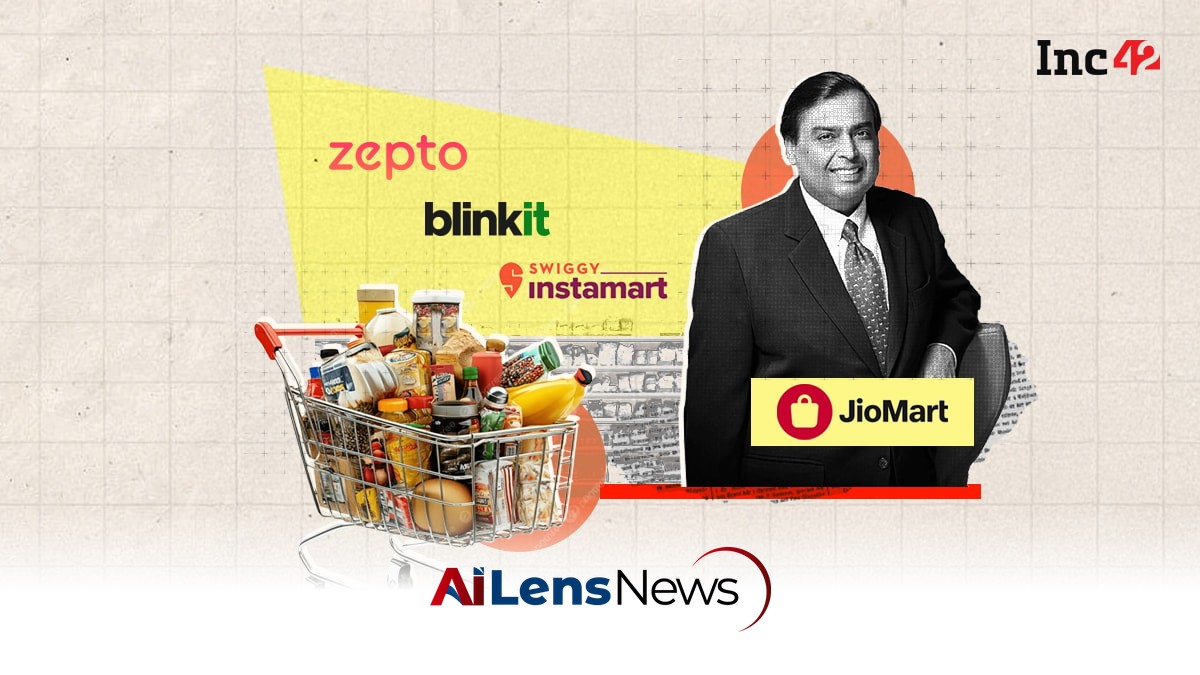


Reliance Retail's EBITDA margin fell to 7.9% in Q1 FY27, attributed to infrastructure investments in quick commerce, impacting profitability despite revenue growth.
New Delhi, India Jul 18, 2026 ALN: Reliance Retail Ventures Ltd. (RRVL), a subsidiary of the Reliance Industries Limited (RIL) conglomerate, is currently facing challenges as it expands its quick commerce operations. The company's earnings before interest, taxes, depreciation, and amortization (EBITDA) margin has declined by 80 basis points, dropping to 7.9% for the first quarter of fiscal year 2027 (Q1 FY27) from 8.7% in the same quarter of the previous fiscal year. This decline reflects a strategic shift towards hyperlocal delivery services, which has increased fixed costs associated with infrastructure investments.
The competitive landscape in the quick commerce sector is intensifying, with rivals such as Blinkit, Instamart, and Zepto offering rapid delivery services within 10 minutes. In contrast, Reliance's JioMart has opted for a model that promises delivery within 30 minutes. This strategic decision may be aimed at balancing operational efficiency with the need to maintain service quality and reliability, yet it has resulted in increased costs that have adversely affected the EBITDA margin.
In the financial details for Q1 FY27, RRVL reported a slight decline in EBITDA, which fell by 1.1% to ₹6,309 crore, down from ₹6,381 crore in Q1 FY26. Despite this drop in EBITDA, the company experienced an increase in revenue, which rose by 8.2% to ₹79,745 crore compared to ₹73,720 crore in the same quarter of the previous year. This disparity between revenue growth and EBITDA decline suggests that while the company is successfully increasing sales, the associated costs of expanding its quick commerce capabilities are impacting profitability.
As a result of these factors, RRVL's net profit saw a significant decline of 14.2%, falling to ₹2,806 crore in Q1 FY27 from ₹3,271 crore in the same quarter last year. This downturn in profitability, despite revenue growth, raises questions about the sustainability of the current business model and the potential long-term implications of the rapid investments being made in infrastructure and technology.
Looking forward, Reliance Retail has indicated that it expects the ongoing investments in hyperlocal delivery infrastructure to continue impacting margins in the near term. However, the company remains optimistic that these investments will create significant scale and value creation opportunities in the future. In its investor presentation, RRVL stated, “The build-out of hyper-local delivery infrastructure will impact margins in the near term… This will provide significant scale and generate value creation opportunities in coming years.” This indicates a belief in the long-term viability of their strategy, despite short-term financial challenges.
In an effort to bolster its quick commerce offerings, Reliance Retail has reported impressive growth in its four-hour apparel delivery service, Ajio Rush, which saw a remarkable 136% quarter-on-quarter increase in orders during Q1 FY27. This growth highlights the potential demand for rapid delivery services and suggests that the company is successfully attracting customers to its new offerings.
Furthermore, JioMart, the digital commerce arm of Reliance, is expanding its two-hour delivery services for apparel and electronics to 5,500 pincodes across India. This expansion is part of a broader strategy to enhance customer accessibility and convenience, with JioMart maintaining growth momentum across key performance metrics. The platform serviced approximately 5,500 pincodes and connected over 2,500 digital and fashion & lifestyle stores to its two-hour delivery system.
In the previous quarter, Q4 FY26, JioMart reported a substantial 116% year-on-year increase in online grocery orders, contributing 13.4% to the company’s direct-to-consumer (D2C) grocery revenues, which marked a 160 basis point increase year-on-year. This growth in online grocery orders indicates a shifting consumer preference towards digital shopping, further underscoring the importance of JioMart’s expansion efforts.
Additionally, RRVL reported a 26% year-on-year growth in JioMart’s active seller base, which emphasizes the platform's focus on building a robust ecosystem for repeat customers. The operational focus remains on enhancing order density, availability, delivery costs, and contribution margin, all of which are crucial for sustaining long-term growth in the competitive retail environment.
In terms of digital commerce contributions, the company indicated that digital channels accounted for 27.3% of apparel and footwear revenues, reflecting a 490 basis point increase year-on-year. However, the company did not provide specific figures on how much the digital and new commerce businesses contributed to overall revenue in Q1 FY27. This lack of clarity may raise questions among investors about the true impact of digital initiatives on financial performance.
On another front, Reliance has seen significant growth in its digital entertainment segment, with JioHotstar achieving its highest-ever average monthly active users (MAUs) of 530 million during the quarter, reflecting a 15% year-on-year increase. This growth has been attributed to a surge in viewership, particularly in sports and entertainment programming. The Indian Premier League (IPL) 2026 also contributed to this growth, with a record 700 million viewers across digital formats, showcasing the platform's capacity to attract large audiences.
Moreover, Reliance's newly launched microdrama vertical, Tadka, has quickly gained traction, surpassing 100 million active users within just two months of its launch. The daily watch time per viewer has reportedly increased fivefold since the platform's inception, indicating strong engagement and interest in new content offerings.
In terms of overall performance, RIL’s digital arm, Jio Platforms, reported a consolidated net profit increase of 9.2% year-on-year to ₹7,764 crore in Q1 FY27. The platform's operating revenue also saw an increase of 11.8% year-on-year to ₹39,173 crore. This growth within Jio Platforms is noteworthy, especially as the company prepares for a potential initial public offering (IPO), which could further fuel its expansion and investment capabilities.
Overall, RIL’s net profit for the quarter rose by 5.7% year-on-year to ₹23,001 crore, with gross revenue increasing by 24.5% year-on-year to ₹3.40 lakh crore. The positive performance in other segments of the business may help offset the challenges faced by Reliance Retail in the quick commerce space.
In the stock market, shares of RIL closed the previous trading session at ₹1,326.5, reflecting a 2.59% increase. This uptick may indicate investor confidence in the company's diversified business model and its potential for growth despite the current challenges in the retail sector.
In conclusion, while Reliance Retail is navigating a complex landscape marked by declining EBITDA margins and net profits, its aggressive push into quick commerce and digital platforms may position the company for future growth. The strategic investments being made in infrastructure and technology are critical as they seek to capitalize on the evolving consumer behaviors and preferences in the retail market. The coming quarters will be pivotal in determining whether these investments can translate into sustainable profitability and market leadership.
To learn more about the latest developments in Funding & Investments, stay updated with our exclusive reports and analyses on AiLensNews.

