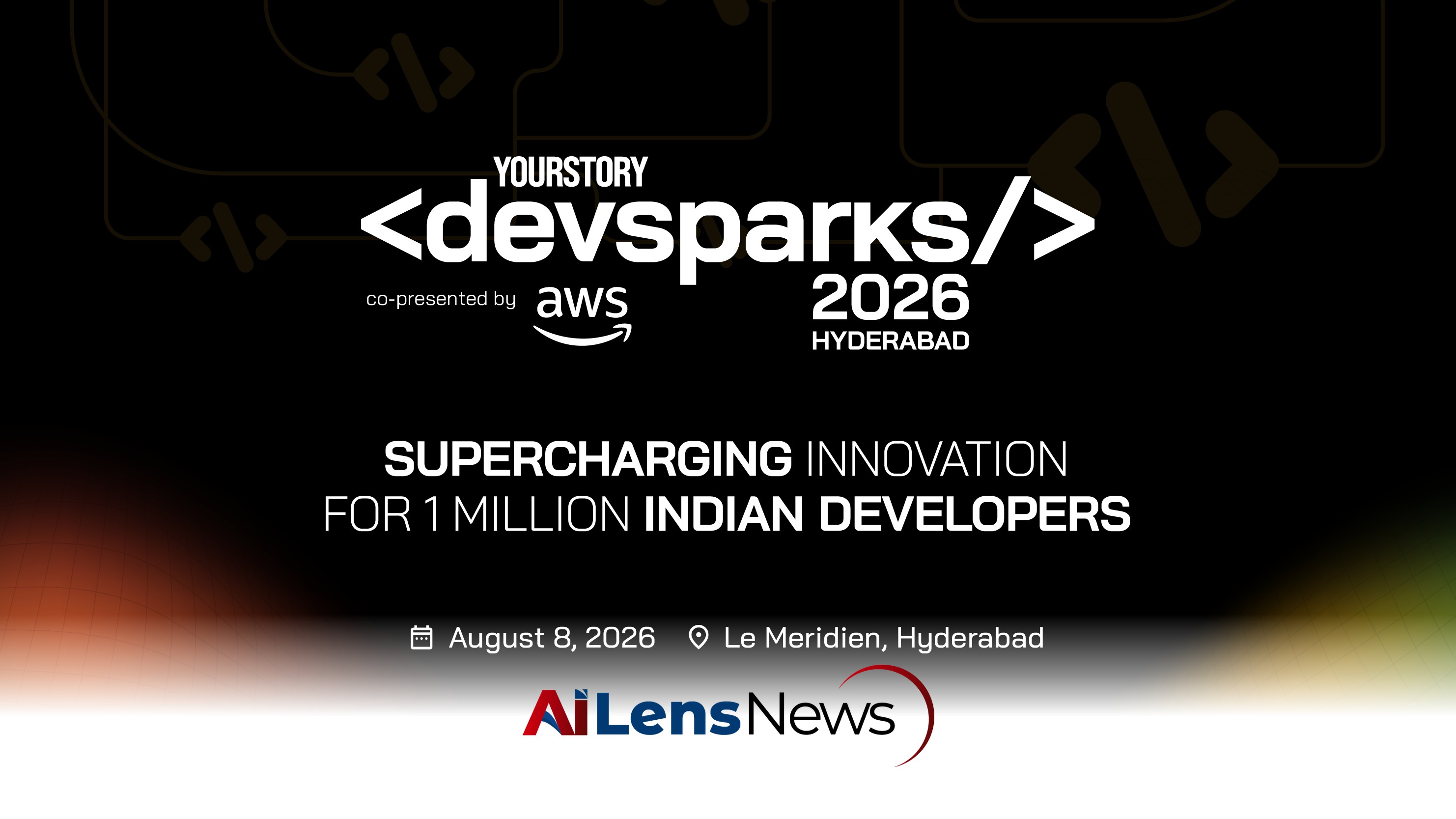


's flagship developer summit heads to Hyderabad on August 8, bringing together developers, tech leaders, and enterprises to unpack the technologies reshaping software, infrastructure, and careers.
New Delhi, India Jul 9, 2026 ALN: After a packed edition in Bengaluru earlier this year, 's flagship developer summit, DevSparks, returns to Hyderabad on August 8, 2026. Now in its third year in the city, the summit will bring together developers, technology leaders, startups, enterprises, and Global Capability Centres (GCCs) for a day of technical sessions, deep dives, and conversations around the biggest shifts transforming software development today. This event is particularly significant as it reflects the growing importance of Hyderabad as a technology hub, which has seen a surge in both domestic and international investments in recent years.
Hundreds of developers are expected to attend the event at Le Meridien Hyderabad, with over 25 speakers leading discussions and workshops across AI, cloud, cybersecurity, infrastructure, and developer productivity. The summit aims to foster collaboration and innovation among various stakeholders in the technology ecosystem, emphasizing the importance of community in driving advancements in software development.
Hyderabad has firmly established itself as one of India's largest technology hubs, with more than 500 GCCs driving engineering, product development, and innovation. However, as AI adoption accelerates, cybersecurity has become one of the biggest concerns for enterprise technology teams. The rapid integration of AI technologies into business operations has introduced new vulnerabilities, making it imperative for organizations to prioritize security measures.
According to Gartner, information security spending in India is expected to reach $3.4 billion, growing nearly 12%, as organisations respond to increasingly sophisticated AI-enabled cyber threats. AI can now automate reconnaissance, identify vulnerabilities within minutes, and generate phishing emails that are difficult to distinguish from legitimate communication. This evolution in threat landscape necessitates a proactive approach to cybersecurity, where organizations must not only defend against known threats but also anticipate and mitigate emerging risks.
In response, enterprises are investing in AI gateways, LLM firewalls, and machine identity governance platforms that monitor and secure the growing number of AI agents operating inside organisations. These technologies are rapidly becoming an essential part of modern software development and enterprise architecture. As cybersecurity continues to evolve, the integration of AI into security protocols will likely become a standard practice, enabling organizations to respond more swiftly and effectively to potential threats.
For years, public cloud promised flexibility and lower infrastructure costs. However, businesses are increasingly discovering that those benefits can come with unpredictable bills. Nearly 84% of Indian businesses report experiencing unexpected costs after moving workloads to the public cloud. This reality has prompted many organizations to reassess where applications should run, giving rise to cloud repatriation—the shift of predictable, resource-intensive workloads back to private infrastructure. This trend highlights the importance of strategic planning in cloud adoption, where organizations must carefully evaluate the cost-benefit analysis of public versus private cloud solutions.
The rapid growth of AI has accelerated that trend. As open-weight models become increasingly capable, companies are also investing in local infrastructure to improve cost efficiency, performance, and data control. The ability to manage data locally not only reduces latency but also enhances compliance with data protection regulations, which is particularly important in sectors such as finance and healthcare.
For developers, the implication is clear: applications can no longer be designed with public cloud as the default. Building for hybrid environments is becoming an essential skill. Developers must now be equipped to navigate complex architectures that leverage both public and private cloud resources, ensuring that applications are optimized for performance, cost, and security.
Agentic AI continues to dominate conversations across the technology industry, raising inevitable questions about the future of software engineering. As AI agents become more capable of writing boilerplate code, debugging, and automating repetitive tasks, they are also changing what organizations expect from developers. Rather than replacing engineers, they're pushing them towards higher-value work involving architecture, systems thinking, orchestration, and AI-assisted application design.
This shift in focus means that developers are now expected to build new skills much earlier in their careers, combining technical expertise with a broader understanding of products, infrastructure, and business problems. As the role of developers evolves, there is a growing emphasis on continuous learning and adaptability, which are crucial in an industry characterized by rapid technological advancements.
These shifts, and the practical skills needed to navigate them, will be a major focus at DevSparks Hyderabad. The summit will provide a platform for developers to explore the implications of Agentic AI on their work and to learn how to leverage these tools to enhance their productivity and creativity.
The Hyderabad edition will explore how developers can move beyond using AI tools to building production-ready AI systems. Sessions will cover topics ranging from coding agents and multi-agent orchestration to AI-first application frameworks, cloud infrastructure, Edge AI, cybersecurity, and data systems. Attendees can also expect technical workshops, real-world case studies, and discussions on upskilling, hiring, and emerging opportunities across India's growing GCC ecosystem.
As AI reshapes software development and enterprise technology, DevSparks Hyderabad aims to equip developers with the ideas, tools, and practical insights needed to build what's next. The summit will be an opportunity for networking, collaboration, and knowledge sharing, fostering a sense of community among developers and industry leaders. In an era where technology is evolving at an unprecedented pace, events like DevSparks play a crucial role in preparing the workforce for the challenges and opportunities that lie ahead.
To learn more about the latest developments in Events & Summits, stay updated with our exclusive reports and analyses on AiLensNews.

