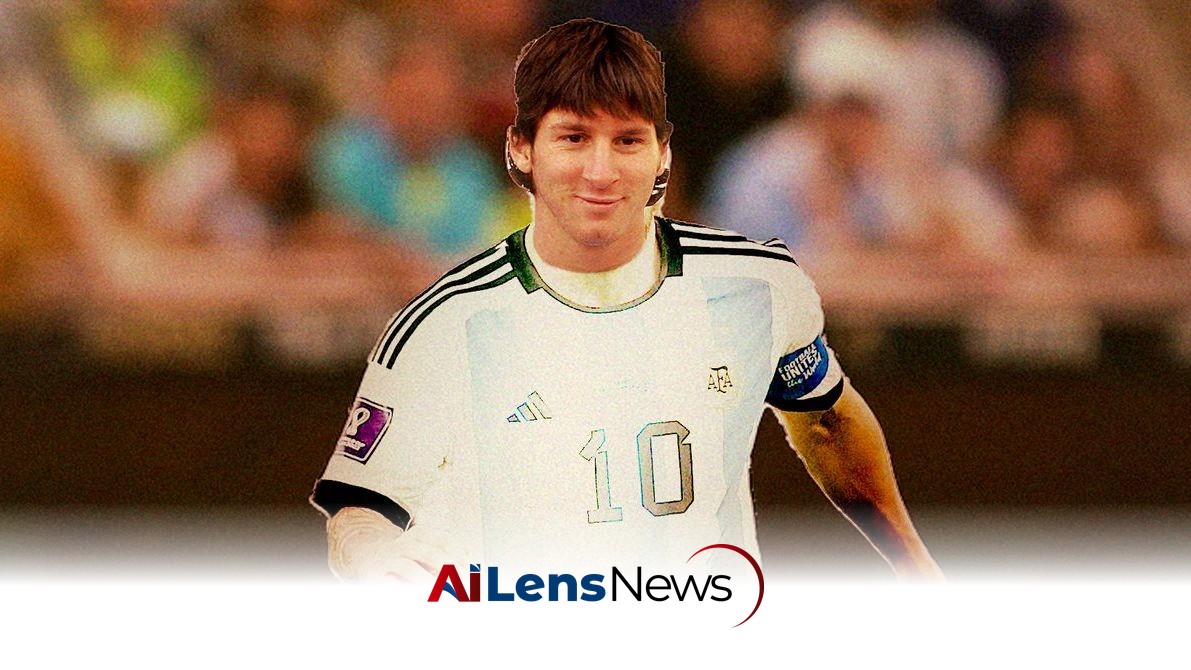


Lionel Messi's remarkable return to the World Cup at 39 exemplifies how sports science is reshaping the aging narrative for elite athletes.
Washington DC, United States Jul 15, 2026 ALN: Mere moments after Argentina lost to France in a Round of 16 match during the 2018 World Cup in Russia, commentators were already predicting it would be his final time on a World Cup pitch. “This was Lionel Messi’s final World Cup match, surely,” one stated, “and maybe his final game for his country.” Messi was 31 at the time, and many assumed they had just watched his last appearance on soccer’s biggest stage.
They were wrong.
Instead, Messi came back four years later to lift the trophy in Qatar. Then he came back again this year at 39. However, Messi is not the exception anymore.
Cristiano Ronaldo, 41, has said that this World Cup will be his last after Portugal’s Round of 16 exit following the team’s loss to Spain. Brazil’s Neymar, 34, too, announced his retirement from international football, as did Germany’s Manuel Neuer, 40. Meanwhile, Guillermo Ochoa, who turned 41 this month, is stepping away from professional football after becoming the first goalkeeper to make six World Cup squads.
Even as this World Cup has felt like one long farewell tour, for many of these players, the goodbye came years later than anyone expected.
While there isn’t a definitive global dataset comparing retirement ages across generations, the evidence points in one direction: football’s elite has been getting older for decades. A 2019 peer-reviewed study published in Frontiers of Psychology tracking nearly 30 seasons of UEFA Champions League football found the average age of players rose from 24.9 years in 1992-93 to 26.5 years by 2017-18. That trend is now on full display at the 2026 FIFA World Cup, which had eight players in their forties—more than every previous edition combined—including Cape Verde’s 40-year-old goalkeeper Vozinha, one of the tournament’s breakout stars.
What’s striking is that this celebration of more veteran players on the pitch is happening during an era of football that has produced teenage stars like Lamine Yamal, Endrick, and Bara Sapoko Ndiaye. Soccer isn’t necessarily getting older because young players have disappeared; it’s getting older because veterans are leaving later.
Research suggests professional footballers still reach their physical peak in their mid-to-late twenties, though the exact age depends on position. And while aging is gradual, players in their thirties begin to lose their explosive speed and the stamina to maintain the high-intensity running that modern soccer demands most.
A long-term study of Spain’s top players found these reported losses in endurance were most notable among external defenders, external midfielders, and forwards, whose roles rely on explosive acceleration to either score a goal or shield their keeper’s box. Central defenders and central midfielders, meanwhile, became more accurate passers with age, suggesting that positioning, anticipation, and decision-making increasingly compensate for fading speed.
Messi may be the best example of how elite players adapt with age. Rather than constantly chasing the ball, he often spends long stretches walking, reading the game before deciding exactly when to get involved. According to The Athletic, FIFA tracking data shows Messi has spent 63 percent of his movement at this World Cup walking, conserving energy for the moments that matter most.
This just goes to prove that sports science hasn’t changed the biology of aging—it changed how soccer clubs respond to it. A 2024 review of athletes with extended careers found a correlation between professionals staying at the top of their game and increasingly individualized training.
Instead of prescribing the same program to an entire squad, coaches now tailor workloads around a player’s injury history, recovery, training response, and physical capacity.
However, as players get older, experience becomes a competitive advantage. Veteran footballers increasingly compensate for declining physicality with sharper decision-making, game intelligence, and a better understanding of their own limits.
To understand what separates longer careers from shorter ones, researchers tracked the careers of 3,467 retired Portuguese footballers who played between 1960 and 2018, following each player from youth soccer through retirement. While the average retirement age was 32.7 years, the authors argued longevity is shaped by long-term athlete management and how players adapt over the course of their careers. In today’s game, there may be another factor at play: for global stars like Ronaldo and Messi, extending a career isn’t just a sporting decision.
Clubs, sponsors, and broadcasters all have a stake in keeping soccer’s biggest names on the pitch for as long as they can still compete.
Helping players do that has become a science in itself. GPS trackers measure sprint speed, accelerations, decelerations, distance covered, and training load, while heart-rate monitoring and recovery data help performance staff spot fatigue before it turns into injury.
Clubs increasingly rely on evidence-based recovery built around what sports scientists call the “4Rs”: rehydrate, refuel, repair, and rest. Those fundamentals are paired with individualized nutrition plans, sleep monitoring, and carefully managed workloads, while cold-water immersion, compression garments, and massage are used to reduce muscle soreness and prepare players for the next match.
For driven players like Ronaldo, the work never stopped when he left the training ground. He has notably and publicly shared snippets of the recovery routine he maintains at home, which combines sleep tracking and expensive technologies like cryotherapy machines with his own team of physiotherapists, nutritionists, and performance coaches.
However, even Ronaldo can't escape the reality of losing pace and recovering more slowly with age. For many of today’s stars, retirement is becoming less about when the body gives out and more about when they’re ready to step away.
As the landscape of professional soccer evolves, the implications of this trend toward longer careers are significant. For one, it challenges the traditional narrative that athletes must retire at a certain age or that their effectiveness diminishes sharply after hitting their thirties. Instead, it opens up discussions about the potential for extending careers through advancements in sports science, personalized training, and a deeper understanding of the physical and mental aspects of aging.
This shift is also influencing how clubs approach player management. With the increasing longevity of elite players, clubs are now investing in long-term contracts and developing strategies to maximize the careers of their star athletes. This includes offering more comprehensive health and wellness programs, which not only benefit the players but also enhance the club’s overall performance.
Moreover, the presence of older players in the game can have a positive impact on younger athletes. Veteran players bring invaluable experience, mentorship, and leadership qualities that can help guide the next generation. This dynamic can foster a culture of learning and growth within teams, contributing to the overall development of the sport.
In conclusion, Lionel Messi's career trajectory epitomizes a broader trend in soccer where age is becoming less of a barrier to success. As the sport continues to evolve, the focus on longevity and the ability to adapt will redefine what it means to be a professional athlete. The ongoing advancements in training, recovery, and player management will likely continue to shape the future of soccer, allowing players to extend their careers and redefine their legacies.
This evolution in the sport raises important questions about the nature of athleticism, the role of experience versus physical ability, and how the game will continue to change in the coming years. As more players like Messi and Ronaldo challenge the norms of aging in sports, the narrative around retirement will likely shift, paving the way for a new era of soccer that values experience as much as youth.
As fans and analysts reflect on the legacies of these iconic players, it becomes clear that their impact extends beyond the pitch. They are not merely athletes but pioneers who are reshaping the landscape of professional soccer, inspiring future generations to strive for excellence and longevity in their own careers.
Ultimately, Messi's legacy is not just about the records he has set or the trophies he has won; it is about redefining what it means to be a professional athlete in today's world. His journey serves as a reminder that with the right approach, dedication, and support, the boundaries of age can be pushed, allowing athletes to continue competing at the highest levels well into their later years.
To learn more about the latest developments in Basketball, stay updated with our exclusive reports and analyses on AiLensNews.

